Anderson News Suspends “Normal Business Activity”
by Judith Rosen -- Publishers Weekly, 2/9/2009 9:09:00 AM
Three weeks after Anderson News threatened that it could cease distributing magazines unless publishers paid a 7¢/per copy surcharge, the Knoxville, Tenn.-based distributor of magazines and books may be forced to exit the business. Not only did publishers refuse to pay the surcharge, but they stopped shipping to it.
On Saturday, the Knoxville, Tenn.-based distributor, which services 40,000 outlets, announced that it had suspended normal business activity, according to the Knoxville News. The suspension affects employees at Anderson News, Prologix East, Anderson Services and Twin Rivers Technology.
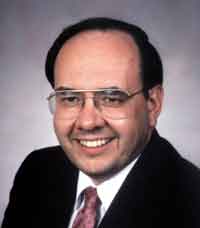
We continue to work toward an amicable solution,” said Anderson News CEO Charlie Anderson in a statement released on Saturday. “I have been told by our two largest publishers that any interruption of service should last only a few days. I am not quite sure if they really understand the situation. This is a mess for all of us.”
Last week another wholesaler Source Interlink, which also sought a 7¢ surcharge, was rumored to be in trouble.
Monday, February 9, 2009

Amazon Set to Release Kindle 2
Live from Kindle-fest II
Kindle 2 is pretty much as advertised and leaked. Thinner ("pencil thin"--a third of an inch); a new five-way controller to improve navigation, which particularly helps for newspaper reading; improved placement of the page-turning buttons; a new E ink display with 16 shades of gray (just like Sony already has); 20 percent faster page turn; 25% longer battery life; seven times more storage (though who knows why); USB-charge capability and a more portable charger; and yes, still apparently designed by Jeff Bezos's brother-in-law in his spare time and priced at $359 and shipping on February 24. (Current Kindle owners get "prioritized in the queue" if they order right now.)
The new Whispersync lets you switch among multiple Kindles and other devices without losing your place, and "experimental" text-to-speech feature lets Kindle read aloud to you in a computerized voice at any time without losing your place in the work.
In other words, no epub support and no radically-new features or changes--an incremental update of the first Kindle. And no new statistics on sales, and no announcement (for now) on their suspected iPhone app.
But they do have Stephen King, just as the WSJ forecast this morning, who wrote a story--"Ur"--that features a Kindle in it. The story will be a Kindle exclusive (at least for now), though it's currently available only for pre-order. It releases the same day as the new Kindle, selling for $2.99 (amusingly discounted from a "digital list price of $3.99"). S&S ceo Carolyn Reidy says there is no current agreement to release the book in traditional print, though she is hopeful that they will be able to make it available that way at some point.
"I'm the entertainment," King said as he took the state. At first he turned Amazon's invitation down, he said, even though he was a satisfied Kindle customer since a year ago December. But then a scene came to him. "I thought I had a chance to say something about reading on the computer" and the supposed crisis in reading.
As King left the stage, he assured, "You're going to like this gadget but you're going to like books, too. It isn't like these things are in conflict."
In other Tools of Change-timed announcements, oversized ereader-in-development Plastic Logic has announced a number of content provider partnerships even though the device is now not expected to hit the market until early 2010. Ingram Digital will serve books to the new device; LibreDigital will provide newspapers and magazines, and Zinio will serve magazines, too. And they have partnered with Fictionwise to run the econtent store.
The company says that "concurrent with the release of its electronic reader, it will launch a content store where users can download a rich variety of business and leisure digital content from newspapers, magazines, trade journals, blogs, ebooks, etc."
Kindle 2 is pretty much as advertised and leaked. Thinner ("pencil thin"--a third of an inch); a new five-way controller to improve navigation, which particularly helps for newspaper reading; improved placement of the page-turning buttons; a new E ink display with 16 shades of gray (just like Sony already has); 20 percent faster page turn; 25% longer battery life; seven times more storage (though who knows why); USB-charge capability and a more portable charger; and yes, still apparently designed by Jeff Bezos's brother-in-law in his spare time and priced at $359 and shipping on February 24. (Current Kindle owners get "prioritized in the queue" if they order right now.)
The new Whispersync lets you switch among multiple Kindles and other devices without losing your place, and "experimental" text-to-speech feature lets Kindle read aloud to you in a computerized voice at any time without losing your place in the work.
In other words, no epub support and no radically-new features or changes--an incremental update of the first Kindle. And no new statistics on sales, and no announcement (for now) on their suspected iPhone app.
But they do have Stephen King, just as the WSJ forecast this morning, who wrote a story--"Ur"--that features a Kindle in it. The story will be a Kindle exclusive (at least for now), though it's currently available only for pre-order. It releases the same day as the new Kindle, selling for $2.99 (amusingly discounted from a "digital list price of $3.99"). S&S ceo Carolyn Reidy says there is no current agreement to release the book in traditional print, though she is hopeful that they will be able to make it available that way at some point.
"I'm the entertainment," King said as he took the state. At first he turned Amazon's invitation down, he said, even though he was a satisfied Kindle customer since a year ago December. But then a scene came to him. "I thought I had a chance to say something about reading on the computer" and the supposed crisis in reading.
As King left the stage, he assured, "You're going to like this gadget but you're going to like books, too. It isn't like these things are in conflict."
In other Tools of Change-timed announcements, oversized ereader-in-development Plastic Logic has announced a number of content provider partnerships even though the device is now not expected to hit the market until early 2010. Ingram Digital will serve books to the new device; LibreDigital will provide newspapers and magazines, and Zinio will serve magazines, too. And they have partnered with Fictionwise to run the econtent store.
The company says that "concurrent with the release of its electronic reader, it will launch a content store where users can download a rich variety of business and leisure digital content from newspapers, magazines, trade journals, blogs, ebooks, etc."
Flashmob Here?
Has anybody done a flashmob event on the Grace campus?
http://www.cnn.com/2009/WORLD/europe/02/09/uk.station.flashmob/index.html
http://www.cnn.com/2009/WORLD/europe/02/09/uk.station.flashmob/index.html
Friday, February 6, 2009
Jack Cafferty Responds to Isaacson Piece

Here is Jack Cafferty's response to the Walter Isaacson piece I posted yesterday:
How important is saving America’s newspapers?
From CNN’s Jack Cafferty:
“How to Save Your Newspaper: A Modest Proposal.” That’s the cover story of TIME magazine this week. In it, Walter Isaacson – former managing editor of Time and the current CEO of the Aspen Institute – as well as my former boss here at CNN – writes how the crisis in journalism has reached meltdown proportions. He says we can now imagine a time when some big cities will no longer have a newspaper, saying that last year more people in this country got their news online for free than paid for it by buying newspapers and magazines.
News outlets now primarily rely on advertising revenue and not on newsstand sales and subscriptions.
Isaacson describes how news outlets now primarily rely on advertising revenue and not on newsstand sales and subscriptions. He says that in order for newspapers to survive they will have to charge for content by way of subscriptions. He also suggests introducing an easy payment system – like how people buy songs on i-Tunes or use an EZ pass.
It’s clear that with the decline of advertising dollars, newspapers are in deep trouble. Publisher McClatchy reported a $21.7 million loss for the fourth quarter. It says it plans to cut about $100 million this year, it’s unclear how much of that will come in the form of layoffs. Other companies like the New York Times, Gannett and Lee Enterprises have already reported lower profits in that same quarter. And, Rupert Murdoch’s giant media conglomerate News Corp posted its biggest ever quarterly net loss this week, taking a write-down of $8.4 billion.
The CEO of another struggling company, the Sun-Times Media Group, says he’ll resign at the end of the month – after the company announced last month it would close a dozen of its weekly papers and ask union workers to take a pay cut.
Here’s my question to you: How important is it to save America’s newspapers?
Interested to know which ones made it on air?
Steve from Florida writes:
That’s kind of a tricky question. With the almost instantaneous transfer and availability of information on the internet, a breaking headline is old news before they even turn the press on. Then, of course, that headline becomes a “breaking” story for a week or two on cable news. What I think is important to save is honest, unbiased, in-depth reporting no matter what format. Anybody still doing that?
Jim from Chicago writes:
Essential. There is a huge difference between an informed opinion and just forming an opinion. Newspapers are a critical source of information, particularly about local issues.
Erico writes:
Not too long ago, we used the teletype ticker tape. It was essential for many functions, such as tracking landing and takeoff of aircraft or keeping tabs on the stock market. The teletype is a symbol of what will become of newspapers as we know them now. The electronic media is sweeping across the board, eliminating old technologies and industries. By eliminating my newspaper subscription, I’ve been able to upgrade my internet services and communications.
David in Orlando writes:
Unfortunately our society is leaving behind many of the values that kept us safe and free. With all due respect to the electronic media of all sorts, it is the quick, easy access to info without sufficient standards of accuracy that have helped to get us into this situation. There was a time when a newspaper article was well-researched and fact-checked and was therefore a dependable source of accurate information… Today, TV news has often had its various faces slathered in egg because of the misguided desire to be first rather than right. And the internet is ten times worse than that. But none of it matters; newspapers as we knew them are dinosaurs.
Maurice from Two Rivers, Wisconsin writes:
Absolutely essential to our freedom. No Bias, no Bull.
Thursday, February 5, 2009
WSJ, Fox Parent Corp. Loses $6.4 Billion
Here are some excerpts from a longer AP article:
News Corp. loses $6.4 billion in 2Q
By RYAN NAKASHIMA
LOS ANGELES (AP) - News Corp., the global media giant controlled by Rupert Murdoch, said Thursday it lost $6.4 billion in its most recent quarter because of a massive write-down in the value of its assets.
The New York-based company, which owns The Wall Street Journal and the Fox broadcast network, also forecast a 30 percent drop in operating profits for the fiscal year to June from a year ago, when it earned $5.13 billion. . .
. . . Murdoch, the chief executive who controls more than a third of the company's shares, blamed the bleak outlook on falling advertising revenue and the impact of weak consumer sentiment on DVD and book sales.
He told analysts the results were ``a direct reflection of the recession that is deeper than anyone predicted'' and called it the worst global economic crisis News Corp. had seen since its founding more than 50 years ago.
``We are doing everything we possibly can to position ourselves to emerge stronger when the economy returns to some semblance of normalcy,'' he said.
News Corp. also said it had cut 800 positions across its Fox properties, including the 20th Century Fox movie studio, in moves that it expected to save $400 million a year. The Wall Street Journal said Thursday it is cutting about two dozen newsroom positions.
Murdoch added that the company was aiming to save more than $10 million a year by combining the backroom operations of its newspapers in Australia, and at The Wall Street Journal and New York Post, while renegotiating distribution contracts in the U.S.
News Corp. loses $6.4 billion in 2Q
By RYAN NAKASHIMA
LOS ANGELES (AP) - News Corp., the global media giant controlled by Rupert Murdoch, said Thursday it lost $6.4 billion in its most recent quarter because of a massive write-down in the value of its assets.
The New York-based company, which owns The Wall Street Journal and the Fox broadcast network, also forecast a 30 percent drop in operating profits for the fiscal year to June from a year ago, when it earned $5.13 billion. . .
. . . Murdoch, the chief executive who controls more than a third of the company's shares, blamed the bleak outlook on falling advertising revenue and the impact of weak consumer sentiment on DVD and book sales.
He told analysts the results were ``a direct reflection of the recession that is deeper than anyone predicted'' and called it the worst global economic crisis News Corp. had seen since its founding more than 50 years ago.
``We are doing everything we possibly can to position ourselves to emerge stronger when the economy returns to some semblance of normalcy,'' he said.
News Corp. also said it had cut 800 positions across its Fox properties, including the 20th Century Fox movie studio, in moves that it expected to save $400 million a year. The Wall Street Journal said Thursday it is cutting about two dozen newsroom positions.
Murdoch added that the company was aiming to save more than $10 million a year by combining the backroom operations of its newspapers in Australia, and at The Wall Street Journal and New York Post, while renegotiating distribution contracts in the U.S.
Rick Warren Magazine Hits Newsstands

Warren's 'Purpose Driven' magazine in stores
A new quarterly magazine by Rick Warren--pastor of Saddleback Church in Lake Forest, Calif., and author of The Purpose-Driven Life (Zondervan)--was recently released by The Reader's Digest Association.
The premiere issue of the 146-page Purpose Driven Connection hit newsstands and Christian bookstores last week for around $10. The four quarterly issues of the magazine, DVDs and small-group workbooks along with behind-the-scenes access to the interactive Web site, www.PurposeDriven.com, are available to consumers for an annual subscription membership of $29.99.
"With the collapse of our economy, the tools, resources and experiences we've bundled into the Purpose Driven Connection are arriving at the exact moment when Americans need them most," said Warren, who serves as editor-in-chief. "The hollow hope of materialism has left us disappointed, empty and worried, and (it)... has created a hunger for a deeper spiritual connection to God and to each other."
The magazine--which includes stories of people who have found God's purpose for their lives--provides personal spiritual development and support. The multimedia platform venture is also tied to the P.E.A.C.E. Plan, a global initiative created by Warren at Saddleback to combat global problems, including spiritual emptiness, corrupt leadership, extreme poverty, pandemic diseases and illiteracy.
Facebook--an Entertaining Saboteur?
This is an excerpt from a thoughtful column by the editor of Christianity Today magazine. To read the entire piece, click here.
An Entertaining Saboteur
Facebook promises to connect us to one another. Is that what you are doing right now?
Mark Galli
I don't believe Facebook is intrinsically evil.
This is not a promising way to begin a column, but it must be said upfront so that readers don't think I'm a Luddite. I am actually on Facebook and have a great many "friends." And I actually visit my homepage a couple of times a week. Like many people, I've especially enjoyed connecting with friends I haven't seen in decades.
Connecting is what Facebook promises. Not community as such, or even friendship. Everyone knows that a Facebook friend is not a friend in any meaningful sense, but only another Facebook member with whom one is "connected," meaning you have access to each other's information as compiled on your respective pages, and can, among other things, instantly get short "status updates" about what the other is thinking or doing.
Facebook is part of the larger electronic phenomenon deemed social networking, which includes text messaging, Twitter, e-mail, blogging, and so forth — all of which are said to herald a new day in human interaction. But let's stick to Facebook as the prime example and admit that, in the end, Facebook actually sabotages our ability to genuinely connect with others. But it is an entertaining saboteur.
Really entertaining. I am writing this on the fifth anniversary of Facebook. The social networking phenomenon began on February 4, 2004, at Harvard University, and within a month, over half of the student body was registered. It was quickly introduced to Stanford and Yale and other Ivy League schools, then to all colleges and universities, and finally to everyone on the planet. Today there are some 90 million active users.
While the popularity of Facebook facilitates broad connectivity, I believe it does so at the expense of intimacy. Intimacy is what we really want. But because we are lazy and fearful creatures, we'll settle for connectivity, because connectivity suggests intimacy but without all the bother. It's like fooling around before marriage: lots of fun but without the danger of pregnancy or the psychological commitment of intercourse.
An Entertaining Saboteur
Facebook promises to connect us to one another. Is that what you are doing right now?
Mark Galli
I don't believe Facebook is intrinsically evil.
This is not a promising way to begin a column, but it must be said upfront so that readers don't think I'm a Luddite. I am actually on Facebook and have a great many "friends." And I actually visit my homepage a couple of times a week. Like many people, I've especially enjoyed connecting with friends I haven't seen in decades.
Connecting is what Facebook promises. Not community as such, or even friendship. Everyone knows that a Facebook friend is not a friend in any meaningful sense, but only another Facebook member with whom one is "connected," meaning you have access to each other's information as compiled on your respective pages, and can, among other things, instantly get short "status updates" about what the other is thinking or doing.
Facebook is part of the larger electronic phenomenon deemed social networking, which includes text messaging, Twitter, e-mail, blogging, and so forth — all of which are said to herald a new day in human interaction. But let's stick to Facebook as the prime example and admit that, in the end, Facebook actually sabotages our ability to genuinely connect with others. But it is an entertaining saboteur.
Really entertaining. I am writing this on the fifth anniversary of Facebook. The social networking phenomenon began on February 4, 2004, at Harvard University, and within a month, over half of the student body was registered. It was quickly introduced to Stanford and Yale and other Ivy League schools, then to all colleges and universities, and finally to everyone on the planet. Today there are some 90 million active users.
While the popularity of Facebook facilitates broad connectivity, I believe it does so at the expense of intimacy. Intimacy is what we really want. But because we are lazy and fearful creatures, we'll settle for connectivity, because connectivity suggests intimacy but without all the bother. It's like fooling around before marriage: lots of fun but without the danger of pregnancy or the psychological commitment of intercourse.
Subscribe to:
Posts (Atom)