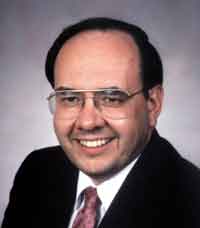
This is from Time Magazine. How do you feel about this practice?
Newspapers Catch Mug-Shot Mania
By Tim Padgett
Monday, Sep. 21, 2009
When Laurie, a 20-something saleswoman in Tampa, Fla., got pulled over this summer for a minor traffic violation, she (and the police officer) discovered that her driver's license had expired. She was arrested for that misdemeanor, was released and dutifully got her license renewed the next day.
Her case is hardly fodder for the crime pages. But since this is the Internet age, Laurie got her mug shot, name and arrest data splashed on TampaBay.com, the website of the Pulitzer-winning St. Petersburg Times. Mug Shots, a prominent fixture on the site's home page since it debuted earlier this year, posts every arrest photo from the four Tampa Bay-area counties, complete with the dazed scowls, bad hair and, for folks like Laurie, the humiliation of appearing alongside alleged murderers and car thieves. "This is completely horrible," says Laurie, who asked TIME not to print her last name to spare her further public shaming. "What if my boss sees it?"
Chances are, he already has. Mug-shot galleries are increasingly popular features on newspaper websites, which are on a crusade for more page views and the advertising revenue that accompanies additional eyeballs. While big dailies like New York's Newsday and the Chicago Tribune have caught on to the trend, mug-shot mania is especially prevalent in Florida, where liberal public-records laws make it easier to obtain these photos. "It's a huge traffic driver for us," says Roger Simmons, digital-news manager for the Orlando Sentinel, where mug shots garner about 2.5 million page views a month, 6% of the site's total. The Palm Beach Post estimates its online police blotter, which streams its own ads, drew half of the site's 45 million page views in May.
Print newspapers have long run police blotters, but they're usually just boring-looking text. Website blotters, on the other hand, can affordably offer every color portrait the local precinct shoots. Like television networks opting for cheaply produced reality shows, the newspaper sites believe they've found their cash cow: readers seem as eager to gawk at the average alleged DUI perp as they are to ogle celebrity mug shots on sites like the Smoking Gun.
That, media watchdogs warn, is a troubling sign that newspapers are using voyeurism to survive. "It feeds societal prurience with no journalistic value," says Robert Steele, a journalism professor at DePauw University and an ethics specialist for the nonprofit Poynter Institute for Media Studies, which owns the St. Petersburg Times. And while most mug-shot galleries advise viewers that the defendants are innocent until proved guilty, Steele says there's a "stench of unfairness to this kind of cyber-billboard." Robert Wesley, the chief public defender in Orlando, calls the mug-shot features "online Salem pillories."
Mug-shot backers argue that the cyber-billboard can help prevent repeat offenses. "If you're screwing up with DUI or domestic violence, it's harder to keep doing it if it's harder to hide it," says Dwayne Mayo, a former St. Petersburg security guard who publishes Cellmates, a weekly print tabloid dedicated solely to mug shots. Stephen Buckley, publisher of TampaBay.com, where mug shots draw about 13% of unique visitors each month, says his site didn't start up its gallery for the shame factor.
"But this is information that's local, useful and interesting," says Buckley, "and if someone types in his zip code to see who's been arrested in his neighborhood, yes, it can have practical benefits."
While editors like Simmons say they do worry when they hear puerile radio jocks making fun of the newest mug-shot faces, they reject the idea that they're cheapening mainstream media "We also list restaurants that don't pass inspection," says Simmons. "We're in the public-information business." True, but minor lawbreakers like Laurie are wondering why their business is now everyone else's too.
Monday, September 14, 2009

Christian Books on the NYT Best Seller List
New York Times Best Sellers for September 13:
The Shack by William P. Young (Windblown Media) is #2 on the paperback trade fiction list.
The Love Dare by Stephen & Alex Kendrick with Lawrence Kimbrough (B&H Publishing Group) is #2 on the paperback advice list.
The Five Love Languages by Gary Chapman (Northfield) is #4 on the paperback advice list.
The Total Money Makeover by Dave Ramsey (Thomas Nelson) is #9 on the hardcover advice, how-to, misc. list.
The Purpose Driven Life by Rick Warren (Zondervan) is #9 on the paperback advice list.
Game Plan for Life by Joe Gibbs with Jerry B. Jenkins (Tyndale House) is #13 on the hardcover advice list.
The Reason for God by Timothy Keller (Riverhead) is #13 on the paperback nonfiction list.
90 Minutes in Heaven by Don Piper w/ Cecil Murphey (Revell) is #16 on paperback nonfiction list.
Same Kind of Different as Me by Ron Hall and Denver Moore (Thomas Nelson) is #17 on the paperback nonfiction list.
Green by Ted Dekker (Thomas Nelson) is #20 on the hardcover fiction list.
The Shack by William P. Young (Windblown Media) is #2 on the paperback trade fiction list.
The Love Dare by Stephen & Alex Kendrick with Lawrence Kimbrough (B&H Publishing Group) is #2 on the paperback advice list.
The Five Love Languages by Gary Chapman (Northfield) is #4 on the paperback advice list.
The Total Money Makeover by Dave Ramsey (Thomas Nelson) is #9 on the hardcover advice, how-to, misc. list.
The Purpose Driven Life by Rick Warren (Zondervan) is #9 on the paperback advice list.
Game Plan for Life by Joe Gibbs with Jerry B. Jenkins (Tyndale House) is #13 on the hardcover advice list.
The Reason for God by Timothy Keller (Riverhead) is #13 on the paperback nonfiction list.
90 Minutes in Heaven by Don Piper w/ Cecil Murphey (Revell) is #16 on paperback nonfiction list.
Same Kind of Different as Me by Ron Hall and Denver Moore (Thomas Nelson) is #17 on the paperback nonfiction list.
Green by Ted Dekker (Thomas Nelson) is #20 on the hardcover fiction list.
Saturday, September 12, 2009
Espresso Book Machine
Monday noon I'll be talking with Dr. Prinsen's class about the book publishing business. Some think this Espresso Book Machine is the future of the industry, whereby libraries, bookstores, and other establishments can produce books on-demand for the customer. Pretty amazing, don't you think?
Religion Newswriters Conclude Annual Conference
Today, Saturday, September 12, is the final day of the Religion Newswriters Association convention which is meeting in Minneapolis.
Click on this link to note some of the program personnel, workshop topics, and activities. Members are largely religion writers for large daily papers and magazines--it is not a specifically evangelical organization, though many participants would be.
Click here: http://www.rna.org/?page=conference_schedule
Religion Newswriters Association Names 2009 Contest Winners
MINNEAPOLIS, Minn., Sept. 12 /Christian Newswire/ -- The Religion Newswriters Association today announced the winners of its 2009 contests for excellence in religion reporting in the mainstream media. The organization awarded more than $6,000 in eight award categories at its annual banquet, held Sept. 12 at the Minneapolis Marriott City Center.
Winners were selected from among 201 entries. Judges included current or former reporters, journalists and scholars who praised the entries as "top-notch" and "nuanced."
Religion Reporter of the Year
The Religion Reporter of the Year category recognizes excellence in enterprise reporting and versatility in the field of religion. The first-place winner is Moni Basu, formerly of The Atlanta Journal-Constitution, for a series of stories chronicling a military chaplain's service to his country from Baghdad to Walter Reed Army Hospital in Washington. Judges said the series "...had credibility and authenticity because the writer, in the best tradition of unblinking reporting, told her readers what she witnessed firsthand." Basu received $1,000.
Religion Writer of the Year
The Supple Religion Writer of the Year Award recognizes a reporter's writing skills. Religion Reporter of the Year first-place winner Moni Basu, took first once again for her series, "Chaplain Turner's War." Judges thought her series was "a vivid, touching entry about the many-faceted role of religion in an ungodly circumstance." Basu received another $1,000 prize.
Religion Reporter of the Year--Mid-sized Newspapers
Publications with weekday circulations between 50,001 and 150,000 compete in the Cornell Award. Jeff Brumley of The Florida Times-Union won first place for an extended look at how faith meets modern life. Judges said his stories "...provide authoritative voices for context but also give readers a glimpse of how regular folks fit in. The writing is smooth and easy to read." Brumley won $1,000.
Religion Reporter of the Year--Small Newspapers
The Cassels Award recognizes the religion reporter of the year at small publications with weekday circulations of 50,000 or below. This year's first-place winner was Melanie Smith of The Decatur Daily. Judges liked Smith's range of stories and said her reporting produced "beautifully written stories with a good grasp of lived faith." Smith won $1,000.
Best Religion Section or Pages
The Schachern Award recognizes excellence in religion pages or sections in the general circulation news media. This year's first-place winner was The Salt Lake Tribune for its "unmatched coverage in 2008 of issues that put The Church of Jesus Christ of the Latter-day Saints in the national spotlight." Judges took particular note of the section's presentation, saying it was "a diverse and well-designed weekly faith section and a lively mix of religion news, multimedia and interactive features online." The Tribune received a citation.
Best Student Religion Reporter
The Chandler Award is given to a student journalist who has a grasp of religion issues and writes in a fair and balanced way. The award was established through the generosity of Russell Chandler, former religion writer for the Los Angeles Times, and his wife, ML. This year's first-place winner was Adeniyi Amadou from Syracuse University. Judges said Amadou takes "the reader on a journey into worlds still seldom penetrated in the daily news--the lives of Muslims in America, their everyday hopes and anxieties." Amadou won $600.
Best Television Religion Reporting
Honoring excellence in religion reporting in general audience news television, this year's award went to Kim Lawton of Religion & Ethics NewsWeekly for a story that asked the question, "What would Martin Luther King, Jr. be like as a minister, if he were alive today?" The judges said, "Good writing and production values made this story the clear winner." Lawton received a citation for her work.
Best Radio Religion Reporting
Awarded for excellence in religion reporting general audience news radio, this year's award went to Stephanie Martin of KQED Radio in Northern California. "Glimpses of faith combined with justice being called into action made the story relevant," judges wrote. "The different people interviewed made the story flow well... It even raised the question: Is religion doctrine or revelation?" Martin received a citation.
Click on this link to note some of the program personnel, workshop topics, and activities. Members are largely religion writers for large daily papers and magazines--it is not a specifically evangelical organization, though many participants would be.
Click here: http://www.rna.org/?page=conference_schedule
Religion Newswriters Association Names 2009 Contest Winners
MINNEAPOLIS, Minn., Sept. 12 /Christian Newswire/ -- The Religion Newswriters Association today announced the winners of its 2009 contests for excellence in religion reporting in the mainstream media. The organization awarded more than $6,000 in eight award categories at its annual banquet, held Sept. 12 at the Minneapolis Marriott City Center.
Winners were selected from among 201 entries. Judges included current or former reporters, journalists and scholars who praised the entries as "top-notch" and "nuanced."
Religion Reporter of the Year
The Religion Reporter of the Year category recognizes excellence in enterprise reporting and versatility in the field of religion. The first-place winner is Moni Basu, formerly of The Atlanta Journal-Constitution, for a series of stories chronicling a military chaplain's service to his country from Baghdad to Walter Reed Army Hospital in Washington. Judges said the series "...had credibility and authenticity because the writer, in the best tradition of unblinking reporting, told her readers what she witnessed firsthand." Basu received $1,000.
Religion Writer of the Year
The Supple Religion Writer of the Year Award recognizes a reporter's writing skills. Religion Reporter of the Year first-place winner Moni Basu, took first once again for her series, "Chaplain Turner's War." Judges thought her series was "a vivid, touching entry about the many-faceted role of religion in an ungodly circumstance." Basu received another $1,000 prize.
Religion Reporter of the Year--Mid-sized Newspapers
Publications with weekday circulations between 50,001 and 150,000 compete in the Cornell Award. Jeff Brumley of The Florida Times-Union won first place for an extended look at how faith meets modern life. Judges said his stories "...provide authoritative voices for context but also give readers a glimpse of how regular folks fit in. The writing is smooth and easy to read." Brumley won $1,000.
Religion Reporter of the Year--Small Newspapers
The Cassels Award recognizes the religion reporter of the year at small publications with weekday circulations of 50,000 or below. This year's first-place winner was Melanie Smith of The Decatur Daily. Judges liked Smith's range of stories and said her reporting produced "beautifully written stories with a good grasp of lived faith." Smith won $1,000.
Best Religion Section or Pages
The Schachern Award recognizes excellence in religion pages or sections in the general circulation news media. This year's first-place winner was The Salt Lake Tribune for its "unmatched coverage in 2008 of issues that put The Church of Jesus Christ of the Latter-day Saints in the national spotlight." Judges took particular note of the section's presentation, saying it was "a diverse and well-designed weekly faith section and a lively mix of religion news, multimedia and interactive features online." The Tribune received a citation.
Best Student Religion Reporter
The Chandler Award is given to a student journalist who has a grasp of religion issues and writes in a fair and balanced way. The award was established through the generosity of Russell Chandler, former religion writer for the Los Angeles Times, and his wife, ML. This year's first-place winner was Adeniyi Amadou from Syracuse University. Judges said Amadou takes "the reader on a journey into worlds still seldom penetrated in the daily news--the lives of Muslims in America, their everyday hopes and anxieties." Amadou won $600.
Best Television Religion Reporting
Honoring excellence in religion reporting in general audience news television, this year's award went to Kim Lawton of Religion & Ethics NewsWeekly for a story that asked the question, "What would Martin Luther King, Jr. be like as a minister, if he were alive today?" The judges said, "Good writing and production values made this story the clear winner." Lawton received a citation for her work.
Best Radio Religion Reporting
Awarded for excellence in religion reporting general audience news radio, this year's award went to Stephanie Martin of KQED Radio in Northern California. "Glimpses of faith combined with justice being called into action made the story relevant," judges wrote. "The different people interviewed made the story flow well... It even raised the question: Is religion doctrine or revelation?" Martin received a citation.
Study on Christian College Students and Facebook Released
Addicted to Facebook? New Study Reveals Concerns and Impact of Social Media on Evangelical Christian College Students
WENHAM, MA-- When they're not sending text messages or tweets, today's Christian college students are spending time on Facebook. A lot of it. One in every three says he's spending 1-2 hours a day on the site; twelve percent report using it 2-4 hours each day and 2.8 percent report usage at 4-7 hours a day. That's in addition to other forms of social media and electronic usage such as video games, blogs, e-mail and Internet browsing.
The data comes from a new and unprecedented study by two Gordon College faculty members, Bryan C. Auday, professor of psychology, and Sybil Coleman, professor of social work. Released at the 60th anniversary conference for the Religion Newswriters Association in Minneapolis, Sept. 10, 2009, the study--"Pulling Off the Mask: The Impact of Social Networking Activities on Evangelical Christian College Students . . . A Self-Reported Study"--is the only one of its kind to target and give voice specifically to evangelical Christian college students. It explores the specific trends, behaviors and attitudes Christian students perceive of themselves regarding social media usage.
"We'd received enough anecdotal evidence from college students to raise some red flags about these issues," said Coleman. "But we felt it was crucial to gather scientific data from students about both the benefits and concerns (of usage) if we were going to get a clearer picture about how we could best respond."
The study was conducted in April 2009 entirely online and surveyed 1,342 students between 18 and 27 years of age on four evangelical Christian college campuses with an equal class representation. Seventy percent of all participants were women.
Questions included the amount of time participants engage in a specific electronic activity during an average day; the primary reason for using a specific site; the impact (both positive and negative) of usage on personal life and relationships; the ability or inability to stop usage, and the possible conflict of usage with personal Christian values.
"It isn't yet clear whether over-zealous use of computer-based activities will be formally accepted in the U.S. as a distinctive, unique form of addiction," said Auday. "What is clear from our study is that a surprisingly high percentage of Christian students who frequently engage in electronic activities report several troubling negative consequences. But ironically they also mention many positive outcomes related to the time that is spent on Facebook or text messaging their friends."
Over half (54 percent) reported that they were "neglecting important areas of their life" due to spending too much time on these sites. And when asked if one were to define addiction as "any behavior you cannot stop, regardless of the consequences," 12.7 percent affirmed that they believe they are addicted to some form of electronic activity. Another 8.7 percent report that they are unsure. For small campuses, that translates into large numbers. And 21 percent felt that their level of engagement with electronic activities at times caused a conflict with their Christian values.
The students' voices--and solutions--themselves add perspective to the study. Some described regular fasts from Facebook, avoiding places with Internet access, deleting their Facebook accounts altogether, or imposing self-limits.
"During the critical years of young adulthood, Christian college students need to be mindful that academic and social development are important, yet incomplete in terms of nurturing the whole person. The spiritual condition also needs attention," said Coleman. "Since the evidence from this study raises several concerns for their time management skills, possible neglect of important areas in their lives and their psychological and spiritual health, the next question needs to be, how can we help?"
For more information or to arrange an interview with the professors, please contact Jo Kadlecek, Office of College Communication, 978.867.4752 or jo.kadlecek@gordon.edu.
###
WENHAM, MA-- When they're not sending text messages or tweets, today's Christian college students are spending time on Facebook. A lot of it. One in every three says he's spending 1-2 hours a day on the site; twelve percent report using it 2-4 hours each day and 2.8 percent report usage at 4-7 hours a day. That's in addition to other forms of social media and electronic usage such as video games, blogs, e-mail and Internet browsing.
The data comes from a new and unprecedented study by two Gordon College faculty members, Bryan C. Auday, professor of psychology, and Sybil Coleman, professor of social work. Released at the 60th anniversary conference for the Religion Newswriters Association in Minneapolis, Sept. 10, 2009, the study--"Pulling Off the Mask: The Impact of Social Networking Activities on Evangelical Christian College Students . . . A Self-Reported Study"--is the only one of its kind to target and give voice specifically to evangelical Christian college students. It explores the specific trends, behaviors and attitudes Christian students perceive of themselves regarding social media usage.
"We'd received enough anecdotal evidence from college students to raise some red flags about these issues," said Coleman. "But we felt it was crucial to gather scientific data from students about both the benefits and concerns (of usage) if we were going to get a clearer picture about how we could best respond."
The study was conducted in April 2009 entirely online and surveyed 1,342 students between 18 and 27 years of age on four evangelical Christian college campuses with an equal class representation. Seventy percent of all participants were women.
Questions included the amount of time participants engage in a specific electronic activity during an average day; the primary reason for using a specific site; the impact (both positive and negative) of usage on personal life and relationships; the ability or inability to stop usage, and the possible conflict of usage with personal Christian values.
"It isn't yet clear whether over-zealous use of computer-based activities will be formally accepted in the U.S. as a distinctive, unique form of addiction," said Auday. "What is clear from our study is that a surprisingly high percentage of Christian students who frequently engage in electronic activities report several troubling negative consequences. But ironically they also mention many positive outcomes related to the time that is spent on Facebook or text messaging their friends."
Over half (54 percent) reported that they were "neglecting important areas of their life" due to spending too much time on these sites. And when asked if one were to define addiction as "any behavior you cannot stop, regardless of the consequences," 12.7 percent affirmed that they believe they are addicted to some form of electronic activity. Another 8.7 percent report that they are unsure. For small campuses, that translates into large numbers. And 21 percent felt that their level of engagement with electronic activities at times caused a conflict with their Christian values.
The students' voices--and solutions--themselves add perspective to the study. Some described regular fasts from Facebook, avoiding places with Internet access, deleting their Facebook accounts altogether, or imposing self-limits.
"During the critical years of young adulthood, Christian college students need to be mindful that academic and social development are important, yet incomplete in terms of nurturing the whole person. The spiritual condition also needs attention," said Coleman. "Since the evidence from this study raises several concerns for their time management skills, possible neglect of important areas in their lives and their psychological and spiritual health, the next question needs to be, how can we help?"
For more information or to arrange an interview with the professors, please contact Jo Kadlecek, Office of College Communication, 978.867.4752 or jo.kadlecek@gordon.edu.
###
Thursday, September 10, 2009
What Crisis?
From BuzzMachine by Jeff Jarvis:
What crisis?
At the Aspen Institute FOCAS event, where we presented our CUNY New Business Models for News, there came to be an unspoken debate – that is, an idea thrown out but never really engaged – about whether there is a crisis in news and journalism.
I now say that there isn’t a crisis. That’s not what I used to say. Indeed, one of my mistakes in this debate has been accepting the assumption that there was one and allowing the debate to start there: “How are you going to save journalism from the scourge of your damned internet?”
Instead, the discussion should start here: “Look at all the new opportunities there are to gather and share news in new ways, to expand and improve it, to change journalism’s relationship with its public and make it collaborative, to find new efficiencies and lower costs and thus to return to profitability and sustainability.”
One’s view on the question determines one’s response and its level of desperation or optimism.
To generalize unfairly, those who say there is a crisis – most often, those whose legacy institutions are fading – are often known to react by:
* Looking for others to blame for the purported problem – Google, bloggers, aggregators, craigslist, et al (which is to say, not taking responsibility for their own role in it);
* Trying to preserve their past (expecting newsrooms to be supported, unchanged, by some manna from the market – paid content being only the latest prayer);
* Seeking protection from government (antitrust exemptions) or the law (copyright extensions);
* Demanding tribute (saying they are entitled to get paid because what they do is worth so much);
* Giving up (talking about abandoning growth by building walls or shifting to not-for-profit and begging for charitable support).
Those who say there is not a crisis (for- and not-for-profit entrepreneurs, inventors, and investors) instead tend to:
* Look to innovation (collaboration, algorithms, data, streams) to create new ways to make news;
* Look to entrepreneurship to sustain journalism (in blogs and networks);
* Be open to new ways to define journalism;
* Irritate the legacy people by not seeing the crisis they see.
So if we’re looking for an original sin in this saga, I’ll confess that mine has been viewing news from the perspective of the old controllers rather than from that of the community (the people formerly known as the audience), the inventors, and the entrepreneurs. At Aspen, it was Sue Gardner, head of the Wikimedia Foundation, who made me see this as she talked about the wonders that have been done with news on Wikipedia, which no one could have predicted. Being open to such new possibilities is key to building news’ new future.
There are so many reasons to be optimistic about the future of news:
* The audience for news is only growing online.
* The audience isn’t an audience anymore. News is becoming more and more collaborative as witnesses share what they see and communities join together to create news.
* Those who make news are more accountable to their publics.
* News is opening up to more diverse voices and perspectives.
* News is becoming far more specialized and targeted, which is to say that it can give deeper service to more communities.
* New technology – and freedom from the limits of the old means of production and distribution – allow the reinvention of the form of news, organized around streams, topics, ideas, and concepts still being imagined.
* News is more efficient thanks to the link – do what you do best and link to the rest – and specialization. That is what makes it more sustainable.
Some – but not nearly enough – of this optimism is inherent in the future we imagined in the New Business Models for News Project. We used the financial lingua franca and assumptions of the present world – CPM advertising, page views per user, even the concept of a page and a site – because that made it easier to describe what can follow and made our vision of sustainable news more credible. We were criticized for being too optimistic about audience penetration and ad rates.
But I think we were not nearly optimistic enough. We have to leap past the idea that news is a collection of pages worth 12 views per user per month (or, quoting Martin Langeveld, 0.5% of time spent online). News shouldn’t be a site we force people to come to but, as Google’s Marissa Mayer said at Aspen, we have to find ways to insinuate news and its value into anyone’s – her words – hyperpersonal news stream. We shouldn’t create sites but instead create platforms that enable communities to share what they know and need to know, with journalists contributing value – reporting, editing, aggregation, curation – to their ecosystem. We should build and assume much greater engagement and define engagement not as consumption but as creation. We must value that creation (and not consider it merely a reaction to what we do). We should forecast much greater relevance and thus value for both the market and the marketer.
We should set the bar way higher. And that is the real problem with letting the discussion start with the pessimism, depression, and desperation of the perceived crisis among the past’s players, who aren’t inventing the future. It limits the possibilities.
What crisis?
At the Aspen Institute FOCAS event, where we presented our CUNY New Business Models for News, there came to be an unspoken debate – that is, an idea thrown out but never really engaged – about whether there is a crisis in news and journalism.
I now say that there isn’t a crisis. That’s not what I used to say. Indeed, one of my mistakes in this debate has been accepting the assumption that there was one and allowing the debate to start there: “How are you going to save journalism from the scourge of your damned internet?”
Instead, the discussion should start here: “Look at all the new opportunities there are to gather and share news in new ways, to expand and improve it, to change journalism’s relationship with its public and make it collaborative, to find new efficiencies and lower costs and thus to return to profitability and sustainability.”
One’s view on the question determines one’s response and its level of desperation or optimism.
To generalize unfairly, those who say there is a crisis – most often, those whose legacy institutions are fading – are often known to react by:
* Looking for others to blame for the purported problem – Google, bloggers, aggregators, craigslist, et al (which is to say, not taking responsibility for their own role in it);
* Trying to preserve their past (expecting newsrooms to be supported, unchanged, by some manna from the market – paid content being only the latest prayer);
* Seeking protection from government (antitrust exemptions) or the law (copyright extensions);
* Demanding tribute (saying they are entitled to get paid because what they do is worth so much);
* Giving up (talking about abandoning growth by building walls or shifting to not-for-profit and begging for charitable support).
Those who say there is not a crisis (for- and not-for-profit entrepreneurs, inventors, and investors) instead tend to:
* Look to innovation (collaboration, algorithms, data, streams) to create new ways to make news;
* Look to entrepreneurship to sustain journalism (in blogs and networks);
* Be open to new ways to define journalism;
* Irritate the legacy people by not seeing the crisis they see.
So if we’re looking for an original sin in this saga, I’ll confess that mine has been viewing news from the perspective of the old controllers rather than from that of the community (the people formerly known as the audience), the inventors, and the entrepreneurs. At Aspen, it was Sue Gardner, head of the Wikimedia Foundation, who made me see this as she talked about the wonders that have been done with news on Wikipedia, which no one could have predicted. Being open to such new possibilities is key to building news’ new future.
There are so many reasons to be optimistic about the future of news:
* The audience for news is only growing online.
* The audience isn’t an audience anymore. News is becoming more and more collaborative as witnesses share what they see and communities join together to create news.
* Those who make news are more accountable to their publics.
* News is opening up to more diverse voices and perspectives.
* News is becoming far more specialized and targeted, which is to say that it can give deeper service to more communities.
* New technology – and freedom from the limits of the old means of production and distribution – allow the reinvention of the form of news, organized around streams, topics, ideas, and concepts still being imagined.
* News is more efficient thanks to the link – do what you do best and link to the rest – and specialization. That is what makes it more sustainable.
Some – but not nearly enough – of this optimism is inherent in the future we imagined in the New Business Models for News Project. We used the financial lingua franca and assumptions of the present world – CPM advertising, page views per user, even the concept of a page and a site – because that made it easier to describe what can follow and made our vision of sustainable news more credible. We were criticized for being too optimistic about audience penetration and ad rates.
But I think we were not nearly optimistic enough. We have to leap past the idea that news is a collection of pages worth 12 views per user per month (or, quoting Martin Langeveld, 0.5% of time spent online). News shouldn’t be a site we force people to come to but, as Google’s Marissa Mayer said at Aspen, we have to find ways to insinuate news and its value into anyone’s – her words – hyperpersonal news stream. We shouldn’t create sites but instead create platforms that enable communities to share what they know and need to know, with journalists contributing value – reporting, editing, aggregation, curation – to their ecosystem. We should build and assume much greater engagement and define engagement not as consumption but as creation. We must value that creation (and not consider it merely a reaction to what we do). We should forecast much greater relevance and thus value for both the market and the marketer.
We should set the bar way higher. And that is the real problem with letting the discussion start with the pessimism, depression, and desperation of the perceived crisis among the past’s players, who aren’t inventing the future. It limits the possibilities.
Tuesday, September 8, 2009
The Old Man and the Sea
Last night we were talking about Hemingway's "The Old Man and the Sea." This is from Garrison Keillor's Writer's Almanac for today:
September 8 -- It was on this day in 1952 that Ernest Hemingway (books by this author) came out with his last novel, The Old Man and the Sea. He'd had a hard time getting back to writing since covering World War II as a journalist. He finally published his first novel in 10 years in 1950, Across the River and Into the Trees, about World War II. It got terrible reviews.
Hemingway was working on a long novel that he called The Sea Book, about different aspects of the sea. He got the idea for it while looking for submarines in his fishing boat. The book had three sections, which he called "The Sea When Young," "The Sea When Absent," and "The Sea in Being," and it had an epilogue about an old fisherman. He wrote more than 800 pages of "The Sea Book" and rewrote them more than a hundred times, but the book still didn't seem finished. Finally, he decided to publish just the epilogue about the old fisherman, which he called The Old Man and the Sea.
The novel begins, "He was an old man who fished alone in a skiff in the Gulf Stream and he had gone eighty-four days now without taking a fish." It tells the story of an old man who catches the biggest fish of his life, only to have it eaten by sharks before he can get back to shore.
The Old Man and the Sea won the Pulitzer Prize, and two years later, Hemingway won the Nobel Prize in literature. He didn't publish another novel in his lifetime.
September 8 -- It was on this day in 1952 that Ernest Hemingway (books by this author) came out with his last novel, The Old Man and the Sea. He'd had a hard time getting back to writing since covering World War II as a journalist. He finally published his first novel in 10 years in 1950, Across the River and Into the Trees, about World War II. It got terrible reviews.
Hemingway was working on a long novel that he called The Sea Book, about different aspects of the sea. He got the idea for it while looking for submarines in his fishing boat. The book had three sections, which he called "The Sea When Young," "The Sea When Absent," and "The Sea in Being," and it had an epilogue about an old fisherman. He wrote more than 800 pages of "The Sea Book" and rewrote them more than a hundred times, but the book still didn't seem finished. Finally, he decided to publish just the epilogue about the old fisherman, which he called The Old Man and the Sea.
The novel begins, "He was an old man who fished alone in a skiff in the Gulf Stream and he had gone eighty-four days now without taking a fish." It tells the story of an old man who catches the biggest fish of his life, only to have it eaten by sharks before he can get back to shore.
The Old Man and the Sea won the Pulitzer Prize, and two years later, Hemingway won the Nobel Prize in literature. He didn't publish another novel in his lifetime.
Subscribe to:
Comments (Atom)