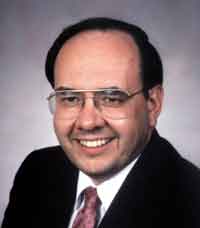
Gary Gerard has cancelled our Newspaper Journalism trip to the Times-Union this evening. We will be working to reschedule it.
Class, as usual, at 6. You would do well to refresh yourself on the textbook reading for this week, current events, and the blog content.
See you then. Sorry for the last-minute change.
Monday, November 9, 2009

Friday, November 6, 2009
Sheckler to Indianapolis
CHRISTIAN SHECKLER, a junior at Grace College, will intern with the Indiana Republican Senate caucus from January to approximately mid-March 2010. Sheckler, who wants to go into political writing after graduation, heard about the internship from Dr. Paulette Sauders, chair of the Department of English and Journalism at Grace.
Sheckler interviewed at the State House in Indianapolis in October and was offered an internship four days later. As an intern, he will write news releases, radio feeds, podcasts, guest columns, newsletters, and other items. Sheckler is a journalism and communication major from Goshen, Ind.
Sheckler interviewed at the State House in Indianapolis in October and was offered an internship four days later. As an intern, he will write news releases, radio feeds, podcasts, guest columns, newsletters, and other items. Sheckler is a journalism and communication major from Goshen, Ind.
Thursday, November 5, 2009
Is This a Good Time to Start a Magazine?
Is this a good or a bad time to start a magazine?
Roy Reiman, founder of Reiman Publications (Country and Taste of Home among many others) and current publisher of Our Iowa magazine, was the keynote speaker for the 26th annual Fall Journalism Week at the University of Mississippi’s School of Journalism and New Media. He spoke about the Gloom, Doom and Zoom in the media industry.
He was asked after his presentation what will he tell someone who asks him what does it take to launch a new magazine in today’s marketplace. Click on the video to hear his answer.
Roy Reiman, founder of Reiman Publications (Country and Taste of Home among many others) and current publisher of Our Iowa magazine, was the keynote speaker for the 26th annual Fall Journalism Week at the University of Mississippi’s School of Journalism and New Media. He spoke about the Gloom, Doom and Zoom in the media industry.
He was asked after his presentation what will he tell someone who asks him what does it take to launch a new magazine in today’s marketplace. Click on the video to hear his answer.
Reader's Digest Drops Rick Warren Magazine
 Purpose Driven Club Fails to Connect With Members' Money
Reader's Digest Drops Rick Warren Title; Content Moves Online, for Free
by Nat Ives
NEW YORK (AdAge.com) -- Maybe membership clubs aren't the paid content model of the moment after all.
Rick Warren's membership club -- which charged $29.99 a year for a quarterly magazine, four spiritual DVDs, four workbooks and access to a social networking site -- is dropping the fees, abandoning the magazine and going online-only.
Mr. Warren, pastor of Saddleback Church and a best-selling author, and Reader's Digest Association introduced the Purpose Driven Connection club and magazine last January, guaranteeing paid circulation of 500,000 but projecting a rate base of 1 million by the third issue this fall. But takers proved far fewer than they had anticipated; the fourth issue, shipping this month, will be the last in print.
The magazine didn't seem to catch on with mainstream advertisers. The first issue included a mix of ads from Christian organizations, ads promoting Mr. Warren's own products and a two-page spread from one major marketer, Procter & Gamble. Later advertisers included Oriental Trading and Big Idea, which produces "Veggie Tales" books and videos.
Both Mr. Warren and Reader's Digest Association described the project as a net positive. "For RDA's part, we learned a lot about the dynamics of serving a community like this with a multiplatform communication, and we may use those learnings going forward with other, potentially larger projects of this type," a Reader's Digest spokesman said by e-mail. "For Saddleback's part, they found that their community loved the content but paying for it was an issue."
Mr. Warren said the web turned out to have some crucial advantages. "From our viewpoint," he said in a statement, "an online magazine allows us to minister to more people internationally, provide more content and features than we could fit in a print magazine, create interaction and two-way dialogue, and offer it for free."
Reader's Digest, which has been in Chapter 11 since the end of the summer, said the shutdown won't lead to any layoffs. One full-time staffer already left after editing the fourth issue; the website editor is continuing in that role during the transition, which will see Reader's Digest exit the project and Saddleback Church assume full control. Reader's Digest will refund any unused print subscriptions.
Wednesday, November 4, 2009
Times-Union Monday Night
Newspaper Journalism class will be going this Monday evening, November 9, to the Warsaw Times-Union offices for a brief tour and talk by the editor of the paper, Gary Gerard.
Those of you who said you could drive, please have your vehicles in the general vicinity of the Philathea back door.
We'll gather in our classroom at 6 and I'll collect the assignments. Then we'll go downtown, until Mr. Gerard is finished with his talk to us about community journalism. Please come prepared to ask him questions and to interact with him on the reporter's life, how he handles beat assignments, etc.
Then we might--just might--find ourselves stopping at Courthouse Coffee to talk about the experience and to debrief (coffee's on me).
The Times-Union newspaper office is located at the corner of Indiana and Market streets in downtown Warsaw
-TW
Those of you who said you could drive, please have your vehicles in the general vicinity of the Philathea back door.
We'll gather in our classroom at 6 and I'll collect the assignments. Then we'll go downtown, until Mr. Gerard is finished with his talk to us about community journalism. Please come prepared to ask him questions and to interact with him on the reporter's life, how he handles beat assignments, etc.
Then we might--just might--find ourselves stopping at Courthouse Coffee to talk about the experience and to debrief (coffee's on me).
The Times-Union newspaper office is located at the corner of Indiana and Market streets in downtown Warsaw
-TW
Tuesday, November 3, 2009
Grisham: 'Printed Books Are Endangered Species'

Grisham: Printed books are endangered species
By Vidya Rao
He’s sold more than 250 million books around the world — but even John Grisham is worried about the future of the printed word in the wake of deep discounting of best-sellers by major retailers and the advent of e-book readers like Amazon’s Kindle.
Grisham’s latest book, “Ford County,” is among those being sold for $12 at Amazon.com, and it is also deeply discounted at Wal-Mart and Target as part of a price war that has erupted between the competitors
“Truthfully it doesn’t affect me — in the short term,” Grisham told Matt Lauer on TODAY. “But it’s a disaster in the long term.”
Bleak future
“Ford County,” which is suggested to retail for $24, is one of 10 books that are being deeply discounted. Books by Stephen King, Sarah Palin and James Patterson that are supposed to sell for between $25 and $35 are among the titles now being sold by the companies for $8.98 and $9.
Paying full price for the books is essential to keep publishers, booksellers and writers in business, Grisham said.
“That enables me to make a royalty, the publisher to make a profit and the bookstore to make a profit,” he said. “If a new book is worth $9, we have seriously devalued that book.”
In response to the discounting, the American Booksellers Association wrote a letter to the Department of Justice on Oct. 22, asking that it investigate the companies’ practices, calling them “illegal predatory pricing.” But Grisham, who was a practicing attorney before becoming a writer, says that there’s not much that can be done to fight the discount pricing in court — even though he calls the practice “short-sighted.”
“It’s a free market — there’s no legal case,” he explained. “I’m not itching to sue Amazon or Wal-Mart … they sell a lot of books. But the future is very uncertain with books.”
Widespread adoption of e-book readers like Amazon’s Kindle will “wipe out tons of bookstores and publishers” and make it hard for aspiring writers to get published, John Grisham predicts.
E-books eat away
And the price war is not the only challenge the publishing industry faces nowadays. E-books sold for the Amazon Kindle and the Sony Reader have eaten into profits of publishers and booksellers — and Grisham says the future looks bleak.
Regarding reading books electronically, he told Lauer: “If half of us are going to be doing it, then you’re going to wipe out tons of bookstores and publishers and we’re going to buy it all online.
“I’m probably going to be all right — but the aspiring writers are going to have a very hard time getting published,” he added.
Grisham’s book “Ford County,” released today, is a departure from his usual fictional legal thrillers. The book is comprised of seven short stories set in a small town in Ford County, Miss.
Monday, November 2, 2009
The Christian Journalist's Dilemma
From WorldMagBlog:
The Christian journalist’s dilemma
by Andrée Seu
“Take no part in the unfruitful works of darkness, but instead expose them. For it is shameful even to speak of the things they do in secret” (Ephesians 5:11-12).
This Bible passage is bound to increasingly have Christian journalists in a bit of a double bind. Which is it—do we expose the works of darkness (verse 11)? Or is it shameful even to mention them (verse 12)?
I’m assuming that since the verses are back to back in the chapter, we need to figure out a way to comply with both somehow. So I will hazard to mention a recent deed of darkness and do it in the least shameful way possible, hoping to expose the act while avoiding the potential prurient pitfalls.
One good thing about not being a TV watcher is that I am impervious to the “frog in the pot syndrome.” Everything shocks me because the last I tuned in was to the 1960’s Bonanza.
So when my friend told me about the Sunday, October 25 episode of HBO’s Curb Your Enthusiasm, I suffered a genuine Alvin Toffler “future shock.” The plotline involves Larry David, who plays a caricature himself on the show, going to the bathroom in the home of a Catholic woman where there is a painting of Jesus on the wall next to the toilet. The David character somehow manages to spray a drop of urine onto the icon, and it lands on Jesus’ cheek, below his eye.
Later the woman emerges from the loo and announces that a miracle has happened: The Jesus picture is crying. The audience has a good laugh at the stupid Christian’s expense.
The German population of the 1930s didn’t wake up one morning and decide to kill Jews. The relentless poisoning of the atmosphere through media softened them up. For instance, Julius Streicher’s Der Sturner magazine ran cartoons featuring characters with large noses, engaged in immoral acts. Ridicule is the passport into the violence to come.
The Christian journalist’s dilemma
by Andrée Seu
“Take no part in the unfruitful works of darkness, but instead expose them. For it is shameful even to speak of the things they do in secret” (Ephesians 5:11-12).
This Bible passage is bound to increasingly have Christian journalists in a bit of a double bind. Which is it—do we expose the works of darkness (verse 11)? Or is it shameful even to mention them (verse 12)?
I’m assuming that since the verses are back to back in the chapter, we need to figure out a way to comply with both somehow. So I will hazard to mention a recent deed of darkness and do it in the least shameful way possible, hoping to expose the act while avoiding the potential prurient pitfalls.
One good thing about not being a TV watcher is that I am impervious to the “frog in the pot syndrome.” Everything shocks me because the last I tuned in was to the 1960’s Bonanza.
So when my friend told me about the Sunday, October 25 episode of HBO’s Curb Your Enthusiasm, I suffered a genuine Alvin Toffler “future shock.” The plotline involves Larry David, who plays a caricature himself on the show, going to the bathroom in the home of a Catholic woman where there is a painting of Jesus on the wall next to the toilet. The David character somehow manages to spray a drop of urine onto the icon, and it lands on Jesus’ cheek, below his eye.
Later the woman emerges from the loo and announces that a miracle has happened: The Jesus picture is crying. The audience has a good laugh at the stupid Christian’s expense.
The German population of the 1930s didn’t wake up one morning and decide to kill Jews. The relentless poisoning of the atmosphere through media softened them up. For instance, Julius Streicher’s Der Sturner magazine ran cartoons featuring characters with large noses, engaged in immoral acts. Ridicule is the passport into the violence to come.
Subscribe to:
Comments (Atom)