Terry Mattingly: Sarah Palin's evangelical-speak
According to a top strategist in the presidential campaign of Sen. John McCain, Sarah Palin believed that the decision to pick her as the Arizona Republican’s running mate was actually made by Almighty God.
Translated into the logic of an Associated Press report, this political theology sounded like this.
“In an interview with the CBS news magazine ‘60 Minutes,’ Steve Schmidt described Palin as ‘very calm — nonplused’ after McCain met with her at his Arizona ranch just before putting her on the Republican ticket. ... Schmidt said he asked Palin about her serenity in the face of becoming ‘one of the most famous people in the world.’ He quoted her as saying, ‘It’s God’s plan.’ “
The Washington Post headline proclaimed, “McCain aide: Palin believed candidacy ‘God’s plan.’ “
After this latest Palin firestorm it’s time to ask: Why can’t journalists learn to understand how ordinary evangelicals talk?
To make matters worse, readers have no chance to understand this private, secondhand quotation because it has been stripped of all context. There is no way to know if this snippet is the entire Palin quote or merely what Schmidt has chosen to share as part of the ongoing fighting between factions inside McCain’s failed campaign.
The big question: Did Palin say her nomination was part of “God’s plan for her life” or did she, as implied, dare to claim that it was part of “God’s plan for America”? Most press reports have implied the latter, linking her faith-based confidence with speculation that she will run for president.
This has made her an easy target for critics — again.
“Palin isn’t a minister or priest. She isn’t a bishop. She is a celebrity,” noted Andrew Sullivan, on his Atlantic Monthly Web site.
“When she says ‘it’s God’s will,’ she is saying, it seems to me, either that her destiny is foretold as a modern-day Esther ... or that it doesn’t matter what decisions she makes in office because God is in charge. So she is either filled with delusions of grandeur and prone to say things that believing Christians keep private out of humility; or she thinks she’s some kind of Messiah figure.”
However, anyone with a working knowledge of evangelical lingo will understand that what Palin probably said was that this stunning door onto the national stage was, win or lose, part of “God’s plan” for her life.
This is the approach that she consistently uses in her memoir, “Going Rogue,” when discussing the twists and turns in her life — from an unexpected chance to climb the political ladder in Alaska to the challenge of an unexpected pregnancy, leading to the birth of a child with special needs.
In other words, Palin believes in a God who is mysteriously working through the choices and events — painful and joyful — that have shaped her life. This is a perfectly ordinary belief among millions of evangelical Protestants and, truth be told, many other believers as well.
It may help to recall that, during the 2008 campaign, Charles Gibson of ABC News struggled to understand another piece of evangelical-speak drawn from Palin remarks about the Iraq War.
The governor told a church audience: “Pray for our military men and women who are striving to do what is right. Also, for this country, that our leaders, our national leaders, are sending (soldiers) out on a task that is from God. That’s what we have to make sure that we’re praying for, that there is a plan and that that plan is God’s plan.”
However, in his interview with Palin, Gibson said: “You said recently, in your old church, ‘Our national leaders are sending U.S. soldiers on a task that is from God.’ Are we fighting a holy war?”
Palin responded: “You know, I don’t know if that was my exact quote.”
Gibson fired back: “Exact words.”
Not exactly. Palin was reminding the worshippers to pray that God had a plan in Iraq and that decisions made by America’s leaders would be consistent with that plan. She was not, as Gibson said, stating that this was a certainty.
Bottom line: It may be time to circulate a basic “How Evangelicals Talk” phrase book that can be used in elite newsrooms, much like the one that journalists needed when then-Gov. Jimmy “born again” Carter first emerged on the national scene.
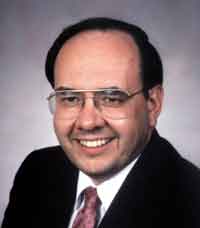
Terry Mattingly directs the Washington Journalism Center at the Council for Christian Colleges and Universities. Contact him at tmattinglyAcccu.org or www.tmatt.net.
Friday, January 15, 2010

E&P Sold, Will Resume Publication
Editor & Publisher Sold To Duncan McIntosh Co. Inc.
Will Resume Publication In Print and Online
NEW YORK CITY -- Editor & Publisher, the only independent news organization
reporting on all aspects of the transforming newspaper business, will
resume publication in print and online following its sale Thursday from The
Nielsen Company to Duncan McIntosh Co. Inc., the Irvine, Calif.-based
magazine and newspaper publisher.
The announcement came exactly two weeks after the closing of E&P, the
acknowledged "bible of the newspaper industry," which can trace its roots
back 126 years.
Duncan McIntosh said he knew immediately when Nielsen announced in December
the closing of E&P that he wanted to keep the magazine and its digital
newsgathering properties going.
"Such a critical information source for a newspaper industry so desperately
in need of help should not go away," McIntosh said. "I've been a reader of
E&P over the course of 30 years and know its incredible value to readers and
advertisers."
Terms of the transaction were not disclosed.
Charles "Chas" McKeown, who will continue as publisher of E&P, hailed the
sale and the speed and professionalism with which McIntosh and Nielsen
completed the transaction. "Everyone knew what was at stake here," McKeown
said. "Newspapers, which are transforming beyond the printed page to all
forms of digital media, simply could not lose the one place where the
industry could have a conversation with itself and exchange ideas and best
practices for navigating the uncertain waters ahead, exemplified by our
Interactive Media Conference which includes cable, TV, radio and other
media."
Duncan McIntosh Co. Inc. is the publisher of several well-respected boating
magazines and newspapers, including Boating World magazine; Sea Magazine,
America's Western Boating Magazine; The Log Newspaper; and FishRap. The
company also produces the Newport Boat Show in the spring and the Lido Yacht
Expo in the fall. Both shows are held in California.
Mark Fitzgerald, a 26-year veteran, was named as the new E&P editor. He had
most recently served as E&P's editor-at-large.
"I'm of course grateful to Duncan for stepping up to keep E&P alive, and
I've been extremely impressed by the passion and energy he is bringing to
this enterprise," Fitzgerald said. "I'm humbled to be leading a news
organization that I've always believed produces one of the best news reports
of any industry sector."
E&P's new owners announced plans to publish a February print issue and
continue the monthly print publication schedule. Online reporting on its Web
site, http://nielsencomm.net/r/?ZXU=1064840&ZXD=392011931, began immediately
upon the close of the transaction Thursday, as did posting on its two
blogs, the business-oriented Fitz & Jen Give You The Business,
http://nielsencomm.net/r/?ZXU=1064841&ZXD=392011931, and The E&P Pub,
http://nielsencomm.net/r/?ZXU=1064842&ZXD=392011931.
Will Resume Publication In Print and Online
NEW YORK CITY -- Editor & Publisher, the only independent news organization
reporting on all aspects of the transforming newspaper business, will
resume publication in print and online following its sale Thursday from The
Nielsen Company to Duncan McIntosh Co. Inc., the Irvine, Calif.-based
magazine and newspaper publisher.
The announcement came exactly two weeks after the closing of E&P, the
acknowledged "bible of the newspaper industry," which can trace its roots
back 126 years.
Duncan McIntosh said he knew immediately when Nielsen announced in December
the closing of E&P that he wanted to keep the magazine and its digital
newsgathering properties going.
"Such a critical information source for a newspaper industry so desperately
in need of help should not go away," McIntosh said. "I've been a reader of
E&P over the course of 30 years and know its incredible value to readers and
advertisers."
Terms of the transaction were not disclosed.
Charles "Chas" McKeown, who will continue as publisher of E&P, hailed the
sale and the speed and professionalism with which McIntosh and Nielsen
completed the transaction. "Everyone knew what was at stake here," McKeown
said. "Newspapers, which are transforming beyond the printed page to all
forms of digital media, simply could not lose the one place where the
industry could have a conversation with itself and exchange ideas and best
practices for navigating the uncertain waters ahead, exemplified by our
Interactive Media Conference which includes cable, TV, radio and other
media."
Duncan McIntosh Co. Inc. is the publisher of several well-respected boating
magazines and newspapers, including Boating World magazine; Sea Magazine,
America's Western Boating Magazine; The Log Newspaper; and FishRap. The
company also produces the Newport Boat Show in the spring and the Lido Yacht
Expo in the fall. Both shows are held in California.
Mark Fitzgerald, a 26-year veteran, was named as the new E&P editor. He had
most recently served as E&P's editor-at-large.
"I'm of course grateful to Duncan for stepping up to keep E&P alive, and
I've been extremely impressed by the passion and energy he is bringing to
this enterprise," Fitzgerald said. "I'm humbled to be leading a news
organization that I've always believed produces one of the best news reports
of any industry sector."
E&P's new owners announced plans to publish a February print issue and
continue the monthly print publication schedule. Online reporting on its Web
site, http://nielsencomm.net/r/?ZXU=1064840&ZXD=392011931, began immediately
upon the close of the transaction Thursday, as did posting on its two
blogs, the business-oriented Fitz & Jen Give You The Business,
http://nielsencomm.net/r/?ZXU=1064841&ZXD=392011931, and The E&P Pub,
http://nielsencomm.net/r/?ZXU=1064842&ZXD=392011931.
Thursday, January 14, 2010
Sports Coverage is Changing
From Journalism 2.0:
There is no future for sports coverage that is expensive and slow
Editor’s Note: Today’s guest writer is Jay Huerbin, a journalism major at the University of Pittsburgh and intern at Serra Media. You can read more from Jay on his blog and follow him at @jayhuerbin.
By Jay Huerbin
As both a journalism student and the sports editor at my university’s student newspaper, I take the future of journalism very seriously. After all, my life after graduation depends on it.
This is why I found a column about the future of newspapers, specifically the sports section, so interesting. In a Poynter column, Jason Fry, a freelance reporter and journalism consultant in New York, suggested that like newspapers, traveling to games and game recaps are a dying breed in the sports section.
And he’s right. In a world driven by user content, what the user — or reader — wants, the user gets. It’s not always necessary for a game recap to show up in the paper the morning or day after a game. Readers can get that information instantly from a box score or, perhaps more importantly, from watching highlights and press conferences online immediately after the game.
So why waste money on sending a reporter to a game? That’s a good question and I found myself in a similar situation last year. In January, myself, another writer and a photographer traveled roughly five hours from Pittsburgh to Louisville to watch the top-ranked Pittsburgh Panthers take on the No. 20 Louisville Cardinals in a Big East basketball matchup. We rented a car, drove out that Saturday for the game, stayed in a hotel that night and drove back the next day — all, including food, on my newspaper’s dime.
I was hoping that my game recap would be online that night, but it never made it there. Instead it ran in our paper on Monday — a two days after the game. (The paper is published in print Monday through Friday during the school year). Anybody who was a fan already knew the score (Pitt was upset by the way) and what it meant in terms of standings and rankings later in the season.
My story? It meant nothing. Nobody cared. It was old news. And like print newspapers before, news needs to be instant. Otherwise, somebody will beat you to it — and so many people did in my case. Worst of all, my paper wasted money on sending three people to a game that was old news by the time anybody saw it.
But this was actually a turning point at my school’s newspaper. Over the next month, the sports section started using Twitter, live blogs, daily blogs and instant online coverage — even if there wasn’t a paper running the next day — to get sports news out there as soon as possible. We’ve continued to expand and learn like other newspapers around us, making smarter decisions as we go along.
Essentially, we’ve realized that we don’t just make a print newspaper that just happens to have a website. We are a news organization and need to use every possible outlet to get our news to our readers, our users.
We’re learning, as should every other journalist, because we’re all students of the new media world. Those who feel they are content with the way things are will soon be gone. It’s those who have the ambition and desire to learn the changes that will survive. And maybe, then, they can save or more efficiently spend money.
There is no future for sports coverage that is expensive and slow
Editor’s Note: Today’s guest writer is Jay Huerbin, a journalism major at the University of Pittsburgh and intern at Serra Media. You can read more from Jay on his blog and follow him at @jayhuerbin.
By Jay Huerbin
As both a journalism student and the sports editor at my university’s student newspaper, I take the future of journalism very seriously. After all, my life after graduation depends on it.
This is why I found a column about the future of newspapers, specifically the sports section, so interesting. In a Poynter column, Jason Fry, a freelance reporter and journalism consultant in New York, suggested that like newspapers, traveling to games and game recaps are a dying breed in the sports section.
And he’s right. In a world driven by user content, what the user — or reader — wants, the user gets. It’s not always necessary for a game recap to show up in the paper the morning or day after a game. Readers can get that information instantly from a box score or, perhaps more importantly, from watching highlights and press conferences online immediately after the game.
So why waste money on sending a reporter to a game? That’s a good question and I found myself in a similar situation last year. In January, myself, another writer and a photographer traveled roughly five hours from Pittsburgh to Louisville to watch the top-ranked Pittsburgh Panthers take on the No. 20 Louisville Cardinals in a Big East basketball matchup. We rented a car, drove out that Saturday for the game, stayed in a hotel that night and drove back the next day — all, including food, on my newspaper’s dime.
I was hoping that my game recap would be online that night, but it never made it there. Instead it ran in our paper on Monday — a two days after the game. (The paper is published in print Monday through Friday during the school year). Anybody who was a fan already knew the score (Pitt was upset by the way) and what it meant in terms of standings and rankings later in the season.
My story? It meant nothing. Nobody cared. It was old news. And like print newspapers before, news needs to be instant. Otherwise, somebody will beat you to it — and so many people did in my case. Worst of all, my paper wasted money on sending three people to a game that was old news by the time anybody saw it.
But this was actually a turning point at my school’s newspaper. Over the next month, the sports section started using Twitter, live blogs, daily blogs and instant online coverage — even if there wasn’t a paper running the next day — to get sports news out there as soon as possible. We’ve continued to expand and learn like other newspapers around us, making smarter decisions as we go along.
Essentially, we’ve realized that we don’t just make a print newspaper that just happens to have a website. We are a news organization and need to use every possible outlet to get our news to our readers, our users.
We’re learning, as should every other journalist, because we’re all students of the new media world. Those who feel they are content with the way things are will soon be gone. It’s those who have the ambition and desire to learn the changes that will survive. And maybe, then, they can save or more efficiently spend money.
Good News Stops Hosting AP Stories
This is an excerpt. To read the entire article, click here.
Google News stops hosting AP stories
By Julianne Pepitone, staff reporter
NEW YORK (CNNMoney.com) -- Google News has stopped hosting new articles from the Associated Press the search giant confirmed Monday, in a sign that contract negotiations between the two companies may have broken down.
A source search for "The Associated Press" on Google News doesn't return any stories dated after Dec. 23, 2009.
"We have a licensing agreement with the Associated Press that permits us to host its content on Google properties such as Google News. Some of that content is still available today," a Google spokesman said in an email statement. "At the moment we're not adding new hosted content from the AP."
Google would not elaborate on that statement, and the AP declined to comment on the situation.
Reports say the AP has been hashing out a new licensing contract with Google (GOOG, Fortune 500), which has hosted the news agency's content since August 2007.
Google News displays stories from content providers around the globe, some of whom have negotiated licensing deals with Google, like the AP, while others have not.
The issue of whether news aggregators like Google News and Yahoo! (YHOO, Fortune 500) News should have to pay content providers to host its content has been a hot button issue for the online news industry.
"For most news publishers, cutting out Google doesn't make sense because they make their money from ads on their Web sites," said Karsten Weide, media industry analyst at research group IDC.
Google News stops hosting AP stories
By Julianne Pepitone, staff reporter
NEW YORK (CNNMoney.com) -- Google News has stopped hosting new articles from the Associated Press the search giant confirmed Monday, in a sign that contract negotiations between the two companies may have broken down.
A source search for "The Associated Press" on Google News doesn't return any stories dated after Dec. 23, 2009.
"We have a licensing agreement with the Associated Press that permits us to host its content on Google properties such as Google News. Some of that content is still available today," a Google spokesman said in an email statement. "At the moment we're not adding new hosted content from the AP."
Google would not elaborate on that statement, and the AP declined to comment on the situation.
Reports say the AP has been hashing out a new licensing contract with Google (GOOG, Fortune 500), which has hosted the news agency's content since August 2007.
Google News displays stories from content providers around the globe, some of whom have negotiated licensing deals with Google, like the AP, while others have not.
The issue of whether news aggregators like Google News and Yahoo! (YHOO, Fortune 500) News should have to pay content providers to host its content has been a hot button issue for the online news industry.
"For most news publishers, cutting out Google doesn't make sense because they make their money from ads on their Web sites," said Karsten Weide, media industry analyst at research group IDC.
Tuesday, January 12, 2010
Northern MN Paper Switches to Twice Weekly
International Falls paper switches to twice a week
INTERNATIONAL FALLS, Minn. - The Daily Journal of International Falls is sfrom five days a week to twice-a-week publication next month.
Starting Feb. 3, the northern Minnesota newspaper will change its name to The Journal and publish on Wednesdays and Fridays.
The newspaper says it's making the changes to better position itself for the futu
Journal Publisher Rob Davenport says the paper will continue to offer news, advertising and other features. The new schedule will allow for more in-depth news reporting.
The Journal also will add to its products by publishing The Journal Shopper, which will be delivered on Friday to nonsubscribers.
No jobs will be affected at The Journal, but contractors who delivered the Monday edition will no longer be needed.
Last September, the Red Wing Republican Eagle switched to twice-a-week publication.
INTERNATIONAL FALLS, Minn. - The Daily Journal of International Falls is sfrom five days a week to twice-a-week publication next month.
Starting Feb. 3, the northern Minnesota newspaper will change its name to The Journal and publish on Wednesdays and Fridays.
The newspaper says it's making the changes to better position itself for the futu
Journal Publisher Rob Davenport says the paper will continue to offer news, advertising and other features. The new schedule will allow for more in-depth news reporting.
The Journal also will add to its products by publishing The Journal Shopper, which will be delivered on Friday to nonsubscribers.
No jobs will be affected at The Journal, but contractors who delivered the Monday edition will no longer be needed.
Last September, the Red Wing Republican Eagle switched to twice-a-week publication.
Journalism Job Fair Coming January 30
From Dr. Sauders:
Dear Journalism Majors and Minors, Here's another reminder
about the Journalism Job Fair that will take place
on Saturday, January 30, 2010, at Ball State University.
We have three students who have expressed interest in
going. It's a great opportunity to gain skills in the interview
process for the future "real thing," even if you don't
plan to work for a newspaper.
They also have a few seminars/workshops during the
course of the day where you can learn much from the experts
about a number of journalistic issues.
The Job Fair is free and we will provide transportation.
As you can see below, lunch is provided free at the job
fair.
Please let me know if you're interested in going!
Dr. Sauders
There are still several interview slots open for the Indiana Associated
Press Managing Editors and Hoosier State Press Association Foundation
Journalism Job and Career Fair.
This is an event that your students will want to attend. In addition to
the opportunity to interview and network with Indiana editors, there are
workshops, luncheon speaker, and a help desk where students can talk
with photo and print editors throughout the day. A free pizza lunch is
provided.
PLEASE POST
INDIANA ASSOCIATED PRESS MANAGING EDITORS AND HOOSIER STATE PRESS
ASSOCIATION FOUNDATION JOURNALISM JOB AND CAREER FAIR
Recruiters from the following news organizations will be at the Indiana
Associated Press Managing Editors and Hoosier State Press Association
Foundation Journalism Job and Career Fair Jan. 30, 2010. THIS EVENT IS
FREE OF CHARGE TO STUDENTS.
Anderson Herald Bulletin
Associated Press
Bloomington Herald-Times
Columbus Republic
Elkhart Truth
Evansville Courier & Press
Fort Wayne Journal Gazette
Fort Wayne News-Sentinel
Greenfield Daily Reporter
Indianapolis Star
Jasper Herald
KPC Media Inc.
Lafayette Journal & Courier
Marion Chronicle-Tribune
Martinsville Reporter-Times
Merrillville Post-Tribune
Muncie Star Press
Munster Times of Northwest Indiana
Portland Commercial Review
Richmond Palladium-Item
Rochester Sentinel
Seymour Tribune
Shelbyville News
Terre Haute Tribune-Star
Illinois Shaw Newspapers
Information on the 2010 HSPA Foundation Eugene S. Pulliam Internship
Program also will be available at the fair.
The event will be on Saturday, Jan. 30, 2010, at the Ball State
University Alumni Center in Muncie, Ind. The Alumni Center is located
adjacent to Ball State's football stadium on Tillotson Avenue. Parking
is conveniently located next to the Alumni Center and is free. The job
fair is an all-day event starting at 9 a.m.
Professional development workshops will be presented throughout the day.
A free pizza lunch for students and editors will be provided offering
students an additional opportunity to network.
Editors will conduct 15-minute interviews with journalism students
seeking regular employment or internships. Students can schedule
interviews by e-mailing Phyllis McQueen at pmcqueen@ap.org . Please
list requested newspapers and a confirmation will be returned. Students
and advisers may also call the Indianapolis AP bureau at (800) 382-1582
or (317) 639-5501 with questions.
Phyllis McQueen
Administrative Assistant
The Associated Press
251 North Illinois Street, Suite 1600
Indianapolis, Indiana 46204
P: (317) 639-5501
Dear Journalism Majors and Minors, Here's another reminder
about the Journalism Job Fair that will take place
on Saturday, January 30, 2010, at Ball State University.
We have three students who have expressed interest in
going. It's a great opportunity to gain skills in the interview
process for the future "real thing," even if you don't
plan to work for a newspaper.
They also have a few seminars/workshops during the
course of the day where you can learn much from the experts
about a number of journalistic issues.
The Job Fair is free and we will provide transportation.
As you can see below, lunch is provided free at the job
fair.
Please let me know if you're interested in going!
Dr. Sauders
There are still several interview slots open for the Indiana Associated
Press Managing Editors and Hoosier State Press Association Foundation
Journalism Job and Career Fair.
This is an event that your students will want to attend. In addition to
the opportunity to interview and network with Indiana editors, there are
workshops, luncheon speaker, and a help desk where students can talk
with photo and print editors throughout the day. A free pizza lunch is
provided.
PLEASE POST
INDIANA ASSOCIATED PRESS MANAGING EDITORS AND HOOSIER STATE PRESS
ASSOCIATION FOUNDATION JOURNALISM JOB AND CAREER FAIR
Recruiters from the following news organizations will be at the Indiana
Associated Press Managing Editors and Hoosier State Press Association
Foundation Journalism Job and Career Fair Jan. 30, 2010. THIS EVENT IS
FREE OF CHARGE TO STUDENTS.
Anderson Herald Bulletin
Associated Press
Bloomington Herald-Times
Columbus Republic
Elkhart Truth
Evansville Courier & Press
Fort Wayne Journal Gazette
Fort Wayne News-Sentinel
Greenfield Daily Reporter
Indianapolis Star
Jasper Herald
KPC Media Inc.
Lafayette Journal & Courier
Marion Chronicle-Tribune
Martinsville Reporter-Times
Merrillville Post-Tribune
Muncie Star Press
Munster Times of Northwest Indiana
Portland Commercial Review
Richmond Palladium-Item
Rochester Sentinel
Seymour Tribune
Shelbyville News
Terre Haute Tribune-Star
Illinois Shaw Newspapers
Information on the 2010 HSPA Foundation Eugene S. Pulliam Internship
Program also will be available at the fair.
The event will be on Saturday, Jan. 30, 2010, at the Ball State
University Alumni Center in Muncie, Ind. The Alumni Center is located
adjacent to Ball State's football stadium on Tillotson Avenue. Parking
is conveniently located next to the Alumni Center and is free. The job
fair is an all-day event starting at 9 a.m.
Professional development workshops will be presented throughout the day.
A free pizza lunch for students and editors will be provided offering
students an additional opportunity to network.
Editors will conduct 15-minute interviews with journalism students
seeking regular employment or internships. Students can schedule
interviews by e-mailing Phyllis McQueen at pmcqueen@ap.org . Please
list requested newspapers and a confirmation will be returned. Students
and advisers may also call the Indianapolis AP bureau at (800) 382-1582
or (317) 639-5501 with questions.
Phyllis McQueen
Administrative Assistant
The Associated Press
251 North Illinois Street, Suite 1600
Indianapolis, Indiana 46204
P: (317) 639-5501
Sunday, January 10, 2010
Ten Words Every Grad Should Know
10 Words Every Graduate Should Know
If you graduated from high school--no matter the year!--you should know these 10 words, according to the editors of the American Heritage Dictionaries. Actually you should know 90 more, too. And they're all in "100 Words Every High School Graduate Should Know." But let's start with these 10.
Time to test yourself! The definitions are at the end of this page so you don't have to go far to find out what the words mean.
Top 10 words you should know:
abstemious
bellicose
chromosome
filibuster
gauche
gerrymander
interpolate
irony
plagiarize
suffragist
Just as any current high school student preparing for the SAT college admissions test can tell you, words sometimes contain hints as to their meanings either through spelling or sound. For example, "abstemious" means to eat or drink in moderation. It sounds a lot like "abstain," so on a multiple-choice test, you might be able to figure this out from the sound of the word.
"The words we suggest are not meant to be exhaustive but are a benchmark against which graduates and their parents can measure themselves. If you are able to use these words correctly, you are likely to have a superior command of the language," Steven Kleinedler, senior editor of "100 Words Every High School Graduate Should Know," says in a news release announcing the book. But he admitted to the Detroit Free Press that few people actually know all 100. Confession time: He told the paper that one of the words on the top 100 list, "quotidian," was completely new to him. (It means commonplace or ordinary.)
The meanings of the 10 words above (on the off chance you need to bone up on your vocabulary):
abstemious: eating and drinking in moderation; self-denying
bellicose: warlike or hostile; belligerent
chromosome: a strand of DNA; genetic material
filibuster: the use of obstructionist tactics, especially prolonged speechmaking
gauche: lacking grace or social polish; vulgar
gerrymander: to divide voting districts so as to give unfair advantage to one party
interpolate: to insert or introduce between other elements or parts; to butt-in
irony: the use of words to express something different from and often opposite to literal meaning
plagiarize: to use and pass off the ideas or writing of another as one's own
suffragist: an advocate of voting rights, especially for women
If you graduated from high school--no matter the year!--you should know these 10 words, according to the editors of the American Heritage Dictionaries. Actually you should know 90 more, too. And they're all in "100 Words Every High School Graduate Should Know." But let's start with these 10.
Time to test yourself! The definitions are at the end of this page so you don't have to go far to find out what the words mean.
Top 10 words you should know:
abstemious
bellicose
chromosome
filibuster
gauche
gerrymander
interpolate
irony
plagiarize
suffragist
Just as any current high school student preparing for the SAT college admissions test can tell you, words sometimes contain hints as to their meanings either through spelling or sound. For example, "abstemious" means to eat or drink in moderation. It sounds a lot like "abstain," so on a multiple-choice test, you might be able to figure this out from the sound of the word.
"The words we suggest are not meant to be exhaustive but are a benchmark against which graduates and their parents can measure themselves. If you are able to use these words correctly, you are likely to have a superior command of the language," Steven Kleinedler, senior editor of "100 Words Every High School Graduate Should Know," says in a news release announcing the book. But he admitted to the Detroit Free Press that few people actually know all 100. Confession time: He told the paper that one of the words on the top 100 list, "quotidian," was completely new to him. (It means commonplace or ordinary.)
The meanings of the 10 words above (on the off chance you need to bone up on your vocabulary):
abstemious: eating and drinking in moderation; self-denying
bellicose: warlike or hostile; belligerent
chromosome: a strand of DNA; genetic material
filibuster: the use of obstructionist tactics, especially prolonged speechmaking
gauche: lacking grace or social polish; vulgar
gerrymander: to divide voting districts so as to give unfair advantage to one party
interpolate: to insert or introduce between other elements or parts; to butt-in
irony: the use of words to express something different from and often opposite to literal meaning
plagiarize: to use and pass off the ideas or writing of another as one's own
suffragist: an advocate of voting rights, especially for women
Subscribe to:
Comments (Atom)