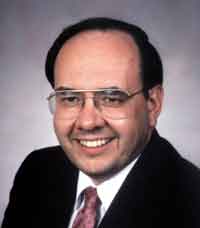
Ethan wins this one! The following release went to the Times-Union and NewsWithStaceyPage.com this afternoon. Thanks for your cooperation. I'll hand back the originals next Monday night.
-tw
Writers Conference Coming to Fort Wayne April 1 and 2
By Ethan Sheckler
American Christian Writers is holding its twelfth annual American Christian Writers Conference on Friday and Saturday, April 1 and 2, 2011, at the Marriot Hotel in Fort Wayne, Ind.
American Christian Writers is a Nashville, Tenn., organization which encourages and informs Christian writers across the country by providing conferences, seminars, and publishing resources.
The Fort Wayne conference, which will feature a faculty of six professional writers and editors, includes two days of seminars, speeches, and workshops designed to educate and inspire Christian writers in attendance.
The faculty will include Bob Hostetler, an editor, speaker, and author and co-author of 26 books with millions of copies sold, as well as Dr. Dennis Hensley, director of the professional writing major at Taylor University in Upland, Ind.
Hensley, who has written more than 50 books and 3,000 newspaper and magazine articles, has appeared at the Warsaw Public Library as a guest speaker for the library's Writer's Club.
Additional faculty include Linda Wade, a children’s writer with 36 books and over 500 devotionals to her credit, and Terry White, publisher of BMH Books in Winona Lake, instructor in journalism at Grace College, and founder of “The Christian Communicator” magazine.
Friday, April 1, will be divided into two simultaneously running four-part writing workshops--one meant specifically for nonfiction writing, and the other directed toward fiction writing.
The nonfiction writing workshop will be taught by Hensley, while the fiction writer's workshop will be taught by Hostetler.
Some partial conference fee scholarships will be available to some applicants, although American Christian Writers encourages applicants to seek financial help from churches or other not-for-profit organizations before applying for scholarships.
The conference will also feature free samples of a large number of publications available to all conferees.
Late "night owl" sessions will also be available on Friday for conferees looking for more conference offerings, including a "Book Writing Keys" session with Hensley as well as a question and answer session with Hostetler.
The cost for the conference is $250 before the March 11 early deadline, or $275 after March 11. Applicants can also choose to attend a single day for $150 before the early deadline, or $165 after the early deadline.
The conference will be held at the Marriot Hotel, 305 E. Washington Center Road in Fort Wayne, Ind., 46825. The American Christian Writers Conference asks that conferees make reservations directly with the host hotel.
Anyone interested in attending the conference should contact American Christian Writers at (615) 834-0450 or ACWriters@aol.com. Registration can be completed online at www.ACWriters.com.
###
Tuesday, March 8, 2011

Monday, March 7, 2011
Wes Pippert Unavailable Tonight
Wes Pippert has e-mailed me that he has a conflict with class tonight and will not be available for Skype interview. So we will reschedule--possibly for March 28.
Pressure is off to come prepared to discuss (and have questions for Wes) for the watchdog chapter for tonight. But...stay tuned!
Pressure is off to come prepared to discuss (and have questions for Wes) for the watchdog chapter for tonight. But...stay tuned!
Sunday, March 6, 2011
Is Being a 'Rock Star Journalist' Bad?
Sheen files: A crazy week for NBC's Jeff Rossen
DAVID BAUDER, AP Television Writer
NEW YORK (AP) — Here's something for Jeff Rossen to ponder after a crazy week: Is being called a "rock star" by Charlie Sheen good or bad for his career in television journalism?
Rossen, an NBC News correspondent who works chiefly for the "Today" show, played a prominent role in the actor's bizarre media tour to bash his bosses for suspending "Two and a Half Men," and explain a lifestyle of drugs and "goddesses." Andrea Canning of ABC News, CNN's Piers Morgan and radio star Howard Stern also spent extensive time with Sheen.
It was Rossen, however, whom Sheen later described as a "rock star" whose interview was "pure gold." Sheen told Morgan live on CNN that Rossen was awesome and should be a guest on his show.
"I think what he meant by calling me a rock star is that I kept my word to him," said Rossen, who joined NBC News in 2008 after working for seven years at ABC's New York City station.
Rossen had been trying to get Sheen to come on the "Today" show since shortly after the actor trashed a room in New York's Plaza Hotel last fall. He said he spoke frequently with Sheen's management team and met the actor on the "Two and a Half Men" set in November. Sheen subsequently spoke to Rossen for background on other stories, but didn't go on camera until last weekend.
Besides taped interviews that appeared on "Today" Monday and Tuesday of last week, Rossen convinced the actor to get up — or stay up — for a 4:30 a.m. PT live interview the morning after he lost custody of his twins.
Rossen didn't pull punches. He asked Sheen about his drug use and whether he provided a healthy home environment for his children and his role in making the future of television's most popular sitcom shaky.
"I told him from the very beginning (that) I'll make no agreements," Rossen said. "I'm going to ask you whatever I want to ask you. The questions will be tough. Sometimes they will be uncomfortable. What I promise to you in return is that I will keep your answers in context. I'm not going to have any clever, tricky endings. I'm going to let you explain."
Rossen's boss, "Today" show executive producer Jim Bell, called him a versatile and relentless reporter.
"Literal and figurative doors were slammed in his face along the way but he simply wouldn't take 'no' for an answer," Bell said. "His work on this story is consistent with the many stories he covers for 'Today,' from comprehensive investigative pieces to breaking news."
Sheen's interviews were a brilliant piece of performance art or evidence he's off his rocker, or some combination of the two. He probably set a record for inserting more catchphrases into the public lexicon in the shortest amount of time. The more he talked, the more excruciating it became.
Rossen said Sheen told him that he wanted to upstage the Academy Awards.
Is he nuts? "It's tough to tell," Rossen said.
"I've been given a very limited snapshot of Charlie Sheen," Rossen said. "I've spent about 10 hours with him over the course of several days, sometimes with cameras and sometimes without cameras. You can't judge a person fully on the basis of 10 hours. I would hope nobody would judge me that way."
Clearly, Sheen is at a crossroads in his life and struggling with that, he said.
How much the "rock star" line sticks with Rossen is an interesting question. Journalists usually look with suspicion at praise from interview subjects, perhaps seeing it as evidence that not enough tough questions were asked.
"It makes me uncomfortable," said Suzanne Lysak, a professor of broadcasting at Rossen's alma mater, Syracuse University. "But this whole situation is just so crazy."
The more important issue is the media's role in giving Sheen a platform. James Rainey of The Los Angeles Times wrote that news outlets are Sheen enablers and, in the case of ABC and NBC, "aiding and abetting the epic meltdown of a celebrity who happens to be the biggest star on the biggest comedy hit at rival CBS."
Networks have swiftly responded to the market. Morgan's interview with Sheen did so well in the ratings CNN reran it Friday. After Canning's "20/20" interview proved a big draw, Rossen put together a "Dateline NBC" special Friday. Celebrity substance abuse expert Dr. Drew Pinsky is doing a VH1 special on Sheen and even Spike TV can't resist, ordering a countdown of Sheen's most outlandish moments illustrated with Taiwanese animation.
"I don't know how you don't cover it," said Richard Wald, a Columbia University professor and former executive at ABC and NBC News.
"It's a bit like (O.J. Simpson's) White Bronco," Wald said. "It has little or no meaning, but it's fascinating: Are you taking advantage of Sheen? Are you helping him or hurting him? These are interesting questions, but I don't know if they are questions for journalists. I don't know how as a television producer you can ignore this. It's the human equivalent of a train collision."
Rossen also disagrees with critics who say the media should have turned its back on Charlie Sheen.
"This is a public figure," he said. "He's in the throes of a life crisis. As we would for a politician, as we would with a celebrity, as we would with any public figure that the public is interested in hearing from, we are telling their story. What better way to tell someone's story than with that person?
"If that person is making himself accessible to you," he said, "I would argue that it would be irresponsible not to talk to him."
DAVID BAUDER, AP Television Writer
NEW YORK (AP) — Here's something for Jeff Rossen to ponder after a crazy week: Is being called a "rock star" by Charlie Sheen good or bad for his career in television journalism?
Rossen, an NBC News correspondent who works chiefly for the "Today" show, played a prominent role in the actor's bizarre media tour to bash his bosses for suspending "Two and a Half Men," and explain a lifestyle of drugs and "goddesses." Andrea Canning of ABC News, CNN's Piers Morgan and radio star Howard Stern also spent extensive time with Sheen.
It was Rossen, however, whom Sheen later described as a "rock star" whose interview was "pure gold." Sheen told Morgan live on CNN that Rossen was awesome and should be a guest on his show.
"I think what he meant by calling me a rock star is that I kept my word to him," said Rossen, who joined NBC News in 2008 after working for seven years at ABC's New York City station.
Rossen had been trying to get Sheen to come on the "Today" show since shortly after the actor trashed a room in New York's Plaza Hotel last fall. He said he spoke frequently with Sheen's management team and met the actor on the "Two and a Half Men" set in November. Sheen subsequently spoke to Rossen for background on other stories, but didn't go on camera until last weekend.
Besides taped interviews that appeared on "Today" Monday and Tuesday of last week, Rossen convinced the actor to get up — or stay up — for a 4:30 a.m. PT live interview the morning after he lost custody of his twins.
Rossen didn't pull punches. He asked Sheen about his drug use and whether he provided a healthy home environment for his children and his role in making the future of television's most popular sitcom shaky.
"I told him from the very beginning (that) I'll make no agreements," Rossen said. "I'm going to ask you whatever I want to ask you. The questions will be tough. Sometimes they will be uncomfortable. What I promise to you in return is that I will keep your answers in context. I'm not going to have any clever, tricky endings. I'm going to let you explain."
Rossen's boss, "Today" show executive producer Jim Bell, called him a versatile and relentless reporter.
"Literal and figurative doors were slammed in his face along the way but he simply wouldn't take 'no' for an answer," Bell said. "His work on this story is consistent with the many stories he covers for 'Today,' from comprehensive investigative pieces to breaking news."
Sheen's interviews were a brilliant piece of performance art or evidence he's off his rocker, or some combination of the two. He probably set a record for inserting more catchphrases into the public lexicon in the shortest amount of time. The more he talked, the more excruciating it became.
Rossen said Sheen told him that he wanted to upstage the Academy Awards.
Is he nuts? "It's tough to tell," Rossen said.
"I've been given a very limited snapshot of Charlie Sheen," Rossen said. "I've spent about 10 hours with him over the course of several days, sometimes with cameras and sometimes without cameras. You can't judge a person fully on the basis of 10 hours. I would hope nobody would judge me that way."
Clearly, Sheen is at a crossroads in his life and struggling with that, he said.
How much the "rock star" line sticks with Rossen is an interesting question. Journalists usually look with suspicion at praise from interview subjects, perhaps seeing it as evidence that not enough tough questions were asked.
"It makes me uncomfortable," said Suzanne Lysak, a professor of broadcasting at Rossen's alma mater, Syracuse University. "But this whole situation is just so crazy."
The more important issue is the media's role in giving Sheen a platform. James Rainey of The Los Angeles Times wrote that news outlets are Sheen enablers and, in the case of ABC and NBC, "aiding and abetting the epic meltdown of a celebrity who happens to be the biggest star on the biggest comedy hit at rival CBS."
Networks have swiftly responded to the market. Morgan's interview with Sheen did so well in the ratings CNN reran it Friday. After Canning's "20/20" interview proved a big draw, Rossen put together a "Dateline NBC" special Friday. Celebrity substance abuse expert Dr. Drew Pinsky is doing a VH1 special on Sheen and even Spike TV can't resist, ordering a countdown of Sheen's most outlandish moments illustrated with Taiwanese animation.
"I don't know how you don't cover it," said Richard Wald, a Columbia University professor and former executive at ABC and NBC News.
"It's a bit like (O.J. Simpson's) White Bronco," Wald said. "It has little or no meaning, but it's fascinating: Are you taking advantage of Sheen? Are you helping him or hurting him? These are interesting questions, but I don't know if they are questions for journalists. I don't know how as a television producer you can ignore this. It's the human equivalent of a train collision."
Rossen also disagrees with critics who say the media should have turned its back on Charlie Sheen.
"This is a public figure," he said. "He's in the throes of a life crisis. As we would for a politician, as we would with a celebrity, as we would with any public figure that the public is interested in hearing from, we are telling their story. What better way to tell someone's story than with that person?
"If that person is making himself accessible to you," he said, "I would argue that it would be irresponsible not to talk to him."
Saturday, March 5, 2011
Friday, March 4, 2011
Hyperlocal News is 'IN'!!
Wow! Read the last three paragraphs!
News of the neighborhood
The Rise of Localism | Journalism isn't, as recently reported, dying; it's going local | Marvin Olasky
Two years ago journalists were crying: Our profession is dead. Now many are watching a local reporting resurgence that will probably be less financially rewarding but more joyful for journalistic entrepreneurs. And, surprisingly, conservative-turned-leftist Arianna Huffington, president of a newly created Huffington Post Media Group with editorial control of all of AOL's editorial content, will have a crucial role in fostering or killing the local press revival.
Let's start with an oozing story: While many local newspapers continue to lay off staffers, new localist competition is emerging. The New Haven Register, still delivered door to door, meet the New Haven Independent, a newsy nonprofit website with revenue from foundation grants, reader donations, and advertising. The Independent proclaims, "Thanks to the Internet, journalists and news-deprived citizens need no longer be hostages to out-of-state media conglomerates. We can reclaim our communities." A hip New York news website, The Gothamist, has brought forth similarly named efforts—The Phillyist, for example—in other large cities.
Heading westward, more efforts—The Ann Arbor Chronicle, for example—are underway in many university towns where graduates who can write like to stay on. But look at Quincy, Ill., a town of 40,000 along the Mississippi River where QuincyNews.org is competing with The Quincy Herald Whig, a 19th-century remnant. The internet site's headline on Feb. 4 was, "Man who attempted to hide drugs in his rectum headed for jury trial." It also had reports on births, deaths, Quincy high-school sports, and state tax breaks for a local manufacturer.
Similarly, in upstate New York a website, The Batavian, is taking on the long-established-on-paper Batavia Daily News. New Jersey journalists publish Baristanet and their counterparts in Montana and Idaho publish NewWest.net, which has local editions for Bozeman, Missoula, and Boise. Those publications are impressive, as are some others with true local flavor like Indiana's Go! Wayne County, which last month published good ice storm photos.
In Seattle, March 17 will be the two-year anniversary of the final print edition of the Post-Intelligencer, a newspaper previously published on newsprint since 1863. When the P-I became web-only, pronouncements of doom rolled across the United States like a cold front, but two years later the site has 200,000 visitors a day, and other online publications have gained readership. For example, West Seattle Blog covers a neighborhood of about 50,000 people with well-written news-you-can-use such as (on Feb. 4) the redo of a highway off-ramp, details of a stolen car (1990 light blue Honda Accord, 4 door sedan, license plate 099 YEZ), a series of speeding arrests on a road where the speed limit is 30, and the visit of Cinnamon, a six-week-old dairy calf, to a local elementary school.
Those are locally owned efforts, but big national groups are also part of hyper-localism, the movement to cover neighborhoods rather than whole cities, and then reap the advertising rewards. The quality of many of these sites is abysmal. CNN's Outside.in has pages for hundreds of neighborhoods, with particular emphasis on upscale ones like the Upper East Side in New York, Adams Morgan in Washington, and Back Bay in Boston. MSNBC funds Every Block, which may have a few people on a block putting up their photos. Both rely heavily on press releases and should be an embarrassment to their corporate sponsors.
Examiner.com, owned by Philip Anschutz, a Denver Christian entrepreneur, claims to have 55,000 active writers who churn out 3,000 articles each day for websites in more than 200 U.S. markets. The lead story on Examiner.com for Arlington, Va., last month came from the "Arlington Natural Beauty" specialist on moisturizers: "When skin is oily or experiencing an acne breakout, it often feels counter-intuitive to add moisturizer." New York City writers can pick from one of many beats available: Manhattan Nail Polish, Queens Karaoke Bars, New York Doberman Pinschers—on and on the list goes. Writers receive very small amounts based on page views.
Examiner.com seems to have no quality control, and the same lack is evident in publications like HubPages, Squiddo, and Mahalo that pretend to be local but have as their only redeeming social value the ability to attract eyeballs to ads. Articles include "Falling in Love With a Sociopath—and Getting Out of Sociopathic Love." But a promising hyper-local experiment is emerging from AOL, the global internet services and media company that divorced Time Warner in 2009 after a quarrel-filled eight-year marriage. That's because AOL is investing $50 million of the divorce settlement in Patch.com, which now has over 400 news sites.
Patch typically pays a young journalist $40,000 to become the editor of a hyper-local website. Nathan Curby, a 2009 graduate of Patrick Henry College's journalism program, has been Dale City Patch editor since last November: Dale City is not a distinct city but a loosely defined stretch of Washington, D.C., suburb on both sides of Dale Boulevard in northern Virginia. Curby's lead story on Feb. 10 concerned a reduction of parking spaces for commuters at a mall, and he also wrote about local real estate sales and restaurants. He typically pays freelancers $50 for a 400- to 600-word story with photos and in-person interviews. Curby says he's learning to be a flexible yet disciplined multitasker who can switch from interviewing and story-writing to assigning writers and making sure they get paid.
Each Patch.com site has had the goal of reaching up to 75,000 readers with coverage of sports, crime, local government, and so forth. Learning from other big organizations that tried hyper-local projects and lost hyper-dollars in the process, Patch has planned to keep editorial expenses low and pull down chunks of the $100 billion per year that local businesses spend on advertising. But the announcement last month that AOL was spending $315 million more from its divorce settlement to buy Huffington Post, and would put Arianna Huffington in charge of all its editorial content, may signal Patch changes. Even the hardly non-ideological New York Times fretted: "Given that Ms. Huffington has been straightforward about using a liberal prism on the news, AOL is now handing control of its still considerable traffic and content assets to someone who uses ideology as one of her decision tools in creating news content for consumers."
Of course, left-wing ideology may make for a good match with some journalism schools that are becoming inexpensive sources of talent for hyper-local publications, with students often paid in bylines and experience. The New York Times and New York University put out The Local: East Village, which covers a Manhattan neighborhood. The Arizona Republic publishes with Arizona State University the website AZ Fact Check, which scrutinizes what politicians say. Patch has PatchU, partnerships between local Patch publications and journalism programs including those of Hofstra, Northwestern, Stanford, and Columbia, and the universities of North Carolina, Missouri, Connecticut, Indiana, California, and Southern California.
Professional affiliations, of course, are no guarantee of quality. Last month, with high publicity, some editors and reporters formerly with The Washington Post, CBS, and others launched TBD.com, which on Feb. 3 headlined its lead story, "Pickup artist guide: How to land a date." The story informed readers, "Professional pickup artists teach men they have to figure themselves out before they can become better seducers. . . . One phone number and 99 rejections is better than no phone numbers and no rejections. . . . The important thing is how you feel after the women walk away. If they reject you, they're not ready for you. You're better than them. You're awesome. You need a woman who can handle you."
If 99 of 100 potential readers reject TBD, the editors may be feeding themselves the same line.
—with reporting by Tiffany Owens
Localism vs. Limbaugh?
Do conservatives have too much media influence? Yes, according to Mark Lloyd, chief diversity officer of the Federal Communications Commission—and emphasizing a version of localism is the way to combat it.
Lloyd, who co-wrote in 2007 a study of "The Structural Imbalance of Political Talk Radio," wants the FCC to reduce conservative influence in talk radio. (To say it more simply, kneecap Rush Limbaugh.) He wants every radio station to be required to reapply for its license every three years. He wants a cap on the number of stations any entity can own. He wants community activists to demand that stations meet their needs and desires. He wants stations that don't bend to lose their licenses or pay fees to support "community broadcasting."
Lloyd's analysis shows that news/talk stations in the top 10 radio markets provide programming that is 76 percent conservative and only 24 percent "progressive." He sees that as a problem. But is it? Let's look at the politics of three other major media:
Major television networks with news programming: ABC, CBS, NBC, PBS, FOX, CNN, MSNBC, Comedy Central. One of them is mostly conservative.
Most influential newspapers and magazines: The New York Times, The Wall Street Journal, Los Angeles Times, Time, Newsweek. None of them is conservative in news coverage. (The Journal has a conservative editorial page, so let's count it as half-conservative.)
Most-read internet news sites, according to Alexa: Yahoo, BBC Online, CNN Interactive, The New York Times, Huffington Post. None of them is conservative.
So let's see: In these three media, plus talk radio, conservatives have 12.5 percent, 10 percent, 0 percent, and 76 percent influence. That averages 25 percent conservative influence.
Hmm. Some folks probably do get all their information from talk radio, and some eat all their meals at McDonald's. But we don't require McDonald's to change its menu or pay fees to support local salad bars, because most of us believe that (a) we shouldn't penalize McDonald's for serving what people want, (b) most people don't eat all their meals at McDonald's, and (c) it's a free country. (Isn't it?)
We used to have a suffocating sameness in mass media, so conservative talk radio, despite its excesses, is a breath of fresh airtime. If we do have a lack of political diversity in media, it's because liberalism is still overrepresented, but that just means conservatives should compete more effectively.
Let's not let "localism" be hijacked for political hatchet work. — Marvin Olasky
Christians behind the curve
Many local Christian publications do good work by printing devotional material—but local Christian news publications in the United States are rare, and the internet revolution hasn't done much to improve the situation. In the book Prodigal Press (1988), I pointed to the well-written Twin Cities Christian as a rarity, and 23 years later the same publication, now called Minnesota Christian Chronicle, is still best in show.
MCC is now owned by the Selah Media Group, which also publishes Christian Examiner (both print and digital) in four Southern California editions and one in Seattle/Tacoma. Other local/regional publications include Christian News Northwest in Oregon and southwestern Washington, and Kansas City Metro Voice (which also has a Topeka edition). Christian Family Publications is franchising throughout the Southeast print magazines that "spread positive, Christian information" about family issues.
While national secular media companies are venturing into localism, Christian ones do not seem to be doing so. Many have been barely hanging on in this tough economic environment, so few are able to develop local initiatives even if that were their inclination. — Marvin Olasky
News of the neighborhood
The Rise of Localism | Journalism isn't, as recently reported, dying; it's going local | Marvin Olasky
Two years ago journalists were crying: Our profession is dead. Now many are watching a local reporting resurgence that will probably be less financially rewarding but more joyful for journalistic entrepreneurs. And, surprisingly, conservative-turned-leftist Arianna Huffington, president of a newly created Huffington Post Media Group with editorial control of all of AOL's editorial content, will have a crucial role in fostering or killing the local press revival.
Let's start with an oozing story: While many local newspapers continue to lay off staffers, new localist competition is emerging. The New Haven Register, still delivered door to door, meet the New Haven Independent, a newsy nonprofit website with revenue from foundation grants, reader donations, and advertising. The Independent proclaims, "Thanks to the Internet, journalists and news-deprived citizens need no longer be hostages to out-of-state media conglomerates. We can reclaim our communities." A hip New York news website, The Gothamist, has brought forth similarly named efforts—The Phillyist, for example—in other large cities.
Heading westward, more efforts—The Ann Arbor Chronicle, for example—are underway in many university towns where graduates who can write like to stay on. But look at Quincy, Ill., a town of 40,000 along the Mississippi River where QuincyNews.org is competing with The Quincy Herald Whig, a 19th-century remnant. The internet site's headline on Feb. 4 was, "Man who attempted to hide drugs in his rectum headed for jury trial." It also had reports on births, deaths, Quincy high-school sports, and state tax breaks for a local manufacturer.
Similarly, in upstate New York a website, The Batavian, is taking on the long-established-on-paper Batavia Daily News. New Jersey journalists publish Baristanet and their counterparts in Montana and Idaho publish NewWest.net, which has local editions for Bozeman, Missoula, and Boise. Those publications are impressive, as are some others with true local flavor like Indiana's Go! Wayne County, which last month published good ice storm photos.
In Seattle, March 17 will be the two-year anniversary of the final print edition of the Post-Intelligencer, a newspaper previously published on newsprint since 1863. When the P-I became web-only, pronouncements of doom rolled across the United States like a cold front, but two years later the site has 200,000 visitors a day, and other online publications have gained readership. For example, West Seattle Blog covers a neighborhood of about 50,000 people with well-written news-you-can-use such as (on Feb. 4) the redo of a highway off-ramp, details of a stolen car (1990 light blue Honda Accord, 4 door sedan, license plate 099 YEZ), a series of speeding arrests on a road where the speed limit is 30, and the visit of Cinnamon, a six-week-old dairy calf, to a local elementary school.
Those are locally owned efforts, but big national groups are also part of hyper-localism, the movement to cover neighborhoods rather than whole cities, and then reap the advertising rewards. The quality of many of these sites is abysmal. CNN's Outside.in has pages for hundreds of neighborhoods, with particular emphasis on upscale ones like the Upper East Side in New York, Adams Morgan in Washington, and Back Bay in Boston. MSNBC funds Every Block, which may have a few people on a block putting up their photos. Both rely heavily on press releases and should be an embarrassment to their corporate sponsors.
Examiner.com, owned by Philip Anschutz, a Denver Christian entrepreneur, claims to have 55,000 active writers who churn out 3,000 articles each day for websites in more than 200 U.S. markets. The lead story on Examiner.com for Arlington, Va., last month came from the "Arlington Natural Beauty" specialist on moisturizers: "When skin is oily or experiencing an acne breakout, it often feels counter-intuitive to add moisturizer." New York City writers can pick from one of many beats available: Manhattan Nail Polish, Queens Karaoke Bars, New York Doberman Pinschers—on and on the list goes. Writers receive very small amounts based on page views.
Examiner.com seems to have no quality control, and the same lack is evident in publications like HubPages, Squiddo, and Mahalo that pretend to be local but have as their only redeeming social value the ability to attract eyeballs to ads. Articles include "Falling in Love With a Sociopath—and Getting Out of Sociopathic Love." But a promising hyper-local experiment is emerging from AOL, the global internet services and media company that divorced Time Warner in 2009 after a quarrel-filled eight-year marriage. That's because AOL is investing $50 million of the divorce settlement in Patch.com, which now has over 400 news sites.
Patch typically pays a young journalist $40,000 to become the editor of a hyper-local website. Nathan Curby, a 2009 graduate of Patrick Henry College's journalism program, has been Dale City Patch editor since last November: Dale City is not a distinct city but a loosely defined stretch of Washington, D.C., suburb on both sides of Dale Boulevard in northern Virginia. Curby's lead story on Feb. 10 concerned a reduction of parking spaces for commuters at a mall, and he also wrote about local real estate sales and restaurants. He typically pays freelancers $50 for a 400- to 600-word story with photos and in-person interviews. Curby says he's learning to be a flexible yet disciplined multitasker who can switch from interviewing and story-writing to assigning writers and making sure they get paid.
Each Patch.com site has had the goal of reaching up to 75,000 readers with coverage of sports, crime, local government, and so forth. Learning from other big organizations that tried hyper-local projects and lost hyper-dollars in the process, Patch has planned to keep editorial expenses low and pull down chunks of the $100 billion per year that local businesses spend on advertising. But the announcement last month that AOL was spending $315 million more from its divorce settlement to buy Huffington Post, and would put Arianna Huffington in charge of all its editorial content, may signal Patch changes. Even the hardly non-ideological New York Times fretted: "Given that Ms. Huffington has been straightforward about using a liberal prism on the news, AOL is now handing control of its still considerable traffic and content assets to someone who uses ideology as one of her decision tools in creating news content for consumers."
Of course, left-wing ideology may make for a good match with some journalism schools that are becoming inexpensive sources of talent for hyper-local publications, with students often paid in bylines and experience. The New York Times and New York University put out The Local: East Village, which covers a Manhattan neighborhood. The Arizona Republic publishes with Arizona State University the website AZ Fact Check, which scrutinizes what politicians say. Patch has PatchU, partnerships between local Patch publications and journalism programs including those of Hofstra, Northwestern, Stanford, and Columbia, and the universities of North Carolina, Missouri, Connecticut, Indiana, California, and Southern California.
Professional affiliations, of course, are no guarantee of quality. Last month, with high publicity, some editors and reporters formerly with The Washington Post, CBS, and others launched TBD.com, which on Feb. 3 headlined its lead story, "Pickup artist guide: How to land a date." The story informed readers, "Professional pickup artists teach men they have to figure themselves out before they can become better seducers. . . . One phone number and 99 rejections is better than no phone numbers and no rejections. . . . The important thing is how you feel after the women walk away. If they reject you, they're not ready for you. You're better than them. You're awesome. You need a woman who can handle you."
If 99 of 100 potential readers reject TBD, the editors may be feeding themselves the same line.
—with reporting by Tiffany Owens
Localism vs. Limbaugh?
Do conservatives have too much media influence? Yes, according to Mark Lloyd, chief diversity officer of the Federal Communications Commission—and emphasizing a version of localism is the way to combat it.
Lloyd, who co-wrote in 2007 a study of "The Structural Imbalance of Political Talk Radio," wants the FCC to reduce conservative influence in talk radio. (To say it more simply, kneecap Rush Limbaugh.) He wants every radio station to be required to reapply for its license every three years. He wants a cap on the number of stations any entity can own. He wants community activists to demand that stations meet their needs and desires. He wants stations that don't bend to lose their licenses or pay fees to support "community broadcasting."
Lloyd's analysis shows that news/talk stations in the top 10 radio markets provide programming that is 76 percent conservative and only 24 percent "progressive." He sees that as a problem. But is it? Let's look at the politics of three other major media:
Major television networks with news programming: ABC, CBS, NBC, PBS, FOX, CNN, MSNBC, Comedy Central. One of them is mostly conservative.
Most influential newspapers and magazines: The New York Times, The Wall Street Journal, Los Angeles Times, Time, Newsweek. None of them is conservative in news coverage. (The Journal has a conservative editorial page, so let's count it as half-conservative.)
Most-read internet news sites, according to Alexa: Yahoo, BBC Online, CNN Interactive, The New York Times, Huffington Post. None of them is conservative.
So let's see: In these three media, plus talk radio, conservatives have 12.5 percent, 10 percent, 0 percent, and 76 percent influence. That averages 25 percent conservative influence.
Hmm. Some folks probably do get all their information from talk radio, and some eat all their meals at McDonald's. But we don't require McDonald's to change its menu or pay fees to support local salad bars, because most of us believe that (a) we shouldn't penalize McDonald's for serving what people want, (b) most people don't eat all their meals at McDonald's, and (c) it's a free country. (Isn't it?)
We used to have a suffocating sameness in mass media, so conservative talk radio, despite its excesses, is a breath of fresh airtime. If we do have a lack of political diversity in media, it's because liberalism is still overrepresented, but that just means conservatives should compete more effectively.
Let's not let "localism" be hijacked for political hatchet work. — Marvin Olasky
Christians behind the curve
Many local Christian publications do good work by printing devotional material—but local Christian news publications in the United States are rare, and the internet revolution hasn't done much to improve the situation. In the book Prodigal Press (1988), I pointed to the well-written Twin Cities Christian as a rarity, and 23 years later the same publication, now called Minnesota Christian Chronicle, is still best in show.
MCC is now owned by the Selah Media Group, which also publishes Christian Examiner (both print and digital) in four Southern California editions and one in Seattle/Tacoma. Other local/regional publications include Christian News Northwest in Oregon and southwestern Washington, and Kansas City Metro Voice (which also has a Topeka edition). Christian Family Publications is franchising throughout the Southeast print magazines that "spread positive, Christian information" about family issues.
While national secular media companies are venturing into localism, Christian ones do not seem to be doing so. Many have been barely hanging on in this tough economic environment, so few are able to develop local initiatives even if that were their inclination. — Marvin Olasky
Tuesday, March 1, 2011
Interesting Controversy Over Universalism

Christian author's book sparks charges of heresy
Rob Bell, who has achieved rock star status in the Christian world, is preaching a false gospel, according to his critics - some of whom have achieved Christian rock star status in their own right.
The pastor of Mars Hill Bible Church in Grand Rapids, Michigan has authored a book called Love Wins: A Book About Heaven, Hell, and the Fate of Every Person Who Ever Lived, which ignited a firestorm of controversy over the weekend, weeks before it arrives in bookstores.
On Saturday, in a blog post on the popular Christian website The Gospel Coalition, Justin Taylor blasted Bell's new book, out March 29, for teaching "false doctrine":
I’m glad that Rob Bell has the integrity to be lay his cards on the table about universalism. It seems that this is not just optimism about the fate of those who haven’t heard the Good News, but (as it seems from below) full-blown hell-is-empty-everyone-gets-saved universalism.
Universalism, in its broadest terms, preaches that everyone goes to heaven and that there is no hell. Critics say it represents a break from traditional Christianity, which they say holds that heaven and hell are very real places. In most Christian circles, universalism is a dirty word.
Taylor's post was quickly tweeted by several prominent pastors connected to the Gospel Coalition, a coalition of theologically conservative evangelical churches, and a full-blown theological controversy was on. By Monday, Taylor's response post had racked up a quarter million hits.
Other bloggers, meanwhile, are calling Bell an outright heretic.
Bell is not the first prominent Christian pastor to be recently accused of wading into theologically troubled waters. Bishop Carlton Pearson, once a mentee of famed Pentecostal televangelist Oral Roberts, has been run out of two churches and branded a heretic for preaching what he says is a gospel of inclusion with broad universalist themes. Last year, Brian McLaren – a popular Christian author and a former pastor - was accused of breaking with Christian orthodoxy and delving head first into universalism in his book A New Kind of Christianity.
But it's rare that theological arguments become top ten trending topics on Twitter, as Rob Bell did on Saturday.
“To be honest, it was a pretty rough weekend,” Taylor said in a phone interview. The 34-year-old heads the editorial content for Crossway, a Christian publishing company in Wheaton, Illinois. Taylor he says his blog expresses his personal opinion not the opinion of the coalition.
"We’re talking about the big things here, things that have been historically defined as orthodox, " he said. "I have a high degree of confidence in what God is saying and what we can understand."
Though many things that separate Catholics, Protestants, and Orthodox Christians, “this isn’t one of them," Taylor said. "We’ve historically agreed on many things, the person of Christ, heaven and hell. This isn’t a peripheral academic debate. What Rob Bell is talking about gets to the heart of Christianity.”
Taylor has not read Bell's new book in its entirety. His blog post was in response to the description released by Bell publisher HarperOne a promotional video that features Bell.
"Rob Bell hasn’t sinned against me personally,” Taylor said, which is why he did not go to Bell before making his comments public. Instead, Taylor said, Bell's book represents a clear example of false teaching.
In the promotional video Bell refers to the nonviolent Indian independence leader Mahatma Gandhi, a Hindu, and asks, "Gandhi's in hell? He is?"
"And someone knows this for sure?" Bell continues. "Will billions and billions of people burn forever in hell? And if that's the case how do you become one of the few? "
The video follows a trend in Bell's career as a pastor: he has long asked tough theological questions and challenged traditional answers. The short promotional video raises lots of questions without offering definitive answers.
"What we believe about heaven and hell is incredibly important because it exposes what we believe about who God likes," Bell says in it. " The good news is that love wins."
Those lines raised eyebrows for Taylor and others. "It is not preaching the gospel as found in the New Testament," Taylor said. "The New Testament is pretty clear if someone preaches a false gospel…that we are to reject that and have nothing to do with them."
For all his hipster leanings - including black rimmed glasses - Bell has a traditional pedigree. He went to Wheaton College, the Harvard of Christian schools, and later graduated from Fuller Theological Seminary with a Master of Divinity.
But the Mars Hill Bible Church, which Bell founded, is not attached to any denomination. Were it attached to one - the Presbyterian or Catholic church, say - his book and video could raise eyebrows in the hierarchy and might lead to a church trial that could result in Bell's expulsion.
"A larger denomination would take his credentials and excommunicate him like they did to me,” Bishop Pearson told CNN.
By Sunday evening, Pearson was getting sent articles about the Bell flap. He said it reminded him of his days as a charismatic leader of a big church in the largest Pentecostal denomination. His questioning of hell from the pulpit led to his ouster.
"What happened to me is happening to Rob Bell," Pearson said who also has not read Bell's new book. "If you denounce hell, it's like you are denouncing God. You’re going to be called a heretic."
“I thought my people loved me and would walk through the valley of the shadow of death with me, but they didn’t,” Pearson said.
Bell's church did not respond to our requests for an interview. His Twitter feed has been silent since he posted about writing a piece for CNN's Belief Blog a few weeks ago. His publicist at HarperOne said he would not be doing publicity until his book hits shelves.
Writers Strike HuffPo Over Pay Issues
California art writers strike Huffington Post
California bloggers affiliated with ArtScene and Visual Art Source are boycotting Huffington Post, which was recently bought by AOL. The two sites agreed last year to let Huffpost republish their reviews and listings of gallery and museum shows from the Los Angeles and Southern California area.
But that agreement is now void writes Bill Lasarow, publisher and editor of the blog sites. Announcing a strike by the bloggers, he says they object to the Post's failure to pay for its content:
"It is unethical to expect trained and qualified professionals to contribute quality content for nothing. It is unethical to cannibalize the investment of other organizations who bear the cost of compensation and other overhead without payment for the usage of their content. It is extremely unethical to not merely blur but eradicate the distinction between the independent and informed voice of news and opinion and the voice of a shill.
None of this is illegal, only unethical and oh so very hypocritical . . . "
California bloggers affiliated with ArtScene and Visual Art Source are boycotting Huffington Post, which was recently bought by AOL. The two sites agreed last year to let Huffpost republish their reviews and listings of gallery and museum shows from the Los Angeles and Southern California area.
But that agreement is now void writes Bill Lasarow, publisher and editor of the blog sites. Announcing a strike by the bloggers, he says they object to the Post's failure to pay for its content:
"It is unethical to expect trained and qualified professionals to contribute quality content for nothing. It is unethical to cannibalize the investment of other organizations who bear the cost of compensation and other overhead without payment for the usage of their content. It is extremely unethical to not merely blur but eradicate the distinction between the independent and informed voice of news and opinion and the voice of a shill.
None of this is illegal, only unethical and oh so very hypocritical . . . "
Subscribe to:
Comments (Atom)