New York (CNN) -- Facebook is taking major steps to ensure that its News Feeds contain more actual news.
The social media giant is hiring someone to build relationships with reporters and news organizations. The new hire also will help organize journalism-focused events, the first of which will take place this month at Facebook's headquarters in Palo Alto, California.
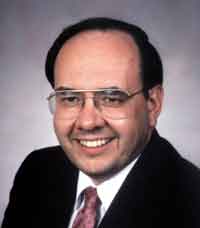
Vadim Lavrusik will start as journalist program manager for Facebook, based in New York, April 25. He leaves Mashable, the tech-news site where he was a community manager. (Mashable is a CNN.com content partner.)
In his new job, Lavrusik will be responsible for advocating for the use of Facebook as a reporting and promotional tool. He will also maintain the recently launched Journalists on Facebook page.
With more than half a billion users, Facebook is nearly ubiquitous as a way for keeping in touch with friends and family. However, the site has lagged behind competitors like Twitter and Tumblr in widespread adoption by reporters as a productivity or newsgathering tool.
"A lot of journalists don't have a professional presence on Facebook yet," Lavrusik said. "They think it's another thing they have to add to their workloads. ... It can actually make your job easier."
Lavrusik, a Belarus native, caught the eye of Facebook executives with his blog posts about the practical applications for using the giant social network in reporting. For example, he urges the use of Facebook as a sort of new-age White Pages, helping reporters get in contact with sources.
Before Mashable, Lavrusik interned at the New York Times as a social media producer. He also teaches a graduate-school journalism class about social media at Columbia University.
"The goal is to build programs that bridge the gap between journalists and Facebook," Lavrusik said. "Twitter is very public. It's an informational platform. It's easy to see the application for news."
Lavrusik will help educate about and carry out Facebook's new newsy mission, which some people close to the company say is a case of Twitter envy. (Last fall, Facebook's offer of $2 billion to acquire Twitter was spurned, according to a Fortune report.) Journalists very quickly took to Twitter and, in doing so, helped promote it to their readers and viewers.
"I feel lucky that we just have such a lead and such an advantage of being part of newsrooms already," said Robin Sloan, a member of Twitter's three-person media-partnerships team. "It's a luxury. We get to go into newsrooms, and, literally, on every other monitor, people are running TweetDeck or logged into Twitter.com."
Facebook also has a group specializing in media partnerships, which Lavrusik will be working closely with, a company spokeswoman said. But that group mainly focuses on business-development initiatives, Lavrusik said. Those programs help news organizations implement tools such as the Like button and the new Facebook-powered commenting system, which are designed to help create more links between news sites and Facebook's network.
Twitter's media-partnership team helps teach and field questions from reporters about how to use its service in their work, said Sloan, who joined Twitter from Current TV last year. That's on top of all the partnerships that the group cultivates with news-agency marketers, award-show promoters, sports and entertainment networks and others that fall under the all-encompassing "media" umbrella.
"Even before there was anybody working on media partnerships at Twitter, journalists were just using it like crazy," Sloan said. "The kind of work that journalists and news organizations do on Twitter is really the work that they've always done and are good at."
Sloan doesn't believe that Facebook's growing focus on the news industry is at odds with his team's efforts. Reporters, he said, "need all the tools that they can get. So we're just trying to make Twitter as useful and powerful as we can and fill in that part of the puzzle."
Mark Coatney, Tumblr's media evangelist and a former journalist, concurs, saying that each is used differently. Neither Facebook nor Twitter "is really designed to be a content delivery platform" but is instead used to link to or find articles, he said. "From a branding perspective, a page on Facebook will always look like Facebook."
Tumblr, a smaller but growing social network with 16.8 million blogs, hired Coatney as a media evangelist last year. The former Newsweek editor's job offer came the same day the Washington Post Co. put his magazine company up for sale, he said.
During Coatney's short tenure, Tumblr has achieved a sort of Facebook or Twitter status with reporters; his job mostly entails brainstorming ideas for how Tumblr can be employed uniquely. His journalism outreach may have even spurred reporters to write about Tumblr more often.
"The story ideas have moved from, 'Hey, what is this thing?' to, 'Here's some cool things that are being done on Tumblr,' " Coatney said.
Encouraging cultural influencers such as journalists to use social networks provides value to these companies and also to the reporters who get a new arsenal of tools, said Dan Gillmor, a digital-media professor and director for the Knight Center at Arizona State University.
"I don't know if it will cause people to write about them more, but it's obviously a smart thing for these companies to be evangelizing journalists," Gillmor said. "The more people who use these platforms for their work, the better it is for the platforms."
Thursday, April 14, 2011

Friday, April 8, 2011
An Investigative Reporter Speaks
Today (April 8) is the birthday of the investigative journalist who broke the story of the My Lai Massacre to the American public: Seymour Hersh (books by this author), born in Chicago (1937).
He worked as a reporter for various wire services, including the Associated Press, and eventually as a Pentagon correspondent. When he wrote an extensive piece on chemical and biological warfare that the AP cut to just a fraction of its original size, he quit to go freelance.
He got a tip that a lieutenant, William Calley, was being court-martialed for killing innocent civilians in Vietnam. Hersh drove from base to base, waking people up to ask them where Calley was, pulling all his Pentagon strings, until he found Calley and Calley told him what happened.
Life and Look magazines refused the story, but he did finally sell it. When the story hit, it made a huge impact on the public perception of the Vietnam War, and Hersh won the Pulitzer Prize.
Since 1993, he has been a regular contributor to The New Yorker, where in 2004 he exposed the Abu Ghraib prison scandal.
A friend of his said, "There's only a handful of reporters like Hersh who are still doing investigative reporting. There's a new crop of journalists who are what I call 'scandal reporters,' or 'scandal beat reporters.' They only pretend to do investigative reporting."
When asked what the secret is to being an investigative reporter, Seymour Hersh said: "I don't make deals, I don't party and drink with sources, and I don't play a game of leaks. I read, I listen, I squirrel information. It's fun."
He worked as a reporter for various wire services, including the Associated Press, and eventually as a Pentagon correspondent. When he wrote an extensive piece on chemical and biological warfare that the AP cut to just a fraction of its original size, he quit to go freelance.
He got a tip that a lieutenant, William Calley, was being court-martialed for killing innocent civilians in Vietnam. Hersh drove from base to base, waking people up to ask them where Calley was, pulling all his Pentagon strings, until he found Calley and Calley told him what happened.
Life and Look magazines refused the story, but he did finally sell it. When the story hit, it made a huge impact on the public perception of the Vietnam War, and Hersh won the Pulitzer Prize.
Since 1993, he has been a regular contributor to The New Yorker, where in 2004 he exposed the Abu Ghraib prison scandal.
A friend of his said, "There's only a handful of reporters like Hersh who are still doing investigative reporting. There's a new crop of journalists who are what I call 'scandal reporters,' or 'scandal beat reporters.' They only pretend to do investigative reporting."
When asked what the secret is to being an investigative reporter, Seymour Hersh said: "I don't make deals, I don't party and drink with sources, and I don't play a game of leaks. I read, I listen, I squirrel information. It's fun."
Thursday, April 7, 2011
Tuesday, April 5, 2011
How Twitter Affects One Court Reporter
From Poynter:
In Kansas, Twitter puts court reporter in touch with the community
by Damon Kiesow
In an elevator in a Wichita, Kan., district court in 2008, Ron Sylvester realized Twitter was changing how he practiced journalism.
Sylvester, a longtime court reporter for The Wichita Eagle and Kansas.com, had just finished covering a murder trial. It was the second time Sylvester had covered a trial live, and the first time he had used Twitter to do so.
As they rode down in the elevator, the mother of victim Chelsea Brooks turned to him and asked, “How is your knee?”
It was not a random question, and it showed Sylvester how he had changed the way readers viewed him in the community.
Sylvester posts professional and personal updates on Twitter. One of those personal tweets mentioned his need for a post-trial knee surgery.
The mother had been following his coverage. On the elevator ride, she opened up the conversation based on the human, not journalistic, information Sylvester had shared online.
Creating a personal connection
“The worst part of the job,” Sylvester told me, “is having to talk to victims’ families.” He now thinks an active presence on Twitter and other social media networks can help in such encounters.
Readers “like to know I am a dad … not just someone who covers grisly murder trials.” The more readers “know about me, the more they can decide if I am trustworthy or not.”
That echoes research I wrote about earlier this month. Engaging on social networks, and even posting reporters’ photos with stories, increases media credibility and trust, according to research by Doreen Marchionni at the University of Missouri.
Sylvester’s courtroom tweeting boosted his credibility in the courthouse, too. Early on in his coverage of that trial, he was interviewed by the ABA Journal, a publication he figures every lawyer and judge in town must read.
The next day in court, everyone wanted to know, “What is this Twitter?”
Fast, frequent updates key to trial tweeting
Sylvester had live-blogged a trial a few months earlier. He emailed updates to the office, where they were edited and posted by an editor. That process was too cumbersome, he said.
The feedback boiled down to readers wanting faster, more frequent updates. For the next trial, of accused murderer Ted Burnett, Sylvester and his editors decided to try Twitter.
He began by tweeting jury selection. By testing out the process during an early phase of the proceedings, they figured it was a good opportunity to “fail quietly” if it didn’t work.
At the time Sylvester had a few dozen followers, but readers quickly took notice. He started seeing replies on Twitter in which people told friends that the Eagle was covering the trial live.
“They know me”
The feedback from regular readers has been the most fulfilling, he said. As a reporter, “usually you only hear from people when you make them mad,” he said. “I have really started hearing the good stuff” since he’s been tweeting trials.
That goes back to the nature of the relationships on Twitter and Facebook. He notes that on social networks, people aren’t called “readers” — they’re “friends” on Facebook and “followers” on Twitter.
That’s a significant change for journalists. Rather than writing for an audience, he said, “I am sharing information with the community.”
Many people, he said, “never pick up a paper or go to a news website.” But they are on Twitter, or more likely Facebook. They learn about riots in Egypt or happenings at school board meetings through those social channels.
Sylvester advocates being where your community is, and Twitter is one of those places. In the past he might have been an anonymous byline in the newspaper. “Now,” he said, “they know me.”
In Kansas, Twitter puts court reporter in touch with the community
by Damon Kiesow
In an elevator in a Wichita, Kan., district court in 2008, Ron Sylvester realized Twitter was changing how he practiced journalism.
Sylvester, a longtime court reporter for The Wichita Eagle and Kansas.com, had just finished covering a murder trial. It was the second time Sylvester had covered a trial live, and the first time he had used Twitter to do so.
As they rode down in the elevator, the mother of victim Chelsea Brooks turned to him and asked, “How is your knee?”
It was not a random question, and it showed Sylvester how he had changed the way readers viewed him in the community.
Sylvester posts professional and personal updates on Twitter. One of those personal tweets mentioned his need for a post-trial knee surgery.
The mother had been following his coverage. On the elevator ride, she opened up the conversation based on the human, not journalistic, information Sylvester had shared online.
Creating a personal connection
“The worst part of the job,” Sylvester told me, “is having to talk to victims’ families.” He now thinks an active presence on Twitter and other social media networks can help in such encounters.
Readers “like to know I am a dad … not just someone who covers grisly murder trials.” The more readers “know about me, the more they can decide if I am trustworthy or not.”
That echoes research I wrote about earlier this month. Engaging on social networks, and even posting reporters’ photos with stories, increases media credibility and trust, according to research by Doreen Marchionni at the University of Missouri.
Sylvester’s courtroom tweeting boosted his credibility in the courthouse, too. Early on in his coverage of that trial, he was interviewed by the ABA Journal, a publication he figures every lawyer and judge in town must read.
The next day in court, everyone wanted to know, “What is this Twitter?”
Fast, frequent updates key to trial tweeting
Sylvester had live-blogged a trial a few months earlier. He emailed updates to the office, where they were edited and posted by an editor. That process was too cumbersome, he said.
The feedback boiled down to readers wanting faster, more frequent updates. For the next trial, of accused murderer Ted Burnett, Sylvester and his editors decided to try Twitter.
He began by tweeting jury selection. By testing out the process during an early phase of the proceedings, they figured it was a good opportunity to “fail quietly” if it didn’t work.
At the time Sylvester had a few dozen followers, but readers quickly took notice. He started seeing replies on Twitter in which people told friends that the Eagle was covering the trial live.
“They know me”
The feedback from regular readers has been the most fulfilling, he said. As a reporter, “usually you only hear from people when you make them mad,” he said. “I have really started hearing the good stuff” since he’s been tweeting trials.
That goes back to the nature of the relationships on Twitter and Facebook. He notes that on social networks, people aren’t called “readers” — they’re “friends” on Facebook and “followers” on Twitter.
That’s a significant change for journalists. Rather than writing for an audience, he said, “I am sharing information with the community.”
Many people, he said, “never pick up a paper or go to a news website.” But they are on Twitter, or more likely Facebook. They learn about riots in Egypt or happenings at school board meetings through those social channels.
Sylvester advocates being where your community is, and Twitter is one of those places. In the past he might have been an anonymous byline in the newspaper. “Now,” he said, “they know me.”
CBS Launches Tweet Week
From Media Daily News:
CBS Launches Tweet Week
by David Goetzl
CBS is finding a new way to capitalize on Twitter's ability to spark interactivity and engagement. The network will hold "Tweet Week" starting April 3, where stars such as Jeff Probst and Donnie Wahlberg will tweet and take questions during the live broadcasts of their respective shows.
The stunt will last eight nights, and users can join via their Twitter accounts or CBS.com. Networks have been experimenting with avenues to use Twitter -- not just to get people to watch their shows, but to create a sense of ownership among them as they engage in discussion.
"Tweet Week" begins Sunday with performer Dierks Bentley and presenter Julianne Hough offering commentary during the Academy of Country Music Awards.
The following night, two CBS Sports analysts, Greg Anthony and Seth Davis, will weigh in during the NCAA championship game. "NCIS" star Pauley Perrette, who plays forensic specialist Abby Sciuto, will interact Tuesday during the drama smash.
Probst, the longtime "Survivor" host, comes Wednesday during the popular reality show. Later on April 10, fellow reality-series host Phil Keoghan will tweet during "The Amazing Race."
Stars Simon Helberg of the "Big Bang Theory" and Donnie Wahlberg of "Blue Bloods" will dial in next Thursday and Friday, respectively.
Headliner Daniel Dae Kim finishes the live tweeting April 11 during "Hawaii Five-O."
CBS Launches Tweet Week
by David Goetzl
CBS is finding a new way to capitalize on Twitter's ability to spark interactivity and engagement. The network will hold "Tweet Week" starting April 3, where stars such as Jeff Probst and Donnie Wahlberg will tweet and take questions during the live broadcasts of their respective shows.
The stunt will last eight nights, and users can join via their Twitter accounts or CBS.com. Networks have been experimenting with avenues to use Twitter -- not just to get people to watch their shows, but to create a sense of ownership among them as they engage in discussion.
"Tweet Week" begins Sunday with performer Dierks Bentley and presenter Julianne Hough offering commentary during the Academy of Country Music Awards.
The following night, two CBS Sports analysts, Greg Anthony and Seth Davis, will weigh in during the NCAA championship game. "NCIS" star Pauley Perrette, who plays forensic specialist Abby Sciuto, will interact Tuesday during the drama smash.
Probst, the longtime "Survivor" host, comes Wednesday during the popular reality show. Later on April 10, fellow reality-series host Phil Keoghan will tweet during "The Amazing Race."
Stars Simon Helberg of the "Big Bang Theory" and Donnie Wahlberg of "Blue Bloods" will dial in next Thursday and Friday, respectively.
Headliner Daniel Dae Kim finishes the live tweeting April 11 during "Hawaii Five-O."
Monday, April 4, 2011
Class Schedule Update
4 April, 2011
To: Advanced Newspaper Journalism Students
Re: Revised schedule for the remainder of the semester
We’ve had to do quite a bit of schedule-juggling, but here is how the rest of the semester looks at this point:
Tonight – April 4. Wes Pippert will be with us by Skype (I just talked with him) His chapter is on p. 79 of the Kennedy & Moen book. Please have your questions ready for him. Since he directs the U of Missouri master’s program in journalism in Washington, DC, he may also have some good insights on changes in the newspaper industry, how journalists should be preparing for the future, etc. I hope this will be a stimulating and helpful conversation. In addition to Wes, we’ll try to look at IRE chapters 15 & 16, Stephen will lead us through the investigative reporting chapter (p. 113) in Kennedy & Moen (have your questions), Ethan will review his book “All the President’s Men” and we will try to save at least 45 minutes for critiquing your first drafts of a new story. I think this works best if you bring three copies – one for you and two critiquers, read your story out loud, everyone marks up the copies as you go, and then you discuss.
Next week, April 11 – Zach will lead discussion on “Computer-Assisted Journalism Creates New Knowledge” (p. 127). We’ll discuss IRE chapters 17 & 18, and we’ll discuss how you’re coming on your investigative projects.
April 18 – I’ll lead discussion on “How to Get the Journalism You Deserve” (p. 148) of Kennedy & Moen, and your final copies will be due for the stories you read tonight. We’ll do IRE chapters 19, 20, & 21.
April 25 is Winona Lake Town Council Candidate’s night at the senior center. Class meets at regular time. Candidate meeting starts at 7 p.m., so I’ll take one carload down at 6:30 (save us all seats) and will return for the remainder. By this night you should have done background research (from Times-Union or other sources) on who each candidate is, and should be prepared to ask some questions of them. Your story will be due 24 hours later (9 p.m. Tuesday, April 26) and it should be written for local media (Times-Union, StaceyPageNews). This will replace the “board story” requirement in the syllabus.
May 2 – Deb Sprong has re-scheduled to this night for “Literary Journalism.” Be sure to read “Rosa Lee’s Story” and the discussion guide which are posted on the portal. Assuming we have enough time that night, we’ll also have the “shadow-a-reporter” reports (verbal and a written one to hand to me) from Stephen and Zach.
May 9 (final class) – we’ll have the remaining “shadow-a-reporter” reports (Sarah, Josh & Ethan) and your investigative project stories will be due, along with the 10-15 minute verbal reports on your positive experiences, difficulties encountered, and assessment of the worth of this investigative project. We can also discuss Freedom of Information Act material this night.
To: Advanced Newspaper Journalism Students
Re: Revised schedule for the remainder of the semester
We’ve had to do quite a bit of schedule-juggling, but here is how the rest of the semester looks at this point:
Tonight – April 4. Wes Pippert will be with us by Skype (I just talked with him) His chapter is on p. 79 of the Kennedy & Moen book. Please have your questions ready for him. Since he directs the U of Missouri master’s program in journalism in Washington, DC, he may also have some good insights on changes in the newspaper industry, how journalists should be preparing for the future, etc. I hope this will be a stimulating and helpful conversation. In addition to Wes, we’ll try to look at IRE chapters 15 & 16, Stephen will lead us through the investigative reporting chapter (p. 113) in Kennedy & Moen (have your questions), Ethan will review his book “All the President’s Men” and we will try to save at least 45 minutes for critiquing your first drafts of a new story. I think this works best if you bring three copies – one for you and two critiquers, read your story out loud, everyone marks up the copies as you go, and then you discuss.
Next week, April 11 – Zach will lead discussion on “Computer-Assisted Journalism Creates New Knowledge” (p. 127). We’ll discuss IRE chapters 17 & 18, and we’ll discuss how you’re coming on your investigative projects.
April 18 – I’ll lead discussion on “How to Get the Journalism You Deserve” (p. 148) of Kennedy & Moen, and your final copies will be due for the stories you read tonight. We’ll do IRE chapters 19, 20, & 21.
April 25 is Winona Lake Town Council Candidate’s night at the senior center. Class meets at regular time. Candidate meeting starts at 7 p.m., so I’ll take one carload down at 6:30 (save us all seats) and will return for the remainder. By this night you should have done background research (from Times-Union or other sources) on who each candidate is, and should be prepared to ask some questions of them. Your story will be due 24 hours later (9 p.m. Tuesday, April 26) and it should be written for local media (Times-Union, StaceyPageNews). This will replace the “board story” requirement in the syllabus.
May 2 – Deb Sprong has re-scheduled to this night for “Literary Journalism.” Be sure to read “Rosa Lee’s Story” and the discussion guide which are posted on the portal. Assuming we have enough time that night, we’ll also have the “shadow-a-reporter” reports (verbal and a written one to hand to me) from Stephen and Zach.
May 9 (final class) – we’ll have the remaining “shadow-a-reporter” reports (Sarah, Josh & Ethan) and your investigative project stories will be due, along with the 10-15 minute verbal reports on your positive experiences, difficulties encountered, and assessment of the worth of this investigative project. We can also discuss Freedom of Information Act material this night.
Friday, April 1, 2011
Times-Union Editor Invites Commentary
From Gary Gerard, editor of the Times-Union:
Hi Terry,
The picture of the Grace debt clock in today's edition prompted me to drop you a line.
I have a website, dumbhoosier.com. It started out as a place to put my column and links to political websites, but it's grown. Now it has links to the top news stories of the day, a Daily Thought, a national debt ticker, a cost of war ticker, a Google search window, a comment box and an interactive poll question.
Plus -- and here's where your students might be interested -- it has a place where writers can submit opinion columns.
Just e-mail the column and a short bio and I will publish it on the website along with a comment box so others can chime in. All the info needed is on the website. Perhaps some of your students might be interested in having their opinions published online. Any issue is fair game, Grace, local, state, national, world, entertainment, whatever is on their minds. Just thought I'd let you know.
Thanks,
Gary
Hi Terry,
The picture of the Grace debt clock in today's edition prompted me to drop you a line.
I have a website, dumbhoosier.com. It started out as a place to put my column and links to political websites, but it's grown. Now it has links to the top news stories of the day, a Daily Thought, a national debt ticker, a cost of war ticker, a Google search window, a comment box and an interactive poll question.
Plus -- and here's where your students might be interested -- it has a place where writers can submit opinion columns.
Just e-mail the column and a short bio and I will publish it on the website along with a comment box so others can chime in. All the info needed is on the website. Perhaps some of your students might be interested in having their opinions published online. Any issue is fair game, Grace, local, state, national, world, entertainment, whatever is on their minds. Just thought I'd let you know.
Thanks,
Gary
Subscribe to:
Posts (Atom)