From Reuters:
Barnes & Noble chairman halts plan to buy stores as sales slide
By Jessica Wohl and Phil Wahba, Tue Aug 20, 2013 3:31pm EDT
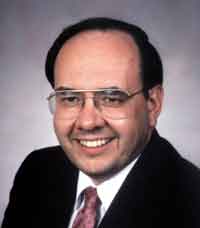
(Reuters) - Barnes & Noble Inc's founder and largest shareholder on Tuesday suspended his plan to buy the bookseller's stores, dashing investor hopes for a deal as the company again reported poor quarterly results.
B&N shares fell 15 percent to $14.17, their lowest level since February, when Leonard Riggio, who is also chairman, said he planned to make an offer for B&N's retail business.
News of Riggio's change of heart came as the company reported a 10 percent decline in sales at its bookstores and bn.com website for the latest quarter, hurt by a drop in sales of Nook e-readers and tablets at its stores and the absence of a mega-bestseller like the "Fifty Shades of Grey" trilogy that boosted business last year.
A deal would have resulted in splitting stores off from B&N's Nook and college bookstore businesses.
Now, investors who were waiting for a deal are moving on.
"Right now, the issue is you've got a lot of short-term deal investors in the stock and there's no deal," said Maxim Group analyst John Tinker. Investors will now focus on business fundamentals instead, he said.
And those were weak - comparable sales fell at its college bookstore chain in the latest quarter, while the Nook unit's revenue fell 20 percent and Barnes & Noble's share of the U.S. ebooks market slipped.
Despite another quarter of losses, the company said its cash position was sound and its $1 billion credit facility nearly untouched. Its stores generate a lot of cash and are still very profitable.
The largest U.S. bookstore chain said it would still entertain offers for all or part of the company, and Riggio said he reserved the right to make another bid someday, but the focus now would be on a more "integrated" company.
"Nothing is taken off the table," B&N President Michael Huseby told Reuters. "We're at the point now where we're going to focus on operating the businesses to improve the value of each one."
This includes launching a new website next year with up-to-date technology to reverse an online sales slide and compete more forcefully with archrival Amazon.com Inc.
"Every publisher I've talked to fervently wants Barnes & Noble to retain its viability both at retail and in e-commerce," said Lorraine Shanley, co-founder of Market Partners International.
She said thousands of author readings the retailer hosts each year help lift book and author profiles.
B&N has said it still plans to close about 15 stores a year and could easily close more if needed: 442 leases out of 674 superstores are up for renewal within the next three years.
The company put itself up for sale in 2010, but the only offer came from Liberty Interactive. Liberty backed down from an initial $1 billion bid and instead bought $204 million of preferred shares convertible for $17 apiece in 2011.
Last year, Microsoft Corp took a 17.6 percent stake in Nook Media, and British publisher Pearson Plc bought 5 percent. Barnes & Noble owns the rest.
Riggio bought the original Barnes & Noble store in Manhattan in the 1970s and used it to launch a national chain of big-box stores. He holds nearly 30 percent of the company's stock.
FIRING ON NO CYLINDERS
The latest quarter was a tumultuous one.
William Lynch resigned as CEO on July 8, soon after the company announced a 34 percent quarterly revenue drop in its Nook digital business, a venture he spearheaded that has cost the company hundreds of millions of dollars. The company on Tuesday blamed those losses on overly optimistic projections in the past for the Nook.
Company executives said B&N has a 22 percent share of the U.S. e-books market, down from 27 percent in February.
B&N said in June it would no longer make new tablets unless it found a partner. An August Ipsos poll conducted for Reuters found that only 2 percent of those very or somewhat interested in purchasing a tablet in the upcoming holiday season were inclined toward a Nook, with Apple's Inc's iPad, Amazon's Kindle Fire and the Samsung Galaxy far ahead.
B&N hasn't given up on color and black-and-white e-readers: The company said on Tuesday it plans to release at least one new Nook device for the upcoming holiday season and that other products are in development.
Still, the chain has slashed prices on its Simple Touch e-readers, suggesting demand for the device was weak.
Sales of B&N's Nook device and e-books plunged 20.2 percent in the latest quarter, and same-store sales at its college chain fell 1.2 percent.
B&N reported a net loss of $87 million, or $1.56 per share, for the fiscal first quarter ended July 27, compared with a loss of $39.8 million, or 76 cents per share, a year earlier.
An adjusted loss of 86 cents per share, which excludes a valuation allowance against certain deferred tax assets, was narrower than the loss of 89 cents per share expected by analysts, according to Thomson Reuters I/B/E/S.
Revenue fell 8.5 percent to $1.33 billion, slightly better than the $1.32 billion analysts had expected.
B&N said it still expects retail comparable-store sales to be down by a high-single-digit percentage in the current fiscal year.
Tuesday, August 20, 2013

Al Jazeera Has to Fix a Brand Problem
From Digiday.com:
Al Jazeera Has to Fix a Brand Problem
Josh Sternberg | August 20, 2013
Andre Agassi once told us that image is everything. Al Jazeera America, the newest entrant into the cable news fray, is learning this quite quickly.
Al Jazeera America goes live this afternoon, eight months after the Qatari government-funded media company bought Al Gore’s struggling network, Current TV, for $500 million. Its brand promise is a deeper dive into news and less shouting than other American cable networks like CNN, MSNBC and Fox News. A big hurdle: Some Americans associate its name, fairly or not, with terrorism. The bigger hurdle: Even more Americans have never heard of it and aren’t likely to trust it based on name alone.
“Perception of the company is absolutely their biggest obstacle; from the name, which is Arabic, to their competition,” said Christopher Penn, vp of marketing technology at Shift Communications. “It might actually be a positive for MSNBC and CNN, as Fox News will likely immediately brand it as the Terrorist News Network.”
Any entity entering the news category, which is so crowded now and undifferentiated, would have trouble, said Cohn & Wolfe’s North American president Jim Joseph. Al Jazeera America is at best an unknown brand, and Joseph believes since the average American doesn’t know it, she won’t trust it.
Joseph said that Al Jazeera America is going to have to deal with what might be perceived as a biased coverage coming from “a certain region of the world.” Any cable news watcher knows about bias. Political bias in the U.S. is a form of targeting. People watch voices they agree with. An Arab bias, he argued, won’t work.
“This kind of bias — it’s unknown, untrusted and scary — people won’t align with,” Joseph said. “They probably won’t touch it.”
The company’s negative image goes beyond potential viewers. Advertisers are also not completely on board. The NYT reports that Al Jazeera declined to mention major advertisers. Translation: We’re having troubles. Adweek also reports that buyers are having a difficult time getting their clients to lay their money down on the fledgling network.
In a conference call last week, Al Jazeera America’s CEO, Ehab Al Shihabi, emphasized its programming of “fact-based, unbiased and in-depth news,” as well as “less yelling and fewer celebrity sightings” as the way it will combat any negative perception and get people to tune in. But it’ll be a long slog.
In a 2009 study, Gallup found that 53 percent of respondents said their opinion of Islam was either “not too favorable” or “not favorable at all.” Americans are also twice as likely to express negative feelings about Muslims as they are about people who subscribe to other religions. Pew reported in May that post-September 11, 2001 attacks, Al Jazeera Arabic, the company’s flagship network, was seen as a mouthpiece for Al Qaeda. American attitudes towards Muslims are complicated.
Through this lens, Al Jazeera may have a difficult time getting Americans to watch. But there’s another issue Al Jazeera America faces. The cable network will start off in 48 million homes, or roughly half the number of households that CNN, Fox and MSNBC are in. This was the biggest problem Current TV had: People didn’t watch because it wasn’t offered to everyone (and it was hard to find on the dial).
“When the parent company created the Al Jazeera English satellite news channel seven years ago, most U.S. cable and satellite operators declined to carry it, and most American viewers could access it only online,” Pew reported.
Now that Al Jazeera America has its place on the TV spectrum it will no longer stream its services online because, as the New York Times reports, “distributors discourage their partners from giving programming away on the Internet.”
Other foreign TV networks, like the BBC, have made stronger footholds in America. This is not surprising given Americans’ fascination with all things British. Also, BBC America shows more than just news, airing popular shows like “Dr. Who” and “Top Gear.”
Al Jazeera America’s 900 staffers, including 400 in the newsroom (with names like former CNN’s Ali Velshi and Soledad O’Brien, former NBC News’ Mike Viqueira and John Seigenthaler and former MSNBC and Current TV’s David Shuster) and 12 bureaus across the country try to bolster its chances of adhering to American-centric programming.
Ultimately, according to Penn, Al Jazeera needs to determine what its brand wants to be in America.
“If they want to appeal to the mainstream, then they need to run news content that showcases exactly why they’re better than the alternatives,” Penn said. “They have to provide a compelling alternative to the existing mainstream news and establish a strong brand immediately, lest their competitors play dirty and marginalize them as nothing more than an ethnic news network.”
Al Jazeera Has to Fix a Brand Problem
Josh Sternberg | August 20, 2013
Andre Agassi once told us that image is everything. Al Jazeera America, the newest entrant into the cable news fray, is learning this quite quickly.
Al Jazeera America goes live this afternoon, eight months after the Qatari government-funded media company bought Al Gore’s struggling network, Current TV, for $500 million. Its brand promise is a deeper dive into news and less shouting than other American cable networks like CNN, MSNBC and Fox News. A big hurdle: Some Americans associate its name, fairly or not, with terrorism. The bigger hurdle: Even more Americans have never heard of it and aren’t likely to trust it based on name alone.
“Perception of the company is absolutely their biggest obstacle; from the name, which is Arabic, to their competition,” said Christopher Penn, vp of marketing technology at Shift Communications. “It might actually be a positive for MSNBC and CNN, as Fox News will likely immediately brand it as the Terrorist News Network.”
Any entity entering the news category, which is so crowded now and undifferentiated, would have trouble, said Cohn & Wolfe’s North American president Jim Joseph. Al Jazeera America is at best an unknown brand, and Joseph believes since the average American doesn’t know it, she won’t trust it.
Joseph said that Al Jazeera America is going to have to deal with what might be perceived as a biased coverage coming from “a certain region of the world.” Any cable news watcher knows about bias. Political bias in the U.S. is a form of targeting. People watch voices they agree with. An Arab bias, he argued, won’t work.
“This kind of bias — it’s unknown, untrusted and scary — people won’t align with,” Joseph said. “They probably won’t touch it.”
The company’s negative image goes beyond potential viewers. Advertisers are also not completely on board. The NYT reports that Al Jazeera declined to mention major advertisers. Translation: We’re having troubles. Adweek also reports that buyers are having a difficult time getting their clients to lay their money down on the fledgling network.
In a conference call last week, Al Jazeera America’s CEO, Ehab Al Shihabi, emphasized its programming of “fact-based, unbiased and in-depth news,” as well as “less yelling and fewer celebrity sightings” as the way it will combat any negative perception and get people to tune in. But it’ll be a long slog.
In a 2009 study, Gallup found that 53 percent of respondents said their opinion of Islam was either “not too favorable” or “not favorable at all.” Americans are also twice as likely to express negative feelings about Muslims as they are about people who subscribe to other religions. Pew reported in May that post-September 11, 2001 attacks, Al Jazeera Arabic, the company’s flagship network, was seen as a mouthpiece for Al Qaeda. American attitudes towards Muslims are complicated.
Through this lens, Al Jazeera may have a difficult time getting Americans to watch. But there’s another issue Al Jazeera America faces. The cable network will start off in 48 million homes, or roughly half the number of households that CNN, Fox and MSNBC are in. This was the biggest problem Current TV had: People didn’t watch because it wasn’t offered to everyone (and it was hard to find on the dial).
“When the parent company created the Al Jazeera English satellite news channel seven years ago, most U.S. cable and satellite operators declined to carry it, and most American viewers could access it only online,” Pew reported.
Now that Al Jazeera America has its place on the TV spectrum it will no longer stream its services online because, as the New York Times reports, “distributors discourage their partners from giving programming away on the Internet.”
Other foreign TV networks, like the BBC, have made stronger footholds in America. This is not surprising given Americans’ fascination with all things British. Also, BBC America shows more than just news, airing popular shows like “Dr. Who” and “Top Gear.”
Al Jazeera America’s 900 staffers, including 400 in the newsroom (with names like former CNN’s Ali Velshi and Soledad O’Brien, former NBC News’ Mike Viqueira and John Seigenthaler and former MSNBC and Current TV’s David Shuster) and 12 bureaus across the country try to bolster its chances of adhering to American-centric programming.
Ultimately, according to Penn, Al Jazeera needs to determine what its brand wants to be in America.
“If they want to appeal to the mainstream, then they need to run news content that showcases exactly why they’re better than the alternatives,” Penn said. “They have to provide a compelling alternative to the existing mainstream news and establish a strong brand immediately, lest their competitors play dirty and marginalize them as nothing more than an ethnic news network.”
Sunday, August 18, 2013
Despite Odds, Calif. City Becomes Two-Newspaper Town
Despite odds, Calif. city becomes 2 newspaper town
JUSTIN PRITCHARD, Associated Press
LONG BEACH, Calif. (AP) — The latest experiment in American journalism is a throwback: a new daily newspaper to compete against an established one in a big city.
With Monday's debut of the Long Beach Register, the ambitious owners of the Orange County Register are expanding their bet that consumers will reward an investment in news inked on paper and delivered to their doorsteps.
The competition is the Long Beach Press-Telegram, which was founded more than a century ago and maintains an average weekday circulation of about 55,000.
As a result of the budding newspaper battle, this city of 468,000 is joining the likes of Chicago, Philadelphia and Boston as what has become a rarity in 21st century America — the two newspaper town. Never mind shrinking circulations and online news migration.
"We believe that a city with the size and vibrancy of Long Beach should be happy to support a great newspaper of the variety we want to provide," said Aaron Kushner, who since buying the Orange County Register a year ago with a partner has surprised industry watchers by expanding reporting staff and page counts. "If it is, we'll make healthy money. If it's not, that'll be unfortunate for everyone. But we believe we'll be successful."
By launching the Long Beach Register, Kushner, publisher of the Register and CEO of Freedom Communications, is taking his contrarian instincts outside of Orange County.
Media business analyst Rick Edmonds said the last time he can recall a major U.S. city adding a new daily paper was around World War II, when Chicago got the Sun-Times and New York got Newsday. A brewing newspaper war in New Orleans between that city's Times-Picayune and a challenger based about 80 miles away in Baton Rouge, La., is the closest to what's unfolding in Long Beach.
"How will it play out?" asked Edmonds, of the Poynter Institute, a journalism foundation in St. Petersburg, Fla. "Don't really know until it happens."
Long Beach is a diverse city better known for its sprawling container ship port — one of the world's largest — than its beaches.
While its oceanfront drive features a large aquarium and the historic Queen Mary ocean liner, it also has big city problems including gangs. Bordering Orange County's urbanized north, it is in Los Angeles County, about 20 miles south of downtown LA.
In their small, sunlight-flooded newsroom, reporters for the new Register were greeted Thursday by two boxes of doughnuts and the kinds of issues that bedevil startups: who sits where, how come this outlet has no power, and how to get an Internet connection?
After a round of introductions, editor Paul Eakins told his staff that with at least 16 pages to fill each day, the paper would both cover "hyperlocal" news and welcome contributions from readers. In all, the paper has about 20 editorial employees.
Write about a boy becoming an Eagle Scout? Yes. Opening of the new dog park? You bet.
"I don't think they quite know what's coming," Eakins said of readers.
The plan Monday is to distribute 10,000 copies, publisher Ian Lamont said. It will be wrapped around the Orange County Register, so readers will get coverage of Long Beach's schools, sports, courts, happenings and City Hall — plus news from around the region and world. There will be no separate Long Beach paper on weekends.
Several reporters at the Long Beach Register are Press-Telegram alums, and though Eakins downplayed any rivalry, at the staff meeting there were gentle jabs about besting an old employer.
For their part, the Press-Telegram's bosses are giving no ground.
"We're not going to let a competitor come into our city and take it," said Michael A. Anastasi, vice president of news and executive editor of the Los Angeles News Group, which owns the Press-Telegram and eight other daily papers in the area.
The competition's certain winners, Anastasi said, will be local residents.
JUSTIN PRITCHARD, Associated Press
LONG BEACH, Calif. (AP) — The latest experiment in American journalism is a throwback: a new daily newspaper to compete against an established one in a big city.
With Monday's debut of the Long Beach Register, the ambitious owners of the Orange County Register are expanding their bet that consumers will reward an investment in news inked on paper and delivered to their doorsteps.
The competition is the Long Beach Press-Telegram, which was founded more than a century ago and maintains an average weekday circulation of about 55,000.
As a result of the budding newspaper battle, this city of 468,000 is joining the likes of Chicago, Philadelphia and Boston as what has become a rarity in 21st century America — the two newspaper town. Never mind shrinking circulations and online news migration.
"We believe that a city with the size and vibrancy of Long Beach should be happy to support a great newspaper of the variety we want to provide," said Aaron Kushner, who since buying the Orange County Register a year ago with a partner has surprised industry watchers by expanding reporting staff and page counts. "If it is, we'll make healthy money. If it's not, that'll be unfortunate for everyone. But we believe we'll be successful."
By launching the Long Beach Register, Kushner, publisher of the Register and CEO of Freedom Communications, is taking his contrarian instincts outside of Orange County.
Media business analyst Rick Edmonds said the last time he can recall a major U.S. city adding a new daily paper was around World War II, when Chicago got the Sun-Times and New York got Newsday. A brewing newspaper war in New Orleans between that city's Times-Picayune and a challenger based about 80 miles away in Baton Rouge, La., is the closest to what's unfolding in Long Beach.
"How will it play out?" asked Edmonds, of the Poynter Institute, a journalism foundation in St. Petersburg, Fla. "Don't really know until it happens."
Long Beach is a diverse city better known for its sprawling container ship port — one of the world's largest — than its beaches.
While its oceanfront drive features a large aquarium and the historic Queen Mary ocean liner, it also has big city problems including gangs. Bordering Orange County's urbanized north, it is in Los Angeles County, about 20 miles south of downtown LA.
In their small, sunlight-flooded newsroom, reporters for the new Register were greeted Thursday by two boxes of doughnuts and the kinds of issues that bedevil startups: who sits where, how come this outlet has no power, and how to get an Internet connection?
After a round of introductions, editor Paul Eakins told his staff that with at least 16 pages to fill each day, the paper would both cover "hyperlocal" news and welcome contributions from readers. In all, the paper has about 20 editorial employees.
Write about a boy becoming an Eagle Scout? Yes. Opening of the new dog park? You bet.
"I don't think they quite know what's coming," Eakins said of readers.
The plan Monday is to distribute 10,000 copies, publisher Ian Lamont said. It will be wrapped around the Orange County Register, so readers will get coverage of Long Beach's schools, sports, courts, happenings and City Hall — plus news from around the region and world. There will be no separate Long Beach paper on weekends.
Several reporters at the Long Beach Register are Press-Telegram alums, and though Eakins downplayed any rivalry, at the staff meeting there were gentle jabs about besting an old employer.
For their part, the Press-Telegram's bosses are giving no ground.
"We're not going to let a competitor come into our city and take it," said Michael A. Anastasi, vice president of news and executive editor of the Los Angeles News Group, which owns the Press-Telegram and eight other daily papers in the area.
The competition's certain winners, Anastasi said, will be local residents.
Friday, August 16, 2013
AOL's Patch Begins Massive Layoffs
AOL’s Patch Layoffs Coming Friday
August 15, 2013 at 8:49 pm PT
Tim_armstrong will begin laying off employees at its Patch unit on Friday, according to people familiar with the company’s plans.
Last week, AOL CEO Tim Armstrong announced that he would shutter or try to find partners for up to 400 of his 900 local news sites. I don’t know if Armstrong was able to find takers for any of the sites, but we should learn more about their status when the cuts begin today.
If I hear more about their scope, I’ll update this post. If you’re an AOL employee who would like to share your story, feel free to reach me at peter@allthingsd.com.
Armstrong co-founded Patch in 2007, when he was still running sales at Google. After taking the top job at AOL in 2009, he had the Web giant buy the local news startup, and since then has poured a lot of money into the venture, to the concern of AOL investors.
It’s relatively easy to understand Armstrong’s bet on Patch. No Internet company has truly cracked the local news and information business at scale. And if someone could do that, they could capture a huge pool of ad money that has yet to migrate to the Web.
But Patch hasn’t done that, either. Last year, it lost money on $35 million in revenue. Earlier this year, Armstrong promised that Patch would become profitable by the end of 2013.
But it’s hard to see how that would happen without significant cuts. As Bloomberg’s Ed Lee pointed out in June, even if Patch doubled its sales from last year, to $70 million, it would still be much less than its operating expenses of approximately $140 million.
Source: http://allthingsd.com/20130815/aols-patch-layoffs-coming-friday/
Tuesday, August 13, 2013
Balow's Warning on 'Doomsday Words'
Industry veteran Dan Balow (whom I admire very much) has a good, reasonable perspective on the future of the industry in this blogpost from Steve Laube's blog:
Doomsday Words
by Dan Balow
“Nobody is buying print books anymore”
“Nobody is buying printed magazines or newspapers anymore”
“No one shops at bookstores anymore”
“No one is reading anymore”
“No one goes to the trade shows anymore”
“No one needs a traditional publisher anymore”
“Everyone should just self-publish”
When the speed of change is faster than we can easily comprehend, our language has a difficult time catching up with reality, so we have a tendency to use over-stated terms to describe what is happening. Our very choice of words open the door to making some very poor business decisions. How? Rather than seeking wise solutions by understanding the facts, we make fast decisions based on incomplete information. Simply…it’s faster.
Nobody, no one, everyone, always, never, etc.
Not limited to publishing, over-stated language fills our political process, the financial markets, our personal lives and even our churches.
Overall, eBooks represent about 25% of all book sales…so digital-only books miss 75% of the market.
Print magazines, newspapers and trade shows are a lot alike…they reach a point where the cost cannot justify continuing, even though hundreds of thousands of people still read them or thousands of people attend an exposition. Readers Digest declared chapter 11 bankruptcy but had millions of print subscribers.
Bookstores still sell half of all print editions of most books. Sure, it is less than it was years ago, but it is still significant.
Traditional publishers still publish hundreds of thousands of new titles every year and account for significant majority of all books sold. Alternative methods of publishing have surpassed the title output of traditional publishers, but hold a small % of the overall dollar and unit volume.
So why use the word “nobody” to describe 75% of the market or “no one” applied to something that still holds a majority of a segment’s business? Information and facts always make things complicated. Wise decision-making is harder to come by. Take time, see the truth, then make wise decisions and hold realistic opinions.
As the great social commentator and sage Yogi Berra once said, “Nobody goes there anymore, it’s too crowded.”
Doomsday Words
by Dan Balow
“Nobody is buying print books anymore”
“Nobody is buying printed magazines or newspapers anymore”
“No one shops at bookstores anymore”
“No one is reading anymore”
“No one goes to the trade shows anymore”
“No one needs a traditional publisher anymore”
“Everyone should just self-publish”
When the speed of change is faster than we can easily comprehend, our language has a difficult time catching up with reality, so we have a tendency to use over-stated terms to describe what is happening. Our very choice of words open the door to making some very poor business decisions. How? Rather than seeking wise solutions by understanding the facts, we make fast decisions based on incomplete information. Simply…it’s faster.
Nobody, no one, everyone, always, never, etc.
Not limited to publishing, over-stated language fills our political process, the financial markets, our personal lives and even our churches.
Overall, eBooks represent about 25% of all book sales…so digital-only books miss 75% of the market.
Print magazines, newspapers and trade shows are a lot alike…they reach a point where the cost cannot justify continuing, even though hundreds of thousands of people still read them or thousands of people attend an exposition. Readers Digest declared chapter 11 bankruptcy but had millions of print subscribers.
Bookstores still sell half of all print editions of most books. Sure, it is less than it was years ago, but it is still significant.
Traditional publishers still publish hundreds of thousands of new titles every year and account for significant majority of all books sold. Alternative methods of publishing have surpassed the title output of traditional publishers, but hold a small % of the overall dollar and unit volume.
So why use the word “nobody” to describe 75% of the market or “no one” applied to something that still holds a majority of a segment’s business? Information and facts always make things complicated. Wise decision-making is harder to come by. Take time, see the truth, then make wise decisions and hold realistic opinions.
As the great social commentator and sage Yogi Berra once said, “Nobody goes there anymore, it’s too crowded.”
Friday, May 31, 2013
Reporters often cry along with the rest of us in sorrowful times like these
By Mark Masse for The News-Sentinel
Friday, May 31, 2013 - 12:01 am
Once again, the death of innocent children in an American elementary school dominates the news. This time, the fatalities are a result of violent weather — a devastating tornado — not a deranged gunman. But our emotions of shock, sorrow and grief are the same, as are many of the questions.
How could this happen? Why did some live while many died? How are surviving family members and friends coping with the unbearable loss of loved ones? Will they ever really recover?
Some of those asking such questions stand in front of the cameras, holding reporters’ notebooks or voice recorders. Still others take photos or video to capture the details on the scene. They are bearing witness so the rest in society can try to understand the import and impact of such an unfathomable act of God, nature, fate or bad luck. And many of those journalists are crying while they ask their questions, observe acres of destruction, gather their facts and compile their narratives.
Most of these are caring, professional reporters, not unfeeling “info-bots.” Certainly, there are notorious exceptions — on and off camera — of news media workers who manipulate people to garner emotional reactions. But, thankfully, these are rarer in an era where American tragedies and traumas arrive in waves and are universally known by just uttering a few words: Oklahoma City, Columbine, 9/11, Katrina, Virginia Tech, Aurora, Newtown and, once again, Oklahoma City.
Oklahoma City journalists have been frontline first responders through major crises during the last two decades: the bombing in 1995 that claimed 168 lives, killer tornadoes in 1999, the airplane crash in 2001 that claimed members of the Oklahoma State University basketball team and then more deadly tornadoes through the young 21st century, notably the one that struck on May 20 in Moore, a suburb of Oklahoma City, leaving a 17-mile path of destruction.
Contrary to the old newsroom myth stating that journalists are supposed to suspend any emotional involvement in their news coverage, a more enlightened generation of contemporary media workers realizes that observing the suffering of others indeed takes an emotional toll and carries serious responsibilities: Take care of yourself while being empathetic and respectful to those affected by tragic circumstances; ask questions sensitively so as not to retraumatize those dealing with loss; above all, be professional so audiences can better understand the world, especially in times of trouble.
Joe Hight, former managing editor of The Oklahoman newspaper and founding president of the Dart Center for Journalism and Trauma, calls the current reform movement in the news media “a culture of caring” for journalists, their sources and communities affected by tragedy and trauma. Yes, print, broadcast and online reporters can be emotional while doing their jobs. And they can cry along with the rest of us at sorrowful times like these.
Mark H. Masse is a professor of literary journalism at Ball State University. He is the author of “Trauma Journalism: On Deadline in Harm’s Way” (2011, Bloomsbury) and other book-length works of narrative nonfiction as well as two novels.
Thursday, May 30, 2013
Chicago Paper Lays Off Photographic Staff
Chicago Sun-Times lays off its photo staff
By Robert Channick Tribune staff reporter
1:14 p.m. EDT, May 30, 2013
The Chicago Sun-Times has laid off its entire photography staff, and plans to use freelance photographers and reporters to shoot photos and video going forward, the newspaper said.
A total of 28 full-time staffers received the news Thursday morning at a meeting held at the Sun-Times offices in Chicago, according to sources familiar with the situation. The layoffs are effective immediately.
The newspaper released a statement suggesting the move reflected the increasing importance of video in news reporting:
"The Sun-Times business is changing rapidly and our audiences are consistently seeking more video content with their news. We have made great progress in meeting this demand and are focused on bolstering our reporting capabilities with video and other multimedia elements. The Chicago Sun-Times continues to evolve with our digitally savvy customers, and as a result, we have had to restructure the way we manage multimedia, including photography, across the network."
The company is also preparing to supplement its freelance staff with reporters to shoot more video and photos, according to sources.
Among those laid off was longtime Sun-Times photographer John H. White, who won a Pulitzer Prize for feature photography in 1982. In winning the award, White was praised for his “consistently excellent work on a variety of subjects.”
By Robert Channick Tribune staff reporter
1:14 p.m. EDT, May 30, 2013
The Chicago Sun-Times has laid off its entire photography staff, and plans to use freelance photographers and reporters to shoot photos and video going forward, the newspaper said.
A total of 28 full-time staffers received the news Thursday morning at a meeting held at the Sun-Times offices in Chicago, according to sources familiar with the situation. The layoffs are effective immediately.
The newspaper released a statement suggesting the move reflected the increasing importance of video in news reporting:
"The Sun-Times business is changing rapidly and our audiences are consistently seeking more video content with their news. We have made great progress in meeting this demand and are focused on bolstering our reporting capabilities with video and other multimedia elements. The Chicago Sun-Times continues to evolve with our digitally savvy customers, and as a result, we have had to restructure the way we manage multimedia, including photography, across the network."
The company is also preparing to supplement its freelance staff with reporters to shoot more video and photos, according to sources.
Among those laid off was longtime Sun-Times photographer John H. White, who won a Pulitzer Prize for feature photography in 1982. In winning the award, White was praised for his “consistently excellent work on a variety of subjects.”
Subscribe to:
Comments (Atom)