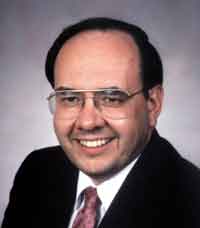
Here's some good advice from John Shore, who blogs at crosswalk.com. This is a short excerpt from a longer posting:
The Book Doctor Will Needle You Now
My last post, A Would-Be Writers Asks: "MUST I Go to College?" made me think of a job I took earlier this year doctoring a novel. If you don't know, "doctoring" a novel means taking someone's novel and either outright fixing it yourself, or directing its author on what he or she needs to do in order to fix it themselves.
It's the most intrusive and inclusive kind of editing; it covers every aspect of the book at hand: pace, setting, characters, dialogue, wardrobe malfunctions, etc. I sometimes take on this sort of work if I believe in the author, or think the book has potential.
Below are excerpts from the last summary report I wrote for a would-be novelist (a fellow whom I'm proud to say took my advice, returned to college, and is now well on his way to making it as a writer of literary fiction).
Back to basics
Just like a physicist must first master basic math skills, so a writer must first master punctuation, grammar, syntax and usage. You simply have to know this stuff, cold. I don’t know how you’re going to learn it as thoroughly as you need to---if you’re going to take an adult ed class in English composition, or buy some style or usage guides and study them, or what.
I can tell you what I did---though I wouldn’t recommend it. I taught that stuff to myself. I spent about three years with my nose buried in "The Chicago Manual of Style," and Kate Turabian’s classic style manual, and the "Harper Dictionary of Contemporary Usage," and the AP Style Guide, and about a zillion other such titles. (One of the best, most comprehensive books of this sort available today is "Quick Access" by Lynn Quitman Troyka. It’s awesome. If you’re only gonna have one such book---and don’t, of course---make it this one.)
I wouldn’t recommend teaching yourself this material because the best way to learn anything so vast and complex is systematically, which is pretty much the whole purpose of (shudder!) school. I think you want to take some classes in English composition. You need to know what constitutes a complete sentence; the basic rules of punctuation; the pitfalls and earmarks of sloppy syntax. However you go about it, do not try to short cut around learning this stuff, because without it I guarantee you will never get off the ground as a writer....
Reading is really the best way to learn the basics of writing. If you read enough, for long enough, after awhile you just know what does and doesn’t make for a sound, clean sentence; you understand the functions of punctuation; you come to have a solid feel for syntax and usage.
Read any modern master: Updike, Vonnegut, Hemingway, John Irving, Steinbeck. Read it hard. Study it. Take a class or two (or ten) on English literature. Give it a some time. It’ll be worth it, because once you know grammar and syntax you'll be in possession of all the bricks necessary to build yourself virtually any building you want....
Sunday, November 30, 2008

What Was That You Said?
(These will NOT show up on a quiz)
When pop star Britney Spears was asked what is the best part about being famous, she replied, "I get to go to lots of overseas places, like Canada." When you're a celebrity or politician, everything you say can be used against you later. If you're famous, innocent flubs that would otherwise be forgotten are quoted until your dying day.
Here is an assortment of some of those innocent flubs collected by Rinkworks.com:
"Outside of the killings, [Washington, D.C.] has one of the lowest crime rates in the country."
-- Marion Barry, Mayor of Washington, D.C.
"[I want to] make sure everybody who has a job wants a job."
-- George H. W. Bush, during his first campaign for the presidency
"Rarely is the question asked: Is our children learning?"
-- George W. Bush
"I know how hard it is for you to put food on your family."
-- George W. Bush
"Well, I think if you say you're going to do something and don't do it, that's trustworthiness."
-- George W. Bush
--"President Carter speaks loudly and carries a fly spotter, a fly swasher -- it's been a long day."
-- Gerald Ford
"If Lincoln was alive today, he'd roll over in his grave."
-- Gerald Ford
"That is what has made America last these past 200 centuries."
-- Gerald Ford
"A zebra does not change its spots."
-- Al Gore
"Smoking kills. If you're killed, you've lost a very important part of your life."
-- Brooke Shields
When pop star Britney Spears was asked what is the best part about being famous, she replied, "I get to go to lots of overseas places, like Canada." When you're a celebrity or politician, everything you say can be used against you later. If you're famous, innocent flubs that would otherwise be forgotten are quoted until your dying day.
Here is an assortment of some of those innocent flubs collected by Rinkworks.com:
"Outside of the killings, [Washington, D.C.] has one of the lowest crime rates in the country."
-- Marion Barry, Mayor of Washington, D.C.
"[I want to] make sure everybody who has a job wants a job."
-- George H. W. Bush, during his first campaign for the presidency
"Rarely is the question asked: Is our children learning?"
-- George W. Bush
"I know how hard it is for you to put food on your family."
-- George W. Bush
"Well, I think if you say you're going to do something and don't do it, that's trustworthiness."
-- George W. Bush
--"President Carter speaks loudly and carries a fly spotter, a fly swasher -- it's been a long day."
-- Gerald Ford
"If Lincoln was alive today, he'd roll over in his grave."
-- Gerald Ford
"That is what has made America last these past 200 centuries."
-- Gerald Ford
"A zebra does not change its spots."
-- Al Gore
"Smoking kills. If you're killed, you've lost a very important part of your life."
-- Brooke Shields
Friday, November 28, 2008
Rick Warren Releases Christmas Book
From Christianpost.com:
Rick Warren's New Book Hits Bestsellers Lists
By Eric Young
Christian Post Reporter
Rick Warren’s first released book since his highly popular Purpose Driven Life is another best seller and will likely continue its climb as America heads past Thanksgiving and toward Christmas.
After two weeks on the bookshelves, The Purpose of Christmas has been listed among the New York Times’ top 5 bestselling Hardcover Advice books. It is also currently No. 25 on USA Today’s weekly top 150 best sellers overall after debuting at No. 27.
“This book, The Purpose of Christmas, is the most clear definition of Christianity – of what it means to follow Jesus, what it means to be saved – of anything I’ve ever written,” says Warren, who pastors Saddleback Valley Community Church in Lake Forest, Calif.
"The book is cleverly simple and profound," adds Pastor Phil Munsey of the Life Church in Mission Viejo, Calif.
"This book won't answer the questions of the skeptic, but it will answer the sincere quest of those who just want the simple truth of the most celebrated holiday in the world," Munsey told the OC Register of Orange County. "If you want to recapture the innocent childlike faith you embraced … this book will cause you to rejoice."
Based off a Christmas message Warren had delivered two years ago at his Southern California megachurch, The Purpose of Christmas explains why Jesus Christ came to earth – which Warren says can be summed up through the three statements given by the angels that appeared at the first Christmas.
“First, he (the angel) said ‘I bring you good news of great joy.’ It’s a time for celebration,” explains Warren. “And then he says, ‘for on this day is born to you a savior, who is Christ the Lord.’ It’s a time for salvation. And then he says ‘Peace on earth; goodwill toward men.’ It’s a time for reconciliation.
“Jesus Christ came to the earth for celebration, salvation, and reconciliation,” Warren says. “In other words, to make peace with God, to make peace with ourselves, to make peace with other people.”
The 125-page gift book follows Warren's bestselling The Purpose Driven Life, which has sold 52 million copies since its release six years ago. Described as the bestselling nonfiction hardback book in history, the 2002 devotional book rocketed the Baptist pastor into national prominence and was also most identified in a Barna survey of American pastors and ministers as the book that was most influential on their lives and ministries.
Even compared to it, however, Warren says The Purpose of Christmas is “the most evangelistic book I’ve ever written.”
“It’s the clearest presentation of the Gospel,” he says.
In addition to the book, two other “amazing tools” were created by Warren and his team to help people understand the meaning and purpose of Christmas.
The second tool that was created is a three-week small group curriculum based on the three parts of Warren’s Christmas message and intended for Christians and churches to use in the months of November and December. The third is a 16-track CD that intertwines inspirational Christmas songs – sung by such well-known artists as Sarah McLachlan, Martina McBride, ThirdDay and Vince Gill – with inspiring narrative from Warren explaining the three purposes of Christmas as detailed in his book.
"God's message of the purpose of Christmas is clearly written in His Word," says Warren. "I believe that when people experience the Good News … they will begin to understand what Christmas means to them personally, deepening their regard and respect for this season.
“We’re going to be praying that this book is used widely to win many people to Christ,” he adds.
All net proceeds of The Purpose of Christmas book and CD will go to benefit Saddleback Church's PEACE Plan – a global initiative created by Warren to mobilize millions of Christians in the fight against the five global giants of spiritual emptiness, self-centered leadership, extreme poverty, pandemic disease and illiteracy/education.
The CD, which comes with a bonus DVD of Warren's message, is currently available exclusively at Wal-Mart stores through an exclusive arrangement.
The Purpose of Christmas book and the DVD study curriculum materials from Christian publishing giant Zondervan, meanwhile, are available at stores nationwide.
Rick Warren's New Book Hits Bestsellers Lists
By Eric Young
Christian Post Reporter
Rick Warren’s first released book since his highly popular Purpose Driven Life is another best seller and will likely continue its climb as America heads past Thanksgiving and toward Christmas.
After two weeks on the bookshelves, The Purpose of Christmas has been listed among the New York Times’ top 5 bestselling Hardcover Advice books. It is also currently No. 25 on USA Today’s weekly top 150 best sellers overall after debuting at No. 27.
“This book, The Purpose of Christmas, is the most clear definition of Christianity – of what it means to follow Jesus, what it means to be saved – of anything I’ve ever written,” says Warren, who pastors Saddleback Valley Community Church in Lake Forest, Calif.
"The book is cleverly simple and profound," adds Pastor Phil Munsey of the Life Church in Mission Viejo, Calif.
"This book won't answer the questions of the skeptic, but it will answer the sincere quest of those who just want the simple truth of the most celebrated holiday in the world," Munsey told the OC Register of Orange County. "If you want to recapture the innocent childlike faith you embraced … this book will cause you to rejoice."
Based off a Christmas message Warren had delivered two years ago at his Southern California megachurch, The Purpose of Christmas explains why Jesus Christ came to earth – which Warren says can be summed up through the three statements given by the angels that appeared at the first Christmas.
“First, he (the angel) said ‘I bring you good news of great joy.’ It’s a time for celebration,” explains Warren. “And then he says, ‘for on this day is born to you a savior, who is Christ the Lord.’ It’s a time for salvation. And then he says ‘Peace on earth; goodwill toward men.’ It’s a time for reconciliation.
“Jesus Christ came to the earth for celebration, salvation, and reconciliation,” Warren says. “In other words, to make peace with God, to make peace with ourselves, to make peace with other people.”
The 125-page gift book follows Warren's bestselling The Purpose Driven Life, which has sold 52 million copies since its release six years ago. Described as the bestselling nonfiction hardback book in history, the 2002 devotional book rocketed the Baptist pastor into national prominence and was also most identified in a Barna survey of American pastors and ministers as the book that was most influential on their lives and ministries.
Even compared to it, however, Warren says The Purpose of Christmas is “the most evangelistic book I’ve ever written.”
“It’s the clearest presentation of the Gospel,” he says.
In addition to the book, two other “amazing tools” were created by Warren and his team to help people understand the meaning and purpose of Christmas.
The second tool that was created is a three-week small group curriculum based on the three parts of Warren’s Christmas message and intended for Christians and churches to use in the months of November and December. The third is a 16-track CD that intertwines inspirational Christmas songs – sung by such well-known artists as Sarah McLachlan, Martina McBride, ThirdDay and Vince Gill – with inspiring narrative from Warren explaining the three purposes of Christmas as detailed in his book.
"God's message of the purpose of Christmas is clearly written in His Word," says Warren. "I believe that when people experience the Good News … they will begin to understand what Christmas means to them personally, deepening their regard and respect for this season.
“We’re going to be praying that this book is used widely to win many people to Christ,” he adds.
All net proceeds of The Purpose of Christmas book and CD will go to benefit Saddleback Church's PEACE Plan – a global initiative created by Warren to mobilize millions of Christians in the fight against the five global giants of spiritual emptiness, self-centered leadership, extreme poverty, pandemic disease and illiteracy/education.
The CD, which comes with a bonus DVD of Warren's message, is currently available exclusively at Wal-Mart stores through an exclusive arrangement.
The Purpose of Christmas book and the DVD study curriculum materials from Christian publishing giant Zondervan, meanwhile, are available at stores nationwide.
Monday, November 24, 2008
Reader's Digest, Rick Warren to Start Magazine
The Reader's Digest Association, Inc., and Dr. Rick Warren, Pastor of Saddleback Valley Community Church and the author of the worldwide best-seller, "The Purpose Driven Life," today announced a partnership to produce an inspirational multimedia platform called The Purpose Driven Connection.
Together the organizations will pool their international resources to produce and publish this Purpose Driven platform to help people who are seeking their purpose in life and wish to interact with others on their spiritual journeys.
The platform will provide a suite of bundled multimedia tools: "The Purpose Driven Connection," a quarterly magazine; Small Group study materials delivered in DVDs, workbooks and downloadable discussion guides; and a state-of-the-art Christian social networking website.
"We are excited about this new partnership and its unprecedented potential for international impact," said Warren, who will serve as Editor-in-Chief and be heavily involved in the conception of each element. "The Purpose Driven Connection represents more than simply integrated multimedia resources; it will become a platform for a movement of people to change the world."
"We are delighted to be working with Rick Warren and the Saddleback team," said Alyce Alston, President of RDA's Home & Garden and Health & Wellness affinities. "This is one of our company's most important and far-reaching ventures ever. Together we will create a category-busting multimedia suite that will help millions of people in their daily lives, including those who already follow the Purpose Driven principles as well as seekers everywhere looking for greater fulfillment."
The Purpose Driven Connection revolves around the theme, "Your Life Matters," and mirrors Warren's book, which has sold more than 30 million copies since being released in 2002 and has been read by 60 million people and translated into nearly 100 languages.
It also relates to Saddleback Church's PEACE Plan, initiated by Warren, which mobilizes Christians to combat global problems affecting billions of people, including spiritual emptiness, corrupt leadership, extreme poverty, pandemic diseases and illiteracy. To date, the PEACE Coalition has advanced the program among the public, profit and faith sectors in 68 countries.
The magazine, to launch early in 2009, will include stories of everyday people who have found God's purpose for their lives. The framework for the platform will be designed to provide five practical tools to communicate five spiritual purposes -- Knowing, Relating, Growing, Serving and Sharing -- each through a combination of teaching and testimony.
"The magazine will be consistent with our highest editorial standards," said Frank Lalli, RDA's Vice President of International Editions and Magazine Development. "In the best traditions of RDA, we are commissioning extraordinary photographers, illustrators and writers to travel the world and capture real-life stories that will change how readers think and inspire them to take action to improve society."
Together the organizations will pool their international resources to produce and publish this Purpose Driven platform to help people who are seeking their purpose in life and wish to interact with others on their spiritual journeys.
The platform will provide a suite of bundled multimedia tools: "The Purpose Driven Connection," a quarterly magazine; Small Group study materials delivered in DVDs, workbooks and downloadable discussion guides; and a state-of-the-art Christian social networking website.
"We are excited about this new partnership and its unprecedented potential for international impact," said Warren, who will serve as Editor-in-Chief and be heavily involved in the conception of each element. "The Purpose Driven Connection represents more than simply integrated multimedia resources; it will become a platform for a movement of people to change the world."
"We are delighted to be working with Rick Warren and the Saddleback team," said Alyce Alston, President of RDA's Home & Garden and Health & Wellness affinities. "This is one of our company's most important and far-reaching ventures ever. Together we will create a category-busting multimedia suite that will help millions of people in their daily lives, including those who already follow the Purpose Driven principles as well as seekers everywhere looking for greater fulfillment."
The Purpose Driven Connection revolves around the theme, "Your Life Matters," and mirrors Warren's book, which has sold more than 30 million copies since being released in 2002 and has been read by 60 million people and translated into nearly 100 languages.
It also relates to Saddleback Church's PEACE Plan, initiated by Warren, which mobilizes Christians to combat global problems affecting billions of people, including spiritual emptiness, corrupt leadership, extreme poverty, pandemic diseases and illiteracy. To date, the PEACE Coalition has advanced the program among the public, profit and faith sectors in 68 countries.
The magazine, to launch early in 2009, will include stories of everyday people who have found God's purpose for their lives. The framework for the platform will be designed to provide five practical tools to communicate five spiritual purposes -- Knowing, Relating, Growing, Serving and Sharing -- each through a combination of teaching and testimony.
"The magazine will be consistent with our highest editorial standards," said Frank Lalli, RDA's Vice President of International Editions and Magazine Development. "In the best traditions of RDA, we are commissioning extraordinary photographers, illustrators and writers to travel the world and capture real-life stories that will change how readers think and inspire them to take action to improve society."
Sunday, November 23, 2008
Woodward & Bernstein Visit 'Deep Throat'
This summary is not available. Please
click here to view the post.
Why Do You Want to Be in Journalism?
From Columbia Journalism Review. Notice the note at the end, inviting journalism students to contribute. Take them up on it!
Hope Dies Last
I want newspapers to survive, but will they?
By Mallory Carra
I wasn’t even twenty-five years old and I was working for the New York Daily News. All of my friends and family called me their “big-time reporter.” Except at that moment, I was the big-time New York reporter crying in a bathroom stall, thinking, “I hate this.” If this was what it’s like at the “top,” why had I worked so hard to get here?
It was a weird thought because I was living my dream. I had been living and breathing journalism since high school; I loved writing, telling stories, and talking to different people. I found joy in writing for my high school’s barely-there newspaper. I worked myself ragged as a writer and sports editor of NYU’s student paper, but I loved every minute of it. Sometimes I still can’t believe I did all of that for free, yet when I got the chance to do it for a top paper for a good salary, I didn’t want to do it at all.
Was it because of the newsrooms I had worked in or the people I had worked with? Yes and no. I’ve worked in three newsrooms in different parts of the country. Each had their own personality, but all of them tried to fight the future. It’s enough for me to understand why newspapers are dying.
During my post-grad internship at The News and Observer in North Carolina, I pitched a story about Facebook privacy concerns. I spent an hour explaining Facebook to my assigning editor, who still couldn’t wrap his head around it and treated the story like intern busywork that should never see newsprint. After I left, my final draft was turned into the millionth “Facebook is popular” trend story, six months before the Facebook privacy backlash began in 2005.
After that, I spent two and a half years working for the Chattanooga Times Free Press, a newspaper that was trying to catch up with the Internet. Reporters were required to blog, though some of the reporters had trouble understanding what a blog was in the first place, confusing posts with print articles on the Web site. Colleagues and I tried to rebel against the weekly post requirement. We had the freedom to write how and what we wanted, but they controlled when? Wasn’t that against the point of blogging? At least this newspaper’s editors understood the importance of their Web site and tried the best they could, even if they were a few years behind. Reporters blogged, we recorded audio and video, but, most of all, complained—a lot.
At the Daily News, a photographer made a slideshow to go with one of my stories. My supervisor proudly circulated the link around the section, but his boss had a very simple response to the multimedia effort: “Why?” Yet this same person also suggested I create a Google Alert with my name to see if blogs picked up any of my stories, as if it would be an honor and a reward. I found it odd that one of the largest newspapers in the country needed the reassurance of bloggers. After all, everyone at the paper acted like they were unaffected by falling circulation numbers, saying that this is New York and newspapers can’t possibly be dying here because people always have read papers and thus always will. Reporters and photographers mention the paper’s circulation rank at least three times a day in conversation to each other, sources, recent hires, and anyone who dare cross them.
But that mantra won’t stop the numbers from falling, the layoffs from coming, the readers from preferring the Internet, and the ads from not selling. The people at the paper kept telling me how everyone wanted to be in my position. After six weeks, I didn’t want to be there anymore. Three months later, I’ve been laid off from a temp receptionist job and my job search has stalled as the economy crumbles. All I can do now is read blogs in my pajamas all day, but I’m thankful for the chance to be a reader again and see what all the fuss is about.
It’s different on the other side. The only newspaper I read is the free one handed to me before I get on the subway, because I can’t afford to pay for one. My mind drifts during long, jargon-filled online news articles and I enjoy their succinct and snarky blogs more. I follow CNN, AP, and The Onion’s Twitter feeds. My job hunt is fueled by online job postings on various Web sites and attempts at networking. I check CNBC.com for updates about the falling stock market and which company is laying off how many today, because newspapers frustrate me by providing yesterday’s information.
My main concern is how newsrooms will move forward—if they ever do. A lot of people who love reading the hard copy and want coupons, but what happens when that group dies off or the economy gets worse? Why buy a bulky stack of paper filled with yesterday’s news when you can log on and get today’s for free? I’ve attended too many journalism conferences where the theme has been convergence and editors talk about how “blogs are the future.” They’re not the future anymore; they’re now, and the Internet will rule more of how we get news in the years ahead. Where have these editors been?
Reporters need to stop regarding the Internet as a pest they’re not paid enough to provide for and accept that, in addition to their daily duties, this is the new journalism. Owners need to remember that, along with the flashy appeal of the Internet and big profits, newspapers still require good journalism and even better journalists. Newspapers, even without the “paper,” can still remain a news authority, but they need to start acting like one and stop acting like the great-grandfather trying to impress the cool kids.
My current interest in journalism has shifted to the Internet, blogs and social media. News doesn’t necessarily come from news sources anymore. Everything on the Internet has the potential to become something big, even if just for a day. That works out well for marketing ploys and blog book deals, but it also helps promote stories from all over that might have ordinarily flown under the radar. I’m not sure how things will evolve, but I’m excited to see how it does and that’s what still has me interested in the industry. The Internet facilitates creativity. and I think newspapers have the potential to do so much with it. And I’d love to be a part of it, if they ever do.
I want this to happen, so much that it’s hard for me to stop caring for the profession I loved so much in college, but cried about hating in the bathroom. Maybe things will get better when the economy bounces back. Maybe newspapers will start to have the backing to utilize the Internet the way they want and should. Maybe a new generation of editors and reporters will embrace the Internet and save newspapers from dying. Right now, though, I have as much hope for newspapers as I have of finding a non-journalism job while equipped with a journalism degree in this economy—none.
____
In July, we invited laid-off and bought-out journalists to reflect on their experience in the form of a letter to colleagues. Now we are issuing a similar invitation to the young people who’ve come into the profession in the last five years or so, and the young journalism students who soon will. We invite them to air their concerns and hopes about journalism, too. The central questions: What do you see in this business that makes you still want to pursue it? How do you imagine people will get quality news five years down the road? How will you try to fit in? Send your submissions to editors@cjr.org. We’ll publish these periodically under the headline “Starting Thoughts,” and we’ll archive everything we publish here.
Hope Dies Last
I want newspapers to survive, but will they?
By Mallory Carra
I wasn’t even twenty-five years old and I was working for the New York Daily News. All of my friends and family called me their “big-time reporter.” Except at that moment, I was the big-time New York reporter crying in a bathroom stall, thinking, “I hate this.” If this was what it’s like at the “top,” why had I worked so hard to get here?
It was a weird thought because I was living my dream. I had been living and breathing journalism since high school; I loved writing, telling stories, and talking to different people. I found joy in writing for my high school’s barely-there newspaper. I worked myself ragged as a writer and sports editor of NYU’s student paper, but I loved every minute of it. Sometimes I still can’t believe I did all of that for free, yet when I got the chance to do it for a top paper for a good salary, I didn’t want to do it at all.
Was it because of the newsrooms I had worked in or the people I had worked with? Yes and no. I’ve worked in three newsrooms in different parts of the country. Each had their own personality, but all of them tried to fight the future. It’s enough for me to understand why newspapers are dying.
During my post-grad internship at The News and Observer in North Carolina, I pitched a story about Facebook privacy concerns. I spent an hour explaining Facebook to my assigning editor, who still couldn’t wrap his head around it and treated the story like intern busywork that should never see newsprint. After I left, my final draft was turned into the millionth “Facebook is popular” trend story, six months before the Facebook privacy backlash began in 2005.
After that, I spent two and a half years working for the Chattanooga Times Free Press, a newspaper that was trying to catch up with the Internet. Reporters were required to blog, though some of the reporters had trouble understanding what a blog was in the first place, confusing posts with print articles on the Web site. Colleagues and I tried to rebel against the weekly post requirement. We had the freedom to write how and what we wanted, but they controlled when? Wasn’t that against the point of blogging? At least this newspaper’s editors understood the importance of their Web site and tried the best they could, even if they were a few years behind. Reporters blogged, we recorded audio and video, but, most of all, complained—a lot.
At the Daily News, a photographer made a slideshow to go with one of my stories. My supervisor proudly circulated the link around the section, but his boss had a very simple response to the multimedia effort: “Why?” Yet this same person also suggested I create a Google Alert with my name to see if blogs picked up any of my stories, as if it would be an honor and a reward. I found it odd that one of the largest newspapers in the country needed the reassurance of bloggers. After all, everyone at the paper acted like they were unaffected by falling circulation numbers, saying that this is New York and newspapers can’t possibly be dying here because people always have read papers and thus always will. Reporters and photographers mention the paper’s circulation rank at least three times a day in conversation to each other, sources, recent hires, and anyone who dare cross them.
But that mantra won’t stop the numbers from falling, the layoffs from coming, the readers from preferring the Internet, and the ads from not selling. The people at the paper kept telling me how everyone wanted to be in my position. After six weeks, I didn’t want to be there anymore. Three months later, I’ve been laid off from a temp receptionist job and my job search has stalled as the economy crumbles. All I can do now is read blogs in my pajamas all day, but I’m thankful for the chance to be a reader again and see what all the fuss is about.
It’s different on the other side. The only newspaper I read is the free one handed to me before I get on the subway, because I can’t afford to pay for one. My mind drifts during long, jargon-filled online news articles and I enjoy their succinct and snarky blogs more. I follow CNN, AP, and The Onion’s Twitter feeds. My job hunt is fueled by online job postings on various Web sites and attempts at networking. I check CNBC.com for updates about the falling stock market and which company is laying off how many today, because newspapers frustrate me by providing yesterday’s information.
My main concern is how newsrooms will move forward—if they ever do. A lot of people who love reading the hard copy and want coupons, but what happens when that group dies off or the economy gets worse? Why buy a bulky stack of paper filled with yesterday’s news when you can log on and get today’s for free? I’ve attended too many journalism conferences where the theme has been convergence and editors talk about how “blogs are the future.” They’re not the future anymore; they’re now, and the Internet will rule more of how we get news in the years ahead. Where have these editors been?
Reporters need to stop regarding the Internet as a pest they’re not paid enough to provide for and accept that, in addition to their daily duties, this is the new journalism. Owners need to remember that, along with the flashy appeal of the Internet and big profits, newspapers still require good journalism and even better journalists. Newspapers, even without the “paper,” can still remain a news authority, but they need to start acting like one and stop acting like the great-grandfather trying to impress the cool kids.
My current interest in journalism has shifted to the Internet, blogs and social media. News doesn’t necessarily come from news sources anymore. Everything on the Internet has the potential to become something big, even if just for a day. That works out well for marketing ploys and blog book deals, but it also helps promote stories from all over that might have ordinarily flown under the radar. I’m not sure how things will evolve, but I’m excited to see how it does and that’s what still has me interested in the industry. The Internet facilitates creativity. and I think newspapers have the potential to do so much with it. And I’d love to be a part of it, if they ever do.
I want this to happen, so much that it’s hard for me to stop caring for the profession I loved so much in college, but cried about hating in the bathroom. Maybe things will get better when the economy bounces back. Maybe newspapers will start to have the backing to utilize the Internet the way they want and should. Maybe a new generation of editors and reporters will embrace the Internet and save newspapers from dying. Right now, though, I have as much hope for newspapers as I have of finding a non-journalism job while equipped with a journalism degree in this economy—none.
____
In July, we invited laid-off and bought-out journalists to reflect on their experience in the form of a letter to colleagues. Now we are issuing a similar invitation to the young people who’ve come into the profession in the last five years or so, and the young journalism students who soon will. We invite them to air their concerns and hopes about journalism, too. The central questions: What do you see in this business that makes you still want to pursue it? How do you imagine people will get quality news five years down the road? How will you try to fit in? Send your submissions to editors@cjr.org. We’ll publish these periodically under the headline “Starting Thoughts,” and we’ll archive everything we publish here.
Clever Groaners -- Fun With Words
Many people are interested in the Stock Market these days. Here's a report from October 31st.
"Helium was up, feathers are down. Paper was stationary. Fluorescent tubing was dimmed by light trading. Knives were up sharply. Cows steered into a bull market. Pencils lost a few points. Hiking equipment was trailing. Elevators rose while escalators continued their slow decline.
"Weights were up in heavy trading. Light switches were off. Mining equipment hit rock bottom. Diapers remain unchanged. Shipping lines stayed at an even keel. The market for raisins dried up. Coca Cola fizzled.
"Caterpillar stock inched up a bit. Sun peaked at midday. Balloon prices were inflated. And batteries exploded in an attempt to recharge the market."
"Helium was up, feathers are down. Paper was stationary. Fluorescent tubing was dimmed by light trading. Knives were up sharply. Cows steered into a bull market. Pencils lost a few points. Hiking equipment was trailing. Elevators rose while escalators continued their slow decline.
"Weights were up in heavy trading. Light switches were off. Mining equipment hit rock bottom. Diapers remain unchanged. Shipping lines stayed at an even keel. The market for raisins dried up. Coca Cola fizzled.
"Caterpillar stock inched up a bit. Sun peaked at midday. Balloon prices were inflated. And batteries exploded in an attempt to recharge the market."
Subscribe to:
Comments (Atom)