Monday, December 31, 2012
Tribune to Leave Bankruptcy After Four Years
2:09a.m. EST December 31, 2012
CHICAGO (AP) — Tribune Co. announced it is emerging after more four years of bankruptcy.
Tribune said late Sunday the reorganized media company begins Monday with new ownership — the senior creditors — and a new board of directors: Bruce Karsh, Ken Liang, Peter Murphy, Ross Levinsohn, Craig A. Jacobson, Peter Liguori, and Eddy Hartenstein.
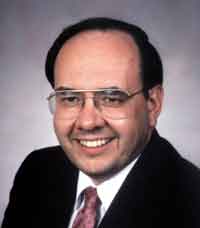
"Tribune will emerge from the bankruptcy process as a multimedia company with a great mix of profitable assets, strong brands in major markets and a much-improved capital structure," said Hartenstein, Tribune's chief executive officer.
Senior creditors Oaktree Capital Management, Angelo, Gordon & Co. and JPMorgan Chase & Co. will control of the new company. The Chicago Tribune reported late Sunday that Liguori, a former TV executive at Discovery and Fox, is expected to be named chief executive the reorganized Tribune Co.
Tribune, which was founded in 1847, publishes some of the best-known newspapers in the U.S., including the Los Angeles Times, The Baltimore Sun and the Chicago Tribune. It also owns WGN in Chicago and 22 other television stations, as well as the WGN radio station. The Tribune's report Sunday said that the new owners expect to sell all of the company's assets.
Tribune Co. sought bankruptcy protection in 2008, less than a year after billionaire developer Sam Zell led an $8 billion leveraged buyout that left the company with $13 billion in debt.

Monday, December 24, 2012
Taylor Students Publish Devotionals
Taylor U. students’ work in book of devotions
Daily devotions written by Taylor University students and their professor are included in a one-year devotional book, “The Spirit Calling: Awaken to the Sound of His Voice,” which was released recently by Worthy Publishers of Nashville, Tenn.
The 23 contributing authors of the book include professor Dennis E. Hensley of Taylor and 11 students from his professional writing program: Ashlee Amann, Kyle Carruthers, Sarah Cespedes, Ryan Dennison, Kacey Heinlein, Katelyn Irons, Lexie Owen, Jeremy Paul, Demelza Ramirez, Joshua Spotts and Tom Vick.
None of the students are from Fort Wayne.
“We were given the theme of writing devotions from the perspective of the Holy Spirit,” Hensley said in a Taylor news release. “Each of the students and I had to write 10 devotions last May.”
The students have written articles, reviews and interviews that have been published in a variety of newspapers and magazines, but was the first book project for all, the news release said. The book sells for $14.99, and is available in Christian bookstores or through the Worthy Publishing website, www.worthypublishing.com.
Tuesday, October 2, 2012
Washington Times Celebrates 30 Years
The Washington Times
Monday, October 1, 2012
Friends of The Washington Times will gather Tuesday to celebrate 30 years of faith, family and freedom in the nation’s capital. A glance through the paper’s headlines over the decades is a testament to how The Washington Times has remained true to its mission.
It’s no secret that early on, The Washington Times became a daily read for President Ronald Reagan. The Gipper’s fondness was so legendary that he couldn’t help but slip in a mention of his favored paper while speaking at an anniversary celebration for USA Today. Reagan described an airliner that cruised low along the Potomac, buzzing past that company’s high-rise Rosslyn headquarters when it first opened for business. USA Today’s editorial staff was understandably alarmed. “And what was really frightening,” added Reagan, “was that those in the meeting were able to see through the windows of the plane as it went by and the passengers were reading The Washington Times.”
What Reagan admired was the commitment to journalism encapsulated on the front page of the May 17, 1982 inaugural issue. “The Washington Times will be above all a striving newspaper,” read the statement of principles. “By that, we mean that it will strive to tell the truth, to the best of our lights and abilities. It will strive to be fair, and it will strive, in the measure that will and nerve sustain us, to be a fearless newspaper.” These ideas continue to guide the effort today.
A fearless paper reports the facts, regardless of whether the powerful become upset. In the early 1990s, that meant investigative reporting that uncovered the House banking scandal, implicating 303 members of Congress who made interest-free loans to themselves through an abuse of the congressional bank’s policies. The scandal weakened heavy-hitters, including then-Speaker Thomas S. Foley, Washington Democrat, who later fell to an upstart challenger in the 1994 elections.
Mr. Foley handed the gavel to a Georgia Republican named Newt Gingrich, breaking the Democrats’ four-decade lock on the lower chamber. The Washington Times was there for the Contract with America, the partial government shutdowns and Congress’ many other battles with President Bill Clinton. Of course, throughout the many scandals that culminated in Mr. Clinton’s impeachment, The Washington Times was the go-to paper for coverage.
America may have changed in the wake of the Sept. 11, 2001 attacks on the Pentagon and the World Trade Center, but the need for telling the truth has only grown stronger. The Washington Times’ Opinion pages have served as a refuge for those thirsting for a clear, concise conservative alternative to the current administration’s policy pronouncements. As the 1982 statement of principles put it, this is a timeless “conservatism we believe as relevant and vital to the solution of man’s problems today as it was in the mind and struggles of Edmund Burke two centuries ago.”
In the years to come, America’s newspaper will continue striving to live by its founding principles.
The Washington Times
Read more: EDITORIAL: Thirty years of striving - Washington Times http://www.washingtontimes.com/news/2012/oct/1/thirty-years-of-striving/#.UGsx-sP_kNY.facebook#ixzz28B2RTPem
Follow us: @washtimes on Twitter
Sunday, September 30, 2012
Thursday, September 27, 2012
NYT Forbids Quote Approval
The New York Times forbids quotation approval
The New York Times is putting an end to the practice of allowing sources to approve their quotations, Public Editor Margaret Sullivan has announced in the Public Editor’s Journal, citing a memorandum that was sent through the newspaper’s glass-fronted headquarters on Thursday.
“Despite our reporters’ best efforts, we fear that demands for after-the-fact ‘quote approval’ by sources and their press aides have gone too far,” begins the memo, which Sullivan includes in full in her post. “Starting now, we want to draw a clear line on this. Citing Times policy, reporters should say no if a source demands, as a condition of an interview, that quotes be submitted afterward to the source or a press aide to review, approve or edit.”
For the Times’ new ombudswoman, whose tenure began on September 1, this can be seen as an early triumph. On Monday, Sullivan argued on the Public Editor’s Journal (which has received a greater-than-average amount of attention over the last three weeks) that “The Times Needs a Policy on Quotation Approval, and Soon.”
On the same day, the Times ran a column by media reporter David Carr in which he referred to quotation approval as "puppetry," and warned: "The first draft of history should not be rewritten by the people who make it.”
The debate over whether journalists should let politicians and their advisors double-check the way words sound in print after they are spoken heated up in July, after Times journalist Jeremy Peters revealed in a story that it was “standard practice for the Obama campaign” and “commonplace throughout Washington and on the campaign trail.” The newspaper’s editors have been working to draft a firm directive ever since, writes Sullivan.
Peters describes it as a power struggle between news sources and news reporters, in which the latter are often forced to declare defeat. “Maybe we have to push back harder,” Peters quotes Managing Editor Dean Baquet as saying.
Journalists greeted the news of the ban joyfully on Twitter. "Times will make it a lot easier for the rest of us to push back too. Thanks nytimes!" tweeted Buzzfeed editor Ben Smith.
Quote approval “puts so much control over the content of journalism in the wrong place,” The Times’ Executive Editor Jill Abramson told Sullivan, shedding light on the new rule. Having spent many years at the Washington bureau, Abramson understands the power struggle involved. She expects that the newspaper will “lose interviews” thanks to the new policy, because for certain sources, the idea of not being able to vet one’s words will seem “too risky.” “The practice is so ingrained,” Sullivan quotes her as saying.
While, as Andrew Beaujon points out on Poynter, the origins of this grey-zone method of reporting are disputed, it is clear that quote approval has become widespread in the American press: the Huffington Post admitted to submitting to the practice on a case-by-case basis; Vanity Fair condoned it in the case of Michael Lewis’ profile on Barack Obama (for which the President was given full veto power over all quotations), and Bloomberg, The Washington Post, Reuters, and The New York Times “have all consented to interviews” in which terms for on-the-record quotes were negotiated according to Peters’ article.
By instituting an explicit policy on the practice, the Times joins the ranks of National Journal and student newspaper the Harvard Crimson. News organizations that condemn the practice but have stopped short of banning it altogether include Reuters and Politico.
The Gray Lady may be putting her foot down, but even her ban is not black and white: “Any potential exceptions to this approach should be discussed with a department head or a masthead editor,” reads the last line of the memo.
Monday, March 12, 2012
The Perfect Christian Woman (according to publishers)
This lady…
Lives a Purpose Driven Life and
Knows the Power of a Praying Wife.
She practices Five Love Languages and
Will not be Left Behind.
She spent 90 Minutes in Heaven
And is convinced that Heaven is for Real.
She is both Captivating and Radical
Because she Kissed Dating Goodbye and
Has developed a Mary Heart in a Martha World.
She wears Blue Like Jazz and keeps The Shack spotless
While making a Case for Christ.
She secured Dinner with a Perfect Stranger and
Appreciates a man who is Wild at Heart and More Than a Carpenter.
But ultimately the Christian Publisher is most attracted to and admires the perfect Christian woman because she is…
Amish.
Lives a Purpose Driven Life and
Knows the Power of a Praying Wife.
She practices Five Love Languages and
Will not be Left Behind.
She spent 90 Minutes in Heaven
And is convinced that Heaven is for Real.
She is both Captivating and Radical
Because she Kissed Dating Goodbye and
Has developed a Mary Heart in a Martha World.
She wears Blue Like Jazz and keeps The Shack spotless
While making a Case for Christ.
She secured Dinner with a Perfect Stranger and
Appreciates a man who is Wild at Heart and More Than a Carpenter.
But ultimately the Christian Publisher is most attracted to and admires the perfect Christian woman because she is…
Amish.
Tuesday, March 6, 2012
Wisdom for Writers
We should not write so that it is possible for the reader to understand us,
but so that it is impossible for him to misunderstand us.
--Quintilian (Marcus Fabius Quintilianus), rhetorician (c. 35-100)
but so that it is impossible for him to misunderstand us.
--Quintilian (Marcus Fabius Quintilianus), rhetorician (c. 35-100)
Subscribe to:
Comments (Atom)