From Ted Olsen at ChristianityTodayLiveBlog:
Another religion journalist gone
Ted Olsen
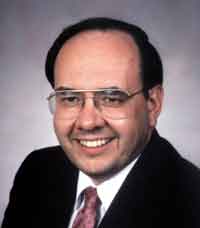
David Briggs of Cleveland's Plain Dealer laid off after a decade.
David Briggs, the religion reporter for the Cleveland Plain Dealer for the past decade, was among those laid off by the paper this week, the Cleveland Leader reports. His writing also appeared often in Religion News Service, and he had served as president of the Religion Newswriters Association. Before coming to the Plain Dealer, Briggs was a national religion writer for The Associated Press in the 1990s.
We've lost a lot of full-time religion reporter positions lately, as well as a lot of longtime religion journalists. I'm not sure if The Orlando Sentinel, Milwaukee Journal Sentinel, San Diego Union Tribune, East Valley (Ariz.) Tribune, and other papers have replaced the religion reporters there who have been laid off or bought out, but I don't think so.
In related news, U.S. News & World Report religion reporter/pundit Jay Tolson has left the magazine to become director of central news at Radio Free Europe/Radio Liberty.
Thursday, December 4, 2008

Will There Be Any News in Newspapers?
Here's a stimulating commentary by the ex-editor of the Los Angeles Times. This is a short excerpt--to read the entire article, click here.
Of course we'll have newspapers. But will there be any news in them?
James O’Shea, ex-editor of the LA Times, sees pandering to readers as a current danger and says newspapers aren’t going to solve their problems by lay-offs or closing bureaus. Journalists need to persuade people that we “once again are a public trust,” he writes.
By James O’Shea
With all the reports about huge layoffs and financial troubles in the news business, it’s no wonder that many journalists and caring Americans question whether we will continue to have newspapers.
But those concerned about the fate of these fabled institutions are asking the wrong question. Of course we will have newspapers. Communist China has newspapers; Russia under the Soviets had newspapers. Serbia had newspapers under dictator Slobadan Milosevic.
The real question is what kind of journalism will we have in the newspapers that manage to survive the current wave of circulation and advertising declines plaguing the industry.
Will we have the rich, hard-hitting storytelling that gives the news its infrastructure of shoe-leather journalism from courthouses, police stations, legislatures and war zones, the kind of reporting that gives bloggers, broadcasters and others something to write and talk about?
Or will the surviving newspapers become vessels for “panderism” instead of journalism, flimsy content organized around the age-old principle of luring dog owners to stories in the paper so you can sell them some dog food?
I’ve been wondering about this question ever since I left the newsroom of the Los Angeles Times earlier this year over what has come to be commonly known as “a disagreement over the future direction of the paper.”
Wednesday, December 3, 2008
Christian Writers Sought
Christian Ministry Seeks to Raise 'Culture Warriors' through Contest
By Kenneth Chan
Christian Post Correspondent
There is a need for more believers to effectively live out their Christian worldview within our culture, says the leader of an apologetics ministry.
"Our media is dominated by people immersed in the secular humanist mindset,” notes Anthony Horvath of Athanatos Christian Ministries.
“The evidence of this is present in books, movies, TV shows, music, as well as in newspapers and cable television,” he says. “The resulting culture perpetuates itself and creates a climate of cynicism - to say the least - regarding the claims of Christianity."
Now, imagine if more Christians were writing movies, books, and the news.
“This alone might not save a single soul, but it would help create a climate where the Christian message is better received," Horvath says.
To encourage writers to represent their Christian beliefs through arts – in particular through fiction – Horvath’s ministry is hosting a contest to identify writers who can write quality fiction that represents the Christian worldview either explicitly or implicitly.
"C.S. Lewis, Tolkien, Dorothy Sayers, and G.K. Chesterton are examples of Christian authors whose stories reflected their Christian outlook,” notes Horvath. “The remarkable thing is that secular audiences enjoy their work as much as Christian audiences do.”
Chris Jones, a theater critic for the Chicago Tribune, would likely concur.
“The Christian allegorist C.S. Lewis is to agnostics what the conservative writer David Brooks is to liberals. He’s about the only one they can stand,” Jones wrote in a review of “The Screwtapes Letters,” a Lewis-based theatrical performance that is currently reaping success at the Mercury Theatre in Chicago.
“Even those who abhor most religiously oriented literature – people who wouldn’t be caught dead reading 'Left Behind' or other apocalyptica – are ready to give Lewis some space in their lives,” he added.
And it is works such as Lewis’s that society needs more of, says Horvath.
“Readers let down their defenses when reading stories or watching movies and this provides an opportunity for the author to present ideas and themes that readers might otherwise have dismissed,” he says. “This is true for both Christians and non-Christians, but the secular community is more deliberate in exploiting this reality.”
The problem, however, is that Christians have mostly been unsuccessful in casting the Christian worldview into mainstream media, though Christian music and books have been seeing more success in recent years.
“A lot of Christian entertainment is incubated in a bubble and often the script isn't challenged creatively the way a mainstream Hollywood script is vetted by director and producer and (for better or worse) studio,” says Christian writer, director and producer Dan Merchant.
Furthermore, Christians sometimes push too hard on "shoving" the gospel into stories and forget that people want to be entertained, adds Phil Cooke, president and creative director of Cooke Pictures.
“We need to be far more subtle in our storytelling,” he says. “After all, Jesus didn't tell ‘Christian’ stories. He told stories about people's lives, and they were powerful and compelling.”
And those are the kind of stories that Athanatos Christian Ministries will be looking for as it receive contest entries this month through May 15, 2009.
Though the amount of the awards are not so impressive (top prize is $500), the ministry still hopes to inspire young Christians to take up the pen and promote the Christian worldview through fiction and create a culture of quality writing reflecting that worldview.
Winning entries will be compiled into an anthology and published. The anthology will be distributed to every single author who entered a story, at no additional cost.
"We want every contributor to see what a winning story looks like so they can learn from it and improve their own writing ability," Horvath explains.
Winners of the Athanatos Christian Writing Contest will be announced on Aug. 1, 2009. Anthologies and awards will be disbursed beginning Sept. 1, 2009.
On the Web:
The Athanatos Christian Writing Contest homepage at www.christianwritingcontest.com.
Thomas Nelson Initiates Second-Round Cuts

From the nation's largest Christian publisher. This is an excerpt--read the entire article by clicking here.
The Recession Hits Home
Today, was a very difficult day at Thomas Nelson. We informed fifty-four of our friends and co-workers (about 10% of our workforce) that we have eliminated their jobs, effective this Friday. This will affect nearly every department in our company.
This was the second round of reductions this year. Unfortunately, this one was no less painful. We did the first round after significantly cutting our SKU count. However, this second round was purely a result of the slowdown in the economy.
As a leadership team, we struggled with this decision for several weeks. As recently as September 19, I assured our employees that we were not planning another reduction in our workforce. It was not even a remote consideration. But the final September and October sales reports changed that.
Kindle Celebrates its First Birthday

By Zach Pontz, CNN
(CNN) -- It has the curves of a Lamborghini, looks like something an astronaut might take into space and weighs only 10.3 ounces.
Amazon's Kindle e-reader is wireless and can hold about 200 books, plus newspapers and magazines.
Amazon.com's electronic Kindle reader -- a device meant to remove the paper from the page and make reading both more convenient and eco-friendly -- is celebrating its first birthday.
Released in November 2007, the Kindle has sold more than a quarter million units. Its texts account for 10 percent of Amazon's book sales despite the fact that 200,000 titles -- a tiny fraction of the books offered on the site -- are available in digital form.
While exact sales figures are hard to come by, recent estimates have put the Kindle's sales on par with other high-profile mobile devices in their first year. Amazon.com says that the Kindle is currently sold out due to heavy demand.
So what has spurred its success? After all, electronic books have been around, in small numbers, for about a decade. Even Jeff Bezos, Amazon's founder and CEO, has admitted that the book is "elegantly suited to its purpose. It's hard to improve on."
One thing that's helped the Kindle is marketing. Where other readers failed to connect with consumers, the Kindle has excelled. The media-savvy Bezos has hardly been publicity shy, gaining his electronic toy a level of exposure most CEOs couldn't begin to fathom.
"You can't discount the prominence of having Amazon behind this," says Paul Reynolds, technology editor at Consumer Reports. "Jeff Bezos is respected for what he's done with Amazon, and if he feels this is a future product in media, people are willing to trust him."
Second, the gadget has been heralded by Oprah Winfrey, whose influence in the publishing world is immense. It's also been embraced by some prominent writers, including Nobel laureate Toni Morrison and best-selling thriller author James Patterson.
Third, with more and more consumers accustomed to reading text on their cell phones and BlackBerrys, the world finally may be ready for an electronic version of a book.
"I checked it out on Amazon and thought it was an intriguing idea, a great way to have a lot of books that don't take up a lot of space," says Emily Branch of Florida, who was moved to buy a Kindle after seeing the hosts of "The View" chatting about it.
"I figured if I didn't like it I could return it within 30 days," Branch says. "There wasn't a chance of that happening once I got it in my hands though."
One clutter-killing Kindle can hold about 200 books. And while other e-readers such as Sony's Reader must connect through a USB port to upload content, the Kindle is a wireless device, thanks to Whispernet, which is powered by Sprint's high-speed data network.
"I think the Whispernet is what sets the Kindle apart from all the other e-readers on the market," says Leslie Nicoll of Portland, Maine, who co-authored "The Amazon Kindle F.A.Q." book after her tech-loving teenage daughter urged her to get a Kindle.
Like Branch, Nicoll says she likes the Kindle's low-impact effect on her bookshelves. "I don't have to worry about giving it to someone else, reselling it on Amazon or finding a place to store it in my house," she says. "For the enjoyment and convenience, it has given me in the past seven months, I consider that it has paid for itself already."
Readers can visit Amazon's online store and upload a new book right to their Kindle. Subscribers also can have electronic versions of The New York Times and other newspapers and magazines delivered automatically to their Kindles in time for reading with their morning cup of coffee.
"The large and tightly interacting collection of Kindle features, that go far beyond those of any other previous e-Book attempt, will cause the Kindle to be the first e-Book to succeed," wrote one reviewer on an Amazon discussion board.
But not everything in Kindle world is roses and gumdrops. There's a difference between modest early success and making a centuries-old print format obsolete. The Kindle sells for $359, a steep price for the average reader in the current economic climate.
"I'm not going to pay $360 for that. I can get books for free," says Nikki Johnson, a college student in Atlanta, Georgia, speaking for traditionalists who are wary of giving up their bound paper volumes.
"There's nothing like reading a nice paperback," she says. "There's nothing like holding or carrying a book, having that tangible quality and it being more than just a piece of data."
So in an unforgiving economy and in a stubbornly old-fashioned medium, will the Kindle ever expand from a tech novelty to a mainstream accessory? It might be too soon to tell.
Blockbuster writers such as J.K. Rowling, author of the "Harry Potter" series, have said they'll never allow their books to appear on the market in electronic form. Yet future, better versions of e-readers may seduce younger consumers who grew up on PSPs and iPhones.
A next-generation model of the Kindle is due in 2009. Early reports indicate the new device will be thinner and will have fixed some current design bugs, such as poorly placed buttons that cause readers to turn pages accidentally.
"I think it's certainly a ways away from hitting the mainstream ... because of the price and the experience a reader gets from long-form reading," says Reynolds of Consumer Reports. "Whether these ... are successful, stand-alone devices remains to be seen. From what I've seen and heard, I think the technology is here to stay."
Tuesday, December 2, 2008
PR Lesson Learned--No Corporate Jets
How Are The Big Three CEO's Getting To DC This Time?
December 02, 2008 11:56 AM
It was a public relations disaster. The CEO's of the Big Three Autos came to Washington aboard corporate jets to ask for a tax payer bail out. Congress was none too happy. Well, the Big 3 are coming back later this week. Most importantly they'll be coming with newly revised plans for how they'll spend federal bail out dollars. But, in terms of symbolism, we're learning they'll also be parking the jets.
ABC's Charlie Herman reports from New York on how the CEOs plan to travel this week:
GM
CEO Rick Wagoner drives to DC in a Malibu Hybrid.
Don't know if he will be behind the wheel.
Ford
CEO Alan Mulally drives to DC in an Escape Hyrbid
Don't know if he will be behind the wheel.
Chrysler
No word yet.
Monday, December 1, 2008
Opinion Writing: A Cancer on the Financial System

Here's an example of extremely effective editorial-style writing. Punchy, direct, well-documented--very lean, no wasted words. Strong call to action that is clear. A very good model of effective persuasive writing.
A Cancer on the Financial System
Radical Surgery Required
By Chuck Colson
For those of you who remember Watergate, John Dean, the President’s counsel, famously warned President Nixon about Watergate, describing it as, quote, “a cancer on the Presidency.” That is a pretty good phrase to describe our economic mess.
If you get the sniffles, you can take an antihistamine. A few antibiotics can cure an ear infection. But cancer requires surgery, and maybe chemo and radiation.
Last week in the New York Times, Thomas Friedman wrote, “Right now there is something deeply dysfunctional, bordering on scandalously irresponsible, in the fractious way our political elite are behaving—with business as usual in the most unusual economic moment of our lifetimes. They don’t seem to understand: Our financial system is imperiled.” And, quoting Yale professor Jeffrey Garten, Friedman argued that it’s better to overestimate the danger and act accordingly than to underestimate.
He’s right. So I have a radical proposal: surgery followed by chemo.
Let us remember that one of the great concepts of the Reformation was the Rule of Law. No office holder is above it. So as for the surgery, I’d start maybe impeaching or indicting some of the officials who pontificate day after day on television about the terrible crisis—but they’re the same ones who helped bring it about. From those who put their pals in charge of Freddie Mac and Fannie Mae and then forced those agencies to make loans they knew couldn’t be repaid; to those regulators at the Office of Thrift Supervision who ignored the signs of catastrophe while the likes of Countrywide Financial, IndyMac, and Washington Mutual went down.
As one former Republican lawmaker told the Washington Post last week, the “regulatory motif” at OTS “was too accommodating to private-sector interests.” The result was chaos!
As for Wall Street, the surgery would include curbing the excess compensation so many of those officials got, and even indicting some of the irresponsible ones who negligently promoted instruments they knew had to fail. In the old days, we’d have called that fraud.
And don’t continue bail-outs to the irresponsible. Let the bankruptcy courts reorganize mismanaged companies. The reorganization would get rid of the all the labor feather-bedding and corporate excesses, particularly in the three big auto makers.
The chemo and radiation part is harder. It means injecting into the bloodstream of the nation a sense of ethics. It’s not taught in business schools; it’s not taught in high schools. We have lost our understanding of right and wrong. All that matters anymore is the financial bottom line and self satisfaction.
So this is where Christians can truly make a difference, as I have written this month in Christianity Today. The financial meltdown is more a crisis of character than a crisis of finances. Historically, our ethical system has come from Judeo-Christian revelation. We’ve got to start bringing it back into society. There is simply no other way.
Surgery, chemo and radiation are long processes. When my son went through it a while ago, it took a year. But the point is, until the cancer is destroyed, the body cannot be healthy.
To postpone it will only postpone the inevitable and perhaps merely succeed in allowing the patient to die painlessly.
This nation deserves better.
Subscribe to:
Posts (Atom)