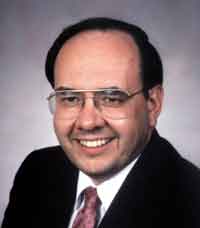
Red Wing paper cuts publishing to twice weekly
The Republican Eagle will switch to all-local news coverage, publish Wednesday, Saturday, and lower its subscription price.
By STEVE ALEXANDER, Star Tribune
The Red Wing (MN) Republican Eagle, citing a drop in advertising revenue, said Wednesday the newspaper will publish two days a week instead of five, and it will drop its wire-service national coverage in favor of all local news.
Beginning Sept. 2, the Republican Eagle will publish Wednesday and Saturday rather than Tuesday through Saturday, publisher Steve Messick said. The paper will post breaking news stories on its free website, www.republican-eagle.com, every day.
The Red Wing paper, which has a circulation of 6,100 and is profitable, will continue to employ 18 people in its offices, including nine in the newsroom, Messick said. But another 24 employees in the paper's Red Wing printing plant, which handles commercial printing jobs in addition to the newspaper, could face job cuts, he said.
The paper's owner said the decision was necessary for the Republican Eagle's survival.
"A decision of this magnitude is centered on maintaining the economic viability of the Red Wing paper," said Steve McLister, vice president of newspapers for Forum Communications, the Fargo, N.D., company that owns the Republican Eagle among other newspapers, TV stations, websites and commercial printing operations.
The root of the paper's problem is a decline in advertising, a situation seen at most newspapers nationwide, McLister said. Traditionally, advertising has generated 75 percent of a newspaper's revenue, compared with 25 percent from subscriptions, he said.
The Red Wing paper has seen declines in employment, auto and real estate advertising, Messick said.
The Red Wing newspaper is the second paper owned by Forum to make the switch to twice-weekly publication, McLister said. Last year, the Superior Telegram in Superior, Wis., cut publication from five days a week to two, but no other Forum-owned newspapers are contemplating such as change, he said.
Thursday, August 6, 2009

1 in 3 Internet Users Visited Newspaper Site in June
From Editor & Publisher:
One in Three Internet Users Visited a Newspaper Site in June
By Jennifer Saba
NEW YORK A little more than one-third of all Internet users visited a newspaper Web site in the month of June -- some 70.3 million unique users, according to the Newspaper Association of America.
Nielsen Online (owned by E&P's parent company) provided the data to the NAA and since the Web metrics firm vastly expanded its panels effective in June, the NAA is not providing figures for prior periods.
Page views to newspaper Web sites totaled 3.5 billion in June. The monthly average time spent per total unique users was 2.7 million minutes or 38 minutes and 24 seconds per person. Nielsen defines "time per person" as the average time spent over the course of a month.
"The newspaper audience continues to expand as publishers aggressively capitalize on their investments in digital properties," John Sturm, president and CEO of the NAA, said in a statement.
The NAA recently released a study conducted by MORI Research that found 82% of the 3,000 adults surveyed said they had taken action as a result of newspaper advertising.
"As the financial environment improves and advertisers return to spending, they will want to reach the valuable and engaged consumer audience that only newspapers can deliver through their multiple platforms," Randy Bennett, senior vice president of development of the NAA, said in a statement.
One in Three Internet Users Visited a Newspaper Site in June
By Jennifer Saba
NEW YORK A little more than one-third of all Internet users visited a newspaper Web site in the month of June -- some 70.3 million unique users, according to the Newspaper Association of America.
Nielsen Online (owned by E&P's parent company) provided the data to the NAA and since the Web metrics firm vastly expanded its panels effective in June, the NAA is not providing figures for prior periods.
Page views to newspaper Web sites totaled 3.5 billion in June. The monthly average time spent per total unique users was 2.7 million minutes or 38 minutes and 24 seconds per person. Nielsen defines "time per person" as the average time spent over the course of a month.
"The newspaper audience continues to expand as publishers aggressively capitalize on their investments in digital properties," John Sturm, president and CEO of the NAA, said in a statement.
The NAA recently released a study conducted by MORI Research that found 82% of the 3,000 adults surveyed said they had taken action as a result of newspaper advertising.
"As the financial environment improves and advertisers return to spending, they will want to reach the valuable and engaged consumer audience that only newspapers can deliver through their multiple platforms," Randy Bennett, senior vice president of development of the NAA, said in a statement.
Wednesday, August 5, 2009
The Last Newspaper Generation
 Guest Post: The last newspaper generation
by Esther Wojcicki, journalism teacher and newspaper adviser at Palo Alto High School
Reading the newspaper these days makes me sad about journalism. “The American Press on Suicide Watch” was the headline of Frank Rich’s New York Times column this past Sunday. “Legendary brands from the Los Angeles Times to the Philadelphia Inquirer are teetering,” Rich said, adding that the New York Times Co. (NYT) might shutter the Boston Globe. Maureen Dowd riffed too about “The Future of Journalism” — which was the title of last week’s Congressional hearing chaired by Senator John Kerry. Journalists, Kerry said, are “an endangered species.”
The crisis isn’t simply that consumers are no longer willing to pay real money to support real journalism. Consumers truly don’t care enough about the product. A Pew Research Center survey in March found that 42% of readers said they wouldn’t miss their city paper. Most of these readers, as you might guess, were under 40 years old.
I care a lot because I teach journalism at Palo Alto High School, in California. I’ve been teaching high school journalism for 25 years. Starting with 19 students, I’ve built our journalism program into the largest high school journalism program in the country, with six publications, four journalism teachers, and about 400 students. In the advanced journalism class, I teach 70 juniors and seniors. I also teach freshman English.
I decided to poll my journalism students: “How do you prefer to get your news, online or in print format?”
The popular answer may surprise you. About 70% of the students said they prefer “print format” — a hard copy of the paper. They said it’s easier to read this way — especially if a story is long. Long stories online give you headaches and eyestrain, they told me.
When I asked how many get breaking news online, almost everyone raised their hands. They prefer online for breaking news and sports news as well. But they prefer the hard-copy newspaper for features, opinion pieces, and columns, as well as long news stories.
“Who prefers to read magazines online?” When I asked that question, no one raised their hand. Makes sense to me. I can’t imagine reading magazines online.
My students say that they read a greater variety of stories in print. Online they tend to seek specific stories or subscribe to RSS feeds that they know they’re interested in. This is why I urge them strongly to read the hard-copy newspaper. How can you expand your world and your knowledge base if you read only what you’re already interested in?
Yes, it’s ironic, these kids who live in the heart of Silicon Valley recognize the value of traditional print journalism. In February, I took 50 of my students to New York City to visit several publications. The New York Times was one of them. The editors there posed this question: “How many of you read the New York Times in print?” The majority of hands went up. The editors were very surprised.
As one of my students said, “Who wants to have breakfast reading your computer if you can avoid it?”
So here’s the reality: It’s not necessarily that people enjoy getting their news online. It’s just that it’s faster and more efficient — and free.
This is the rub: Readers aren’t willing to pay for news online. They expect it to be free. The standard was set back in the 90’s, and it’s now part of the culture of the Internet. Ads, they said…the ads should pay for it. So far, that strategy has had mixed results. And now we see Amazon.com (AMZN), with the Kindle, and other e-book innovators asking consumers to pay subscription fees for newspapers delivered wirelessly.
How will this story evolve? I’m not sure whether there is a solution to help pay for real journalism. I told one of my sources close to the industry about the results of my poll. “We are in a transition period,” he said. “Wait until the netbooks become ubiquitous. Then kids won’t mind taking their netbooks everywhere and accessing all their news online. It is just a matter of time.”
I wonder if it really is a matter of time. Not for me. Nothing can replace reading the New York Times on Sunday morning. I’ll pay for that pleasure, even though news about the future of journalism is bad.
Esther Wojcicki is a journalism teacher and newspaper adviser at Palo Alto High School in Palo Alto, California. In 2002, she was named California Teacher of the Year by the California Commission on Teacher Credentialing. Starting in 1984, she built one of the largest high school journalism programs in the nation — about 400 students currently. One of her students a decade ago: my Postcards colleague Jessica Shambora. And we featured two of her daughters – Susan, VP of Product Management at Google (GOOG), and Anne, co-founder of genetic analysis startup 23andMe, in “The New Valley Girls,” a feature about Silicon Valley’s rising-star women in Fortune’s Most Powerful Women issue last October. Wojcicki’s other daughter, Janet, is Professor of Pediatrics at University of California Medical Center.
“Woj,” as Wojcicki is known to her friends and students, this year was named Board Chair of Creative Commons, a group dedicated to providing free licenses and other legal tools to facilitate sharing, remixing and using of creative works of all kinds.
Tuesday, August 4, 2009
Wednesday, July 8, 2009
Wall Street Journal Birthday Today
From Garrison Keillor's "The Writer's Almanac" for July 8:
It was on this day in 1889 that The Wall Street Journal was founded. In 1882, three journalists who were interested in finances — Charles Dow, Edward Jones, and Charles Bergstresser — founded a little company called Dow, Jones & Company.
They started hand-writing daily news bulletins, which they called "flimsies," and delivered to customers each afternoon, and the next year they titled it "Customers' Afternoon Letter." On this day in 1889, their four-page afternoon letter officially became The Wall Street Journal, which cost two cents per issue.
It was on this day in 1889 that The Wall Street Journal was founded. In 1882, three journalists who were interested in finances — Charles Dow, Edward Jones, and Charles Bergstresser — founded a little company called Dow, Jones & Company.
They started hand-writing daily news bulletins, which they called "flimsies," and delivered to customers each afternoon, and the next year they titled it "Customers' Afternoon Letter." On this day in 1889, their four-page afternoon letter officially became The Wall Street Journal, which cost two cents per issue.
Wednesday, July 1, 2009
Ten Dumbest Grammar Mistakes
The 10 Dumbest Grammar Mistakes
Catching typos is easy thanks to spell checkers, but flagrant grammatical errors are harder to spot. If you weren't paying attention in seventh grade English class during those boring grammar lessons, it could come back to haunt you decades later. Proper grammar is essential if you want to be seen as educated and professional.
Make any one of these 10 errors, and you'll just look dumb!
Error No. 1: It's/its
Explanation: "It's" is a contraction for "it is." If you aren't sure whether to use "its" or "it's," read the sentence and substitute the words "it is." Does it make sense? Then "it's" is correct. If not, use "its."
Wrong: Your home and all it's contents are only protected if you lock it when you leave.
Right: Your home and all its contents are only protected if you lock it when you leave.
Error No. 2: They're/their/there
Explanation: "They're" means "they are." "Their" is a possessive pronoun just like "her," "his," or "our." All other uses are "there."
Wrong: There going on they're weekly lunch date to the restaurant over their.
Right: They're going on their weekly lunch date to the restaurant over there.
Error No. 3: Effect/affect
Explanation: "Affect" is a verb that means to have an influence upon. "Effect" is a noun.
Wrong: Gold prices have no affect on purchasing power.
Right: Gold prices have no effect on purchasing power.
Wrong: The earnings report is not expected to effect the stock price in the long-term.
Right: The earnings report is not expected to affect the stock price in the long-term.
Error No. 4: Lay/lie
Explanation: You lay down the newspaper on the kitchen table in the morning, but you lie down on the couch to watch TV at night. Here's a good way to tell them apart: If the subject of the sentence is acting on something, it's "lay." If the subject is lying down, then it's "lie." And that's no lie!
Wrong: I'm going to lay down for a nap.
Right: I'm going to lie down for a nap.
Error No. 5: You're/your
Explanation: "You're" is the contraction for "you are," while "your" is used in all other instances.
Wrong: Your so smart to realize that you're short skirts and flip-flops aren't appropriate attire in the office.
Right: You're so smart to realize that your short skirts and flip-flops aren't appropriate attire in the office.
Error No. 6: Loose/lose
Explanation: "Loose" means something that is wobbly or baggy. "Lose" is to misplace or not be able to find something.
Wrong: Don't loose that house key.
Right: Don't lose that house key.
Error No. 7: Then/than
Explanation: If you're making a comparison, choose "than." If you're talking about time, choose "then."
Wrong: First you write and polish your resume, than you look for a job.
Right: First you write and polish your resume, then you look for a job.
Wrong: Joyce is prettier then Sarah.
Right: Joyce is prettier than Sarah.
Error No. 8: Could of/would of/should of instead of could have/would have/should have
Explanation: It may sound like "of" when you speak and slur your words together, but it's not! The correct form is always "have."
Wrong: I could of gotten into that college if I only knew the rules of grammar.
Right: I could have gotten into that college if I only knew the rules of grammar.
Error No. 9: Different than/different from
Explanation: This one is easy. Use "different from" and don't use "different than." Period. (If you're British, you may use "different to.")
Wrong: My computer at work is different than the one I have at home.
Right: My computer at work is different from the one I have at home.
Error No. 10: i.e./e.g.
Explanation: "i.e." means "that is," while "e.g." means "for example. Both are Latin abbreviations and are always followed by a comma.
Wrong: On their first day of work, new employees are given free company goodies (i.e., T-shirts and mugs).
Right: On their first day of work, new employees are given free company goodies (e.g., T-shirts and mugs).
Catching typos is easy thanks to spell checkers, but flagrant grammatical errors are harder to spot. If you weren't paying attention in seventh grade English class during those boring grammar lessons, it could come back to haunt you decades later. Proper grammar is essential if you want to be seen as educated and professional.
Make any one of these 10 errors, and you'll just look dumb!
Error No. 1: It's/its
Explanation: "It's" is a contraction for "it is." If you aren't sure whether to use "its" or "it's," read the sentence and substitute the words "it is." Does it make sense? Then "it's" is correct. If not, use "its."
Wrong: Your home and all it's contents are only protected if you lock it when you leave.
Right: Your home and all its contents are only protected if you lock it when you leave.
Error No. 2: They're/their/there
Explanation: "They're" means "they are." "Their" is a possessive pronoun just like "her," "his," or "our." All other uses are "there."
Wrong: There going on they're weekly lunch date to the restaurant over their.
Right: They're going on their weekly lunch date to the restaurant over there.
Error No. 3: Effect/affect
Explanation: "Affect" is a verb that means to have an influence upon. "Effect" is a noun.
Wrong: Gold prices have no affect on purchasing power.
Right: Gold prices have no effect on purchasing power.
Wrong: The earnings report is not expected to effect the stock price in the long-term.
Right: The earnings report is not expected to affect the stock price in the long-term.
Error No. 4: Lay/lie
Explanation: You lay down the newspaper on the kitchen table in the morning, but you lie down on the couch to watch TV at night. Here's a good way to tell them apart: If the subject of the sentence is acting on something, it's "lay." If the subject is lying down, then it's "lie." And that's no lie!
Wrong: I'm going to lay down for a nap.
Right: I'm going to lie down for a nap.
Error No. 5: You're/your
Explanation: "You're" is the contraction for "you are," while "your" is used in all other instances.
Wrong: Your so smart to realize that you're short skirts and flip-flops aren't appropriate attire in the office.
Right: You're so smart to realize that your short skirts and flip-flops aren't appropriate attire in the office.
Error No. 6: Loose/lose
Explanation: "Loose" means something that is wobbly or baggy. "Lose" is to misplace or not be able to find something.
Wrong: Don't loose that house key.
Right: Don't lose that house key.
Error No. 7: Then/than
Explanation: If you're making a comparison, choose "than." If you're talking about time, choose "then."
Wrong: First you write and polish your resume, than you look for a job.
Right: First you write and polish your resume, then you look for a job.
Wrong: Joyce is prettier then Sarah.
Right: Joyce is prettier than Sarah.
Error No. 8: Could of/would of/should of instead of could have/would have/should have
Explanation: It may sound like "of" when you speak and slur your words together, but it's not! The correct form is always "have."
Wrong: I could of gotten into that college if I only knew the rules of grammar.
Right: I could have gotten into that college if I only knew the rules of grammar.
Error No. 9: Different than/different from
Explanation: This one is easy. Use "different from" and don't use "different than." Period. (If you're British, you may use "different to.")
Wrong: My computer at work is different than the one I have at home.
Right: My computer at work is different from the one I have at home.
Error No. 10: i.e./e.g.
Explanation: "i.e." means "that is," while "e.g." means "for example. Both are Latin abbreviations and are always followed by a comma.
Wrong: On their first day of work, new employees are given free company goodies (i.e., T-shirts and mugs).
Right: On their first day of work, new employees are given free company goodies (e.g., T-shirts and mugs).
Tuesday, June 30, 2009
Start Your Own Local Church Magazine
Here is a creative, entrepreneurial approach to starting a new local magazine. This is an excerpt--to read the entire article, click here.
Former Hippie Breaks New Ground as he Helps Modern Americans Come to Grips with Popular Culture
By Michael Ireland
Chief Correspondent, ASSIST News Service
NASHVILLE, TN (ANS) -- Joel Freeman, Ph.D is a man of many talents and wears many different entrepreneurial hats.
He left home when he was seventeen, a self-described "long-haired Hippie, dope-smoking fool, traveling about six-thousand miles in North America, living off the road."
But you wouldn't know that from his current appearance or groundbreaking projects to help people across America think about Christianity in new and creative ways.
He's been chaplain for 19 years for an NBA team the Washington Bullets, now called the Washington Wizards, has written seven books that are now in twenty-eight languages, he and his wife Shirley have four children ages 22 to 29, and they live in Maryland. He has some of the most creative book titles of any author in America today.
I caught up with him earlier this year at the NRB convention in Nashville TN, where we discussed several of his ongoing projects.
One of four projects he's working on right now for this year is a magazine called 'Every Day Matters', featuring Christian surgeon Dr. Ben Carson on the front cover.
"Well it's a different kind of a model -- a lot of magazines are folding up shop and going to the Internet; this is a different model. Basically in our local church I wanted to have something that would be of benefit to entrepreneurs in the local church and at the same time would be a help to strengthen the personal evangelism muscles of people within the congregation. So what we did was sold ads and we developed forty 'felt needs' ranging from financial, to health, to spiritual, to moral, to relational -- all kinds of different felt needs. We narrowed it down to some basic ones. We did an interview with Ben Carson. Then we have one about men and their emotions, raising kids without raising your voice, tips to help you care for aging parents."
Freeman is particularly concerned about what he calls "The New Bullies" and the phenomenon of cyber bullying and online harassment with young people use the anonymity of the Internet to harm each other.
"It's just a real interesting article about how to protect our children and how to make our kids aware of this particular aspect of life, the reality of it, and how many kids get impacted by it, with some good tips and tools. But I wanted to have something kind of like Jesus with the woman at the well -- they didn't immediately start talking about him being the Messiah, he didn't rip off his toga and his t-shirt says 'I'm the Messiah,'" said Freeman.
"Instead they start talking about water -- something that she was familiar with -- and then they moved from the natural to the spiritual. So the purpose of the magazine is to print up 25,000 copies, anyone listening to my voice right now if you're part of the local church and are thinking of a unique outreach tool, basically what we do is we provide the disc with all of the graphics for $750. For some just to do the cover would cost $1,500 to $2,500 from a graphic standpoint. So we're giving a gift to a local church with a license for about fifteen miles around the church and then someone adopts it -- they sell the ads locally and then print it locally so they have control of the cost and everything else. It's not me trying to make money off the situation. No salaries are given or taken in this whole situation and then what happens is ultimately the local church has 25,000 copies of a magazine and they put it at the back of the church every service and people grab ten, twenty, thirty of them.They adopt a grocery store, keep it stacked with the magazines..."
Freeman said he thought of it as a way to get people talking about spiritual matters.
"It's a conversation starter to get people talking and then ultimately seeing how the Holy Spirit opens up the opportunity to share their faith," he said.
The website for the new magazine is www.outreachmag.com
Former Hippie Breaks New Ground as he Helps Modern Americans Come to Grips with Popular Culture
By Michael Ireland
Chief Correspondent, ASSIST News Service
NASHVILLE, TN (ANS) -- Joel Freeman, Ph.D is a man of many talents and wears many different entrepreneurial hats.
He left home when he was seventeen, a self-described "long-haired Hippie, dope-smoking fool, traveling about six-thousand miles in North America, living off the road."
But you wouldn't know that from his current appearance or groundbreaking projects to help people across America think about Christianity in new and creative ways.
He's been chaplain for 19 years for an NBA team the Washington Bullets, now called the Washington Wizards, has written seven books that are now in twenty-eight languages, he and his wife Shirley have four children ages 22 to 29, and they live in Maryland. He has some of the most creative book titles of any author in America today.
I caught up with him earlier this year at the NRB convention in Nashville TN, where we discussed several of his ongoing projects.
One of four projects he's working on right now for this year is a magazine called 'Every Day Matters', featuring Christian surgeon Dr. Ben Carson on the front cover.
"Well it's a different kind of a model -- a lot of magazines are folding up shop and going to the Internet; this is a different model. Basically in our local church I wanted to have something that would be of benefit to entrepreneurs in the local church and at the same time would be a help to strengthen the personal evangelism muscles of people within the congregation. So what we did was sold ads and we developed forty 'felt needs' ranging from financial, to health, to spiritual, to moral, to relational -- all kinds of different felt needs. We narrowed it down to some basic ones. We did an interview with Ben Carson. Then we have one about men and their emotions, raising kids without raising your voice, tips to help you care for aging parents."
Freeman is particularly concerned about what he calls "The New Bullies" and the phenomenon of cyber bullying and online harassment with young people use the anonymity of the Internet to harm each other.
"It's just a real interesting article about how to protect our children and how to make our kids aware of this particular aspect of life, the reality of it, and how many kids get impacted by it, with some good tips and tools. But I wanted to have something kind of like Jesus with the woman at the well -- they didn't immediately start talking about him being the Messiah, he didn't rip off his toga and his t-shirt says 'I'm the Messiah,'" said Freeman.
"Instead they start talking about water -- something that she was familiar with -- and then they moved from the natural to the spiritual. So the purpose of the magazine is to print up 25,000 copies, anyone listening to my voice right now if you're part of the local church and are thinking of a unique outreach tool, basically what we do is we provide the disc with all of the graphics for $750. For some just to do the cover would cost $1,500 to $2,500 from a graphic standpoint. So we're giving a gift to a local church with a license for about fifteen miles around the church and then someone adopts it -- they sell the ads locally and then print it locally so they have control of the cost and everything else. It's not me trying to make money off the situation. No salaries are given or taken in this whole situation and then what happens is ultimately the local church has 25,000 copies of a magazine and they put it at the back of the church every service and people grab ten, twenty, thirty of them.They adopt a grocery store, keep it stacked with the magazines..."
Freeman said he thought of it as a way to get people talking about spiritual matters.
"It's a conversation starter to get people talking and then ultimately seeing how the Holy Spirit opens up the opportunity to share their faith," he said.
The website for the new magazine is www.outreachmag.com
Subscribe to:
Posts (Atom)