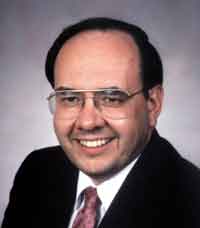
Politics and Prose has found a buyer
Melina Mara / THE WASHINGTON POST -
Politics and Prose, D.C.’s iconic independent bookstore, has found a buyer.
For nearly 30 years, Carla Cohen and Barbara Meade were the Cal Ripkens of bookselling, seemingly never leaving their perch at Politics and Prose. They were so in sync in their stewardship that they often showed up for work wearing the same color.
Eras end. Cohen is gone now, succumbing to cancer last year, and on Tuesday, Meade and Cohen’s husband revealed that they had found new owners for the 27-year-old store. They are former Washington Post journalists Bradley Graham and his wife, Lissa Muscatine.
“The hardest part of all this was losing Carla,” Meade said in an interview. “I told Carla it would be too lonely to run a business by myself.”
Meade and David Cohen settled on the couple’s offer after narrowing a flurry of propositions down to five or six serious offers. One of the final bidders was a group including ex-New Republic editor Franklin Foer, Atlantic magazine writer Jeffrey Goldberg, literary agent Rafe Sagalyn and a real estate company.
Terms of the deal were not released, but a person with knowledge of the negotiations said that the purchase price was about $2 million.
Meade and Cohen said price was not the sole factor in determining the buyer of the store, which has remained profitable despite catastrophic changes in the industry for bricks-and-mortar stores. Rather, they picked Graham and Muscatine because they think the couple is uniquely qualified to extend the store’s reputation as a gathering place for ideas and civic discourse.
Graham began working at The Post in 1978, serving as a business reporter, foreign correspondent, editor and Pentagon correspondent. He is the author of two books, including “By His Own Rules,” a biography of Donald Rumsfeld. He is a graduate of Yale and Stanford Business School and comes from a family that made its money in the ice cream cone and plastics industries.
Muscatine, a Rhodes scholar, worked at the Post for 12 years as a reporter and editor before becoming an aide and confidante to President Bill Clinton and Secretary of State Hillary Rodham Clinton. Most recently, she was the State Department’s director of speechwriting. Meade liked the idea of a female owner considering the store had always been run by women.
“We understand that Politics and Prose is much more than a bookstore,” Graham told the store’s staff in a gathering held where novelists, presidents and eggheads alike have signed books. “It is an integral part of the Washington community, a community that Lissa and I have served for much of our careers already as journalists, authors and, in Lissa’s case, a senior government staff member. It is a very special culture here, a culture we want to see survive.”
A longtime shopper listening nearby liked what she heard. “They sound like people of the book, which is what the store needs,” said Lenore Weinberg of Northwest Washington, who shops at Politics and Prose often for her grandchildren. “This store is in a class by itself, and I hope it stays that way.”
The deal is expected to close in about 45 days. Graham and Muscatine plan to work full time in the store, taking control, with some guidance from Meade, as the bookstore industry has been battered by e-books and the digitization of information. Borders recently filed for bankruptcy, shutting down hundreds of stores, including several in the Washington region. Barnes & Noble, for sale for months, has struggled to find a buyer.
But many observers think there is still a role for independent bookstores in hand-to-hand bookselling, with smaller overheads, strong customer relationships and the ability to create a tightknit community around words with author events and classes — areas in which Politics and Prose already excels. Using new print-on-demand technology, some independent bookstores are publishing original books or printing not-in-stock items.
Graham, who is not related to Post Co. Chairman Donald Graham, said he approached the idea of buying the store as a reporter, travelling across the country to talk to other successful independent bookstore owners. One stop was at Village Books, in Bellingham, Wash.
“Brad’s eyes were wide open,” said Chuck Robinson, longtime owner of Village Books. “I don’t think he has any great illusions of making a lot money, but if there’s any bookstore in this country that has the potential of continuing to do well, it’s Politics and Prose.”
Graham and Muscatine said they weren’t ready to discuss details. Instead, they want to gather the perspective of the store’s fiercely loyal staff, which Graham called its “greatest asset.” They did say that they plan to put their own money into expanding the store.
And they acknowledge, like other bookstore owners, that the path ahead is somewhat uncertain.
“We are all a little crazy,” Robinson said. “It’s almost as bad as being in the newspaper industry, which Brad of course knows.”
Monday, March 28, 2011

Magazine for Gay Military Launches
Magazine launch for gay military members announced
Washington (CNN) -- A magazine designed for and by gay military members may soon be displayed at military installations worldwide, an advocacy group announced Monday.
"Our first objective with the magazine is to let all the gay, lesbian, bi, and trans members currently serving know that they are not alone," an active-duty officer who goes by the pseudonym JD Smith said in a statement.
Smith, along with co-director Ty Walrod lead the organization known as OutServe, the group describes themselves as an underground network of actively serving military members of the United States Armed Services who identify as lesbian, gay, bisexual or transgender.
"Visibility is key," Smith said, who added that OutServe hopes to have its next version available in print at "some larger military bases."
The magazine can currently be downloaded from the internet, the statement said.
"We are not about highlighting our differences." Smith said the goal of the publication is to demonstrate "how LGBT troops are proud soldiers, sailors, airmen, Coasties, and Marines just like everyone else."
The magazine will contain features about "Don't Ask Don't Tell" repeal implementation and OutServe chapters, as well as other information of interest to currently-serving LGBT military members, the statement said.
"We also want to communicate to all troops that there are capable gay military members serving honorably, and that accepting that and moving on will make our military stronger," said Smith.
On December 22, President Barack Obama signed the DADT bill repealing the 17-year-old law.
The repeal "will strengthen our national security and uphold (America's) ideals," Obama said. "No longer will tens of thousands of Americans in uniform be asked to live a lie."
"Don't ask-don't tell" became law in 1993, after opposition ballooned to then newly elected President Bill Clinton's plan to lift the military's complete ban on gay service members.
The policy stopped the practice of asking service members if they are gay, but still called for the dismissal of openly gay service members.
Washington (CNN) -- A magazine designed for and by gay military members may soon be displayed at military installations worldwide, an advocacy group announced Monday.
"Our first objective with the magazine is to let all the gay, lesbian, bi, and trans members currently serving know that they are not alone," an active-duty officer who goes by the pseudonym JD Smith said in a statement.
Smith, along with co-director Ty Walrod lead the organization known as OutServe, the group describes themselves as an underground network of actively serving military members of the United States Armed Services who identify as lesbian, gay, bisexual or transgender.
"Visibility is key," Smith said, who added that OutServe hopes to have its next version available in print at "some larger military bases."
The magazine can currently be downloaded from the internet, the statement said.
"We are not about highlighting our differences." Smith said the goal of the publication is to demonstrate "how LGBT troops are proud soldiers, sailors, airmen, Coasties, and Marines just like everyone else."
The magazine will contain features about "Don't Ask Don't Tell" repeal implementation and OutServe chapters, as well as other information of interest to currently-serving LGBT military members, the statement said.
"We also want to communicate to all troops that there are capable gay military members serving honorably, and that accepting that and moving on will make our military stronger," said Smith.
On December 22, President Barack Obama signed the DADT bill repealing the 17-year-old law.
The repeal "will strengthen our national security and uphold (America's) ideals," Obama said. "No longer will tens of thousands of Americans in uniform be asked to live a lie."
"Don't ask-don't tell" became law in 1993, after opposition ballooned to then newly elected President Bill Clinton's plan to lift the military's complete ban on gay service members.
The policy stopped the practice of asking service members if they are gay, but still called for the dismissal of openly gay service members.
NY Times Paywall Goes Active Today
New York Times paywall goes live today
By Allan Chernoff, CNN senior correspondent
NEW YORK (CNN) -- Beginning at 2 p.m. ET Monday, The New York Times will try to harness the force that has been wrecking the newspaper business: free access on the Internet.
The nation's most prestigious general interest paper will now charge readers for extended access to its web site, NYTimes.com. In erecting a paywall, executives at the Times are trying to walk a fine line: generate subscription revenue from avid readers willing to pay, while still retaining more the casual customers who boost advertising revenue with their clicks.
1Email Print Analyzing online readership habits and polling data led the Times to set that fine line at 20 articles every four weeks. Click on fewer and you'll have free access -- but to get article #21, you'll have to pay up.
Readers will need to shell out $15 every four weeks for unlimited online and smartphone content, $20 for online access and the iPad tablet app, or $35 for the full digital smorgasbord. (Print subscribers get it all at no additional cost.)
That pricing structure is subject to tweaking, according to Martin Nisenholtz, The New York Times' head of digital operations.
"We're as confident as we can possibly be in a research setting. Obviously, whenever research hits the real world, there are changes," he said.
"A bet on the future" is how managing editor Jill Abramson describes the plan -- a gamble to raise revenue so the organization can maintain the breadth and depth of its news coverage. Sitting in her office, lined with books and baseball memorabilia, Abramson says she is confident of winning that bet.
"I believe strongly that the quality of our journalism is at such a level that people should be willing to pay to read it," Abramson said. "I don't know if there are that many other general interest newspapers that are offering that same kind of highest-quality journalism, so I'm not sure that everyone else is going to dive into this pond."
While business papers like the Wall Street Journal and Financial Times have long charged for online content, the New York Times is the largest general interest paper to end free, unlimited access to its website.
WSJ.com costs $155 a year, and the Financial Times charges $260 annually for FT.com.
As newspapers have given away their digital product for free, paper subscriptions have plunged. The prestigious Times is no exception. Circulation is down to 877,000 for the weekday edition and 1.35 million on Sunday. Meanwhile, readership at NYTimes.com is steadily climbing. According to ComScore, NYTimes.com had 48.5 million unique visitors in January.
Web advertising now accounts for one quarter of the ad revenue of the Times and its overseas sister, the International Herald Tribune. But that hasn't made up for the drop in print revenue, which has fallen sharply over the past few years. The Times' News Media Group, which includes both newspapers, reported revenue of $2.3 billion last year, off 3%.
So the NYTimes can't afford to retain the status quo. It needs a second stream of online revenue -- and company executives say now is the right time to start charging.
"A lot of things have changed recently. One is that people are more used to paying for digital content with the advent of apps and the app store," said Paul Smurl, NYTimes.com' vice president for paid products.
Even so, the Times will allow access to its site through links on social networks such as Facebook and Twitter, to bring in the large audience that makes NYTimes.com appealing to advertisers. In fact, the Times anticipates the vast majority of online readers will not reach the paywall limit. Its hope is simply that devoted readers will reach into their wallets, just as they used to for their daily newspaper.
If any general interest publication can pull it off, it should be the New York Times. But getting people to pay for something they've been getting for free is not easy in any industry. Competing newspaper publishers will be watching very closely.
By Allan Chernoff, CNN senior correspondent
NEW YORK (CNN) -- Beginning at 2 p.m. ET Monday, The New York Times will try to harness the force that has been wrecking the newspaper business: free access on the Internet.
The nation's most prestigious general interest paper will now charge readers for extended access to its web site, NYTimes.com. In erecting a paywall, executives at the Times are trying to walk a fine line: generate subscription revenue from avid readers willing to pay, while still retaining more the casual customers who boost advertising revenue with their clicks.
1Email Print Analyzing online readership habits and polling data led the Times to set that fine line at 20 articles every four weeks. Click on fewer and you'll have free access -- but to get article #21, you'll have to pay up.
Readers will need to shell out $15 every four weeks for unlimited online and smartphone content, $20 for online access and the iPad tablet app, or $35 for the full digital smorgasbord. (Print subscribers get it all at no additional cost.)
That pricing structure is subject to tweaking, according to Martin Nisenholtz, The New York Times' head of digital operations.
"We're as confident as we can possibly be in a research setting. Obviously, whenever research hits the real world, there are changes," he said.
"A bet on the future" is how managing editor Jill Abramson describes the plan -- a gamble to raise revenue so the organization can maintain the breadth and depth of its news coverage. Sitting in her office, lined with books and baseball memorabilia, Abramson says she is confident of winning that bet.
"I believe strongly that the quality of our journalism is at such a level that people should be willing to pay to read it," Abramson said. "I don't know if there are that many other general interest newspapers that are offering that same kind of highest-quality journalism, so I'm not sure that everyone else is going to dive into this pond."
While business papers like the Wall Street Journal and Financial Times have long charged for online content, the New York Times is the largest general interest paper to end free, unlimited access to its website.
WSJ.com costs $155 a year, and the Financial Times charges $260 annually for FT.com.
As newspapers have given away their digital product for free, paper subscriptions have plunged. The prestigious Times is no exception. Circulation is down to 877,000 for the weekday edition and 1.35 million on Sunday. Meanwhile, readership at NYTimes.com is steadily climbing. According to ComScore, NYTimes.com had 48.5 million unique visitors in January.
Web advertising now accounts for one quarter of the ad revenue of the Times and its overseas sister, the International Herald Tribune. But that hasn't made up for the drop in print revenue, which has fallen sharply over the past few years. The Times' News Media Group, which includes both newspapers, reported revenue of $2.3 billion last year, off 3%.
So the NYTimes can't afford to retain the status quo. It needs a second stream of online revenue -- and company executives say now is the right time to start charging.
"A lot of things have changed recently. One is that people are more used to paying for digital content with the advent of apps and the app store," said Paul Smurl, NYTimes.com' vice president for paid products.
Even so, the Times will allow access to its site through links on social networks such as Facebook and Twitter, to bring in the large audience that makes NYTimes.com appealing to advertisers. In fact, the Times anticipates the vast majority of online readers will not reach the paywall limit. Its hope is simply that devoted readers will reach into their wallets, just as they used to for their daily newspaper.
If any general interest publication can pull it off, it should be the New York Times. But getting people to pay for something they've been getting for free is not easy in any industry. Competing newspaper publishers will be watching very closely.
Saturday, March 26, 2011
Increasing Risk to Journalists
Rash Report: Press under fire, and not just in war zones
Foreign correspondents and local reporters alike are increasingly targeted for killing, kidnapping or incarceration.
Star Tribune , By John Rash
On Monday, after six days of captivity, four New York Times journalists -- Anthony Shadid, the paper's Pulitzer Prize-winning Beirut bureau chief, Stephen Farrell, a reporter and videographer, and Tyler Hicks and Lynsey Addario, both photographers -- were finally freed from forces loyal to Libyan leader Moammar Gadhafi.
The reporters recounted their harrowing ordeal in a first-person account in the Times. They were repeatedly beaten, threatened with decapitation, and Addario was particularly singled out because of her gender, just as CBS reporter Lara Logan was when she was assaulted in Cairo.
The four journalists were among the 60 so far who have been targeted in Libya, according to the Committee to Protect Journalists (CPJ), an independent, nonprofit organization dedicated to defending the rights of reporters worldwide.
Seven other journalists are listed as "missing." Two -- Mohammed al-Nabbous, founder of opposition broadcaster Libya Alhurra TV, and Ali Hassan al-Jaber, an Al Jazeera cameraman -- were killed in the conflict, which is only weeks old.
The high number of incidents is indicative of how changes in warfare, war coverage and the perception of the press among some combatants has shifted in the post-9/11 era.
It's a significant shift from World War II, when uniformed armies had uniform rules, approved by the Geneva Convention, that classified journalists the same as soldiers -- with the same rights if captured, according to Joel Simon, executive director of the CPJ.
But post-Vietnam, the Geneva Convention was amended to treat journalists as citizens, reflecting how reporting had changed.
Today, asymmetric warfare has been met with asymmetric treatment of journalists in combat zones. Some recent wars, such as those in the Balkans, still operated with some semblance of understanding of reporters' roles.
More recently, the rise in rogue regimes and militant groups has resulted in increasingly dangerous conditions.
David Rohde, a colleague of the Times reporters liberated from Libya, knows both sides well. The Pulitzer Prize winner was kidnapped by Bosnian Serbs in 1996, but was released due to diplomatic pressure, because Bosnia still cared about its international image.
Conversely, his 2008 kidnapping by the Taliban, chronicled in the Times and in his 2010 book "A Rope and a Prayer: A Kidnapping From Two Sides," ended only after he escaped to a Pakistani military base.
"The nature of war has changed, and there's less of a delineation between combatant and civilian," he said in an interview.
"Journalists, fairly or unfairly, are viewed as extensions of certain political parties or governments, so if they are viewed as a citizen of a country that is viewed as an enemy, then the journalists themselves are enemies."
American journalists in particular are suspected of working for the CIA or the State Department, a charge Rohde called "extraordinarily widespread, very prevalent, and completely unfair and wrong."
The high profile of prominent journalists in harm's way is actually a small slice of the perils reporters face, however.
Since CPJ started keeping track in 1992, of the 852 journalists killed because of their job, defined as "motive confirmed" (an additional 320 deaths are categorized as "motive unconfirmed"), 87 percent were local reporters who didn't have the protection of large news organizations and couldn't flee the fighting.
"People have this notion of war correspondents traveling from one conflict to another, but the reality is most journalists who are killed didn't go looking for the war -- the war came to them," said Simon.
And nowadays, more often than not, it's not crossfire, but crossing local politicians or criminals that costs journalists their freedom or their lives.
Of the 44 "motive confirmed" killings of journalists last year (an additional 31 "motive unconfirmed" murders occurred), only 25 percent were war correspondents.
Conversely, 48 percent covered politics, 30 percent corruption and 20 percent crime (totals exceed 100 percent due to some reporters having multiple beats).
Last year's suspected perpetrators apparently didn't think everything is news that's fit to print: 22 percent were part of a political group, while government officials, criminals and mobs accounted for 19 percent each.
Comparatively, military officials, who are often more professional and disciplined, accounted for only 4 percent of those accused.
And typically those accused are never convicted.
Last year, those responsible for 96 percent of the deaths of journalists received complete impunity. In the rare instance someone is held accountable, the wheels of justice grind slowly.
Such is the case in the Ukraine, where former President Leonid D. Kuchma was officially named a suspect on Wednesday in the 2000 killing of journalist Georgy Gongadze, whose headless corpse was dumped in a forest outside the capital, Kiev.
Ukraine illustrates that the dangers aren't limited to war zones such as Iraq (147 killed since 1992), Algeria (60), Pakistan (35) and Afghanistan (22).
In the same time period, 52 journalists have been murdered in Russia, 27 in India, 24 in Mexico, and an astonishing 71 in the Philippines, including 29 who were slaughtered in one 2009 incident.
The stark statistics of those killed are eclipsed by the number of jailed journalists. Worldwide 145 were incarcerated in 2010, with China and Iran each locking up 34. Nearly half of them write online only, often as opinion journalists.
What's at stake for journalists is clear. What's at stake for society is the fundamental ability of the press to present the world as it is.
And especially now, we're interested: The Pew Research Center reported on Wednesday that since January's Egyptian uprising, foreign news has accounted for 40 percent of overall media coverage, which is twice the normal rate.
But it takes robust reporting on the ground to make an indigenous story international. And that reporting is threatened, along with journalists themselves.
"The irony and tragedy of the situation is that with all of the partisan punditry that's occurring, it's more important than ever that journalists get on the ground in these foreign countries and see what's actually happening," Rohde said.
Simon summed it up this way: "There's kind of an ecology of information, and it starts with local reporters who are doing the kind of nuts and bolts information gathering that feeds the international press corps."
Let's hope that for journalists' sake -- and the public's -- this ecology isn't further endangered. Reporters need, and deserve, protection. And our world in crisis needs their journalism now more than ever.
Foreign correspondents and local reporters alike are increasingly targeted for killing, kidnapping or incarceration.
Star Tribune , By John Rash
On Monday, after six days of captivity, four New York Times journalists -- Anthony Shadid, the paper's Pulitzer Prize-winning Beirut bureau chief, Stephen Farrell, a reporter and videographer, and Tyler Hicks and Lynsey Addario, both photographers -- were finally freed from forces loyal to Libyan leader Moammar Gadhafi.
The reporters recounted their harrowing ordeal in a first-person account in the Times. They were repeatedly beaten, threatened with decapitation, and Addario was particularly singled out because of her gender, just as CBS reporter Lara Logan was when she was assaulted in Cairo.
The four journalists were among the 60 so far who have been targeted in Libya, according to the Committee to Protect Journalists (CPJ), an independent, nonprofit organization dedicated to defending the rights of reporters worldwide.
Seven other journalists are listed as "missing." Two -- Mohammed al-Nabbous, founder of opposition broadcaster Libya Alhurra TV, and Ali Hassan al-Jaber, an Al Jazeera cameraman -- were killed in the conflict, which is only weeks old.
The high number of incidents is indicative of how changes in warfare, war coverage and the perception of the press among some combatants has shifted in the post-9/11 era.
It's a significant shift from World War II, when uniformed armies had uniform rules, approved by the Geneva Convention, that classified journalists the same as soldiers -- with the same rights if captured, according to Joel Simon, executive director of the CPJ.
But post-Vietnam, the Geneva Convention was amended to treat journalists as citizens, reflecting how reporting had changed.
Today, asymmetric warfare has been met with asymmetric treatment of journalists in combat zones. Some recent wars, such as those in the Balkans, still operated with some semblance of understanding of reporters' roles.
More recently, the rise in rogue regimes and militant groups has resulted in increasingly dangerous conditions.
David Rohde, a colleague of the Times reporters liberated from Libya, knows both sides well. The Pulitzer Prize winner was kidnapped by Bosnian Serbs in 1996, but was released due to diplomatic pressure, because Bosnia still cared about its international image.
Conversely, his 2008 kidnapping by the Taliban, chronicled in the Times and in his 2010 book "A Rope and a Prayer: A Kidnapping From Two Sides," ended only after he escaped to a Pakistani military base.
"The nature of war has changed, and there's less of a delineation between combatant and civilian," he said in an interview.
"Journalists, fairly or unfairly, are viewed as extensions of certain political parties or governments, so if they are viewed as a citizen of a country that is viewed as an enemy, then the journalists themselves are enemies."
American journalists in particular are suspected of working for the CIA or the State Department, a charge Rohde called "extraordinarily widespread, very prevalent, and completely unfair and wrong."
The high profile of prominent journalists in harm's way is actually a small slice of the perils reporters face, however.
Since CPJ started keeping track in 1992, of the 852 journalists killed because of their job, defined as "motive confirmed" (an additional 320 deaths are categorized as "motive unconfirmed"), 87 percent were local reporters who didn't have the protection of large news organizations and couldn't flee the fighting.
"People have this notion of war correspondents traveling from one conflict to another, but the reality is most journalists who are killed didn't go looking for the war -- the war came to them," said Simon.
And nowadays, more often than not, it's not crossfire, but crossing local politicians or criminals that costs journalists their freedom or their lives.
Of the 44 "motive confirmed" killings of journalists last year (an additional 31 "motive unconfirmed" murders occurred), only 25 percent were war correspondents.
Conversely, 48 percent covered politics, 30 percent corruption and 20 percent crime (totals exceed 100 percent due to some reporters having multiple beats).
Last year's suspected perpetrators apparently didn't think everything is news that's fit to print: 22 percent were part of a political group, while government officials, criminals and mobs accounted for 19 percent each.
Comparatively, military officials, who are often more professional and disciplined, accounted for only 4 percent of those accused.
And typically those accused are never convicted.
Last year, those responsible for 96 percent of the deaths of journalists received complete impunity. In the rare instance someone is held accountable, the wheels of justice grind slowly.
Such is the case in the Ukraine, where former President Leonid D. Kuchma was officially named a suspect on Wednesday in the 2000 killing of journalist Georgy Gongadze, whose headless corpse was dumped in a forest outside the capital, Kiev.
Ukraine illustrates that the dangers aren't limited to war zones such as Iraq (147 killed since 1992), Algeria (60), Pakistan (35) and Afghanistan (22).
In the same time period, 52 journalists have been murdered in Russia, 27 in India, 24 in Mexico, and an astonishing 71 in the Philippines, including 29 who were slaughtered in one 2009 incident.
The stark statistics of those killed are eclipsed by the number of jailed journalists. Worldwide 145 were incarcerated in 2010, with China and Iran each locking up 34. Nearly half of them write online only, often as opinion journalists.
What's at stake for journalists is clear. What's at stake for society is the fundamental ability of the press to present the world as it is.
And especially now, we're interested: The Pew Research Center reported on Wednesday that since January's Egyptian uprising, foreign news has accounted for 40 percent of overall media coverage, which is twice the normal rate.
But it takes robust reporting on the ground to make an indigenous story international. And that reporting is threatened, along with journalists themselves.
"The irony and tragedy of the situation is that with all of the partisan punditry that's occurring, it's more important than ever that journalists get on the ground in these foreign countries and see what's actually happening," Rohde said.
Simon summed it up this way: "There's kind of an ecology of information, and it starts with local reporters who are doing the kind of nuts and bolts information gathering that feeds the international press corps."
Let's hope that for journalists' sake -- and the public's -- this ecology isn't further endangered. Reporters need, and deserve, protection. And our world in crisis needs their journalism now more than ever.
Friday, March 25, 2011
Oxford Dictionary Adds Internet Terms
OMG! Abbreviations make the dictionary
LOL, IMHO, and BFF also added
JILL LAWLESS,Associated Press
LONDON (AP) - OMG! LOL! The venerable Oxford English Dictionary approves of the three-letter, Internet-inspired expressions you use for "Oh, my God!" and "Laughing out loud."
It is adding them to the authoritative reference book's latest online update.
You can now text the news to your BFF. That's "best friends forever."
All three expressions — and IMHO, or "in my humble opinion" — are among 900 new words included this week. Cracking the dictionary, however, is no easy task.
"The OED is quite cautious," said Graeme Diamond, OED's principal editor for new words.
Terms made popular online are only included among the dictionary's 300,000 entries when they have crossed over into everyday use, Diamond said.
Although the new abbreviations are associated with modern electronic communications, some are surprisingly old. The first confirmed use of OMG was in a 1917 letter by a British admiral.
"Things people think are new words normally have a longer history," Diamond said.
Editors publish updates to the online Oxford every three months.
The OED's Internet version was launched in 2000 and gets 2 million hits a month from subscribers. It may replace the mammoth 20-volume printed edition, last published in 1989.
The new update also includes:
— "muffin top," ''a protuberance of flesh above the waistband of a tight pair of trousers."
— wag, "wives and girlfriends." It was first used in 2002 to describe the female partners of members of the England soccer team. Now it denotes the glamorous and extravagant female partners of male celebrities.
"By our standards, wag is a real rocket of a word," Diamond said. "To go from being coined in 2002 to being included in 2011 is quite unusual."
— "heart" as a verb, a casual equivalent of "to love" that is represented with a symbol, as seen on millions of souvenirs proclaiming "I (heart) New York."
It may be the first English usage to come from T-shirts and bumper stickers. "At some point, people started to vocalize what the symbol was rather than what the symbol stood for," said Fiona McPherson, another editor. "People now talk about hearting things left, right and center."
Well, the latest update hearts the Road Runner cartoon character. The word "meep" — a short high-pitched sound — made the cut.
There are other new terms from the online world, including ego-surfing (the practice of searching for your own name on the Internet) and dot-bomb (a failed Internet company).
Diamond said the Internet has revolutionized the way lexicographers work, giving them a huge amount of new evidence of word use.
Which brings us to another new online-inspired word: TMI, "too much information."
LOL, IMHO, and BFF also added
JILL LAWLESS,Associated Press
LONDON (AP) - OMG! LOL! The venerable Oxford English Dictionary approves of the three-letter, Internet-inspired expressions you use for "Oh, my God!" and "Laughing out loud."
It is adding them to the authoritative reference book's latest online update.
You can now text the news to your BFF. That's "best friends forever."
All three expressions — and IMHO, or "in my humble opinion" — are among 900 new words included this week. Cracking the dictionary, however, is no easy task.
"The OED is quite cautious," said Graeme Diamond, OED's principal editor for new words.
Terms made popular online are only included among the dictionary's 300,000 entries when they have crossed over into everyday use, Diamond said.
Although the new abbreviations are associated with modern electronic communications, some are surprisingly old. The first confirmed use of OMG was in a 1917 letter by a British admiral.
"Things people think are new words normally have a longer history," Diamond said.
Editors publish updates to the online Oxford every three months.
The OED's Internet version was launched in 2000 and gets 2 million hits a month from subscribers. It may replace the mammoth 20-volume printed edition, last published in 1989.
The new update also includes:
— "muffin top," ''a protuberance of flesh above the waistband of a tight pair of trousers."
— wag, "wives and girlfriends." It was first used in 2002 to describe the female partners of members of the England soccer team. Now it denotes the glamorous and extravagant female partners of male celebrities.
"By our standards, wag is a real rocket of a word," Diamond said. "To go from being coined in 2002 to being included in 2011 is quite unusual."
— "heart" as a verb, a casual equivalent of "to love" that is represented with a symbol, as seen on millions of souvenirs proclaiming "I (heart) New York."
It may be the first English usage to come from T-shirts and bumper stickers. "At some point, people started to vocalize what the symbol was rather than what the symbol stood for," said Fiona McPherson, another editor. "People now talk about hearting things left, right and center."
Well, the latest update hearts the Road Runner cartoon character. The word "meep" — a short high-pitched sound — made the cut.
There are other new terms from the online world, including ego-surfing (the practice of searching for your own name on the Internet) and dot-bomb (a failed Internet company).
Diamond said the Internet has revolutionized the way lexicographers work, giving them a huge amount of new evidence of word use.
Which brings us to another new online-inspired word: TMI, "too much information."
NY Times and its New Paywall
(CNN) -- The New York Times plans to add a paywall to its website on Monday in the United States. And the internet isn't too happy.
People who don't want to pay for the Times' content -- or who believe the internet is and forever should be an endless vat of free stuff -- already have created a few work-arounds that let people continue to read nytimes.com stories without paying for them.
The Times has taken note. According to a report in Forbes, the well-respected newspaper company asked Twitter to shut down the @FreeNYTimes Twitter feed, which had planned to post every New York Times story on its page so that people could access stories for free.
Because of an exemption in the Times' payment model, people who find New York Times stories through search engines or social media sites like Twitter don't have to pay to read the full version of the story.
A message on the @FreeNYTimes page now says: "Sorry, the profile you are trying to view has been suspended."
Other work-arounds include a bookmark link called NYTClean that, when clicked, claims to let readers bypass the Times' paywall.
The Times will continue to let anyone read up to 20 articles per month without paying. Beyond that, readers will need a digital subscription to access stories directly from nytimes.com. Subscription prices range from $15 to $35 per month. As noted above, you can get around this just by clicking on NYT links from Google or Facebook (if you find an article you like on the homepage you could just Google that headline and then follow the link).
But there's a limit to how far that back-door approach can take you. The Times is clearly aware of such tricks.
"For some search engines, users will have a daily limit of free links to Times articles," the company says in a letter outlining these payment plans.
This isn't the internet's first paywall show-down. Payment models from The Wall Street Journal and Pandora were met with similar digital groans.
People who don't want to pay for the Times' content -- or who believe the internet is and forever should be an endless vat of free stuff -- already have created a few work-arounds that let people continue to read nytimes.com stories without paying for them.
The Times has taken note. According to a report in Forbes, the well-respected newspaper company asked Twitter to shut down the @FreeNYTimes Twitter feed, which had planned to post every New York Times story on its page so that people could access stories for free.
Because of an exemption in the Times' payment model, people who find New York Times stories through search engines or social media sites like Twitter don't have to pay to read the full version of the story.
A message on the @FreeNYTimes page now says: "Sorry, the profile you are trying to view has been suspended."
Other work-arounds include a bookmark link called NYTClean that, when clicked, claims to let readers bypass the Times' paywall.
The Times will continue to let anyone read up to 20 articles per month without paying. Beyond that, readers will need a digital subscription to access stories directly from nytimes.com. Subscription prices range from $15 to $35 per month. As noted above, you can get around this just by clicking on NYT links from Google or Facebook (if you find an article you like on the homepage you could just Google that headline and then follow the link).
But there's a limit to how far that back-door approach can take you. The Times is clearly aware of such tricks.
"For some search engines, users will have a daily limit of free links to Times articles," the company says in a letter outlining these payment plans.
This isn't the internet's first paywall show-down. Payment models from The Wall Street Journal and Pandora were met with similar digital groans.
Tuesday, March 22, 2011
Example: Personality Feature With News Hook
Here is an excellent example of a personality feature article with a news hook (in this case, "time is running out.") This is an excerpt from the Washington Post. To read the entire article click here.
Evangelist Charles Colson’s final mission: Spiritually cloning himself
Charles Colson assembles the newest members of his Christian army at a Loudoun County convention hall on a winter Saturday.
Former Nixon aide-turned-evangelist embarks on his final mission.
Seated before the aging Watergate-era felon-turned-evangelical leader are dozens of handpicked disciples: a woman who sings at patriotic events, a sports psychology professor, a real estate developer, a pharmaceutical salesman.
They’ve spent the year — and as much as $4,000 — reading the books Colson reads, watching the movies he watches, praying the way he prays. It’s all part of an ambitious effort by Colson to replicate his spiritual DNA and ensure that his vision of Christianity doesn’t die when he does.
“This is the time for us to metastasize and impact society!” the gravelly-voiced former Nixon aide tells his rapt audience. “And this is a really, really urgent hour.”
For decades after emerging from a federal penitentiary, Colson focused on building what has become the world’s biggest prison ministry. Now, at 79, he has shifted his attention to the final mission of his remarkable life: saving what he regards as true Christianity from American extinction.
Time is running out.
Evangelist Charles Colson’s final mission: Spiritually cloning himself
Charles Colson assembles the newest members of his Christian army at a Loudoun County convention hall on a winter Saturday.
Former Nixon aide-turned-evangelist embarks on his final mission.
Seated before the aging Watergate-era felon-turned-evangelical leader are dozens of handpicked disciples: a woman who sings at patriotic events, a sports psychology professor, a real estate developer, a pharmaceutical salesman.
They’ve spent the year — and as much as $4,000 — reading the books Colson reads, watching the movies he watches, praying the way he prays. It’s all part of an ambitious effort by Colson to replicate his spiritual DNA and ensure that his vision of Christianity doesn’t die when he does.
“This is the time for us to metastasize and impact society!” the gravelly-voiced former Nixon aide tells his rapt audience. “And this is a really, really urgent hour.”
For decades after emerging from a federal penitentiary, Colson focused on building what has become the world’s biggest prison ministry. Now, at 79, he has shifted his attention to the final mission of his remarkable life: saving what he regards as true Christianity from American extinction.
Time is running out.
Subscribe to:
Posts (Atom)