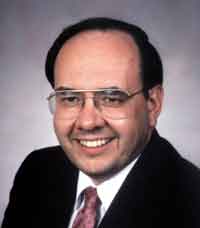
Top journalists join world journalism institute at cpac
New York, N.Y., January 6, 2011—The World Journalism Institute has become a participating organization in the 2011 Conservative Political Action Conference (CPAC), seeking to equip young conservative journalists to effectively compete for jobs in the mainstream newsrooms of America. This year’s conference will be held in Washington, D.C., from February 10 – 12. CPAC is the nation’s largest gathering of conservatives annually. It is a project of the American Conservative Union Foundation.
CPAC brings together nearly 10,000 attendees and all of the leading conservative organizations and speakers who impact conservative thought in the nation. Regularly seen on C-SPAN and other national news networks, CPAC has been the premiere event for any major elected official or public personality seeking to discuss issues of the day with conservatives. From Presidents of the United States to college student leaders, CPAC has become the place to find our nation’s current and future leaders.
WJI will hold seminars and panel discussions on freelance writing, investigative reporting, opinion writing, the new media’s role in the Tea Party movement, as well as offering a tutorial class for young college journalists by top editors of WORLD magazine.
Accomplished journalists such as Mark Tapscott (Washington Examiner), Mindy Belz, Marvin Olasky and Nick Eicher (WORLD magazine), Bill Mattox, Julia Duin, Fred Barnes and Andrew Ferguson (Weekly Standard), Ross Douthat (New York Times), David Brody (CBN News) and SE Cupp will be joining WJI for the conference.
Robert Case, director of the World Journalism Institute, stated, “We have had our displays and seminars in the major professional journalism gatherings for the last decade. We are now broadening our outreach.”
The World Journalism Institute’s mission is to recruit, equip, place and encourage Christian journalists in the newsrooms of first America and then the world. To that end, WJI offers courses, conferences, internship funding, and monographs on the intersection of Christianity and journalism.
For more information:
Kim Collins
World Journalism Institute
800-769-7870
Kcollins@worldji.com
www.worldji.com
Friday, January 7, 2011

Sunday, January 2, 2011
Are Social Media Jobs Here to Stay?
From Fortune magazine:
Are social media jobs here to stay?
December 21, 2010 12:36 pm
The demand for social media jobs has exploded, even as overall unemployment heads in the opposite direction. But in a fledgling field surrounded by hype, some industry insiders are saying it may be too good to last.
By Anne VanderMey, reporter
With billions of dollars on offer for fledgling social media companies and even the biggest corporations refining their approach to the Tweet, the budding social media industry seems like a goldmine for young and tech-savvy jobseekers.
The demand for social media jobs has exploded, even as overall unemployment hovers around 10%. A recent study published by SocialMediaInfluence.com showed that 59 of the Fortune 100 companies have at least one employee who works full time in social media, and that job postings directly related to social media have soared 600% in the last five years.
The Social Media Influence report, which collaborated with the career site Indeed.com to research online job listings, found more than 21,000 social media-related job postings -- up from only a few thousand in 2005.
That may be a glimmer of good news for the country's vast pool of young and underemployed college graduates. But in a fledgling field surrounded by hype, some industry insiders are saying it may be too good to last.
As social media hiring has picked up, the pool of qualified talent has failed to keep pace. The resulting imbalance of supply and demand, says Curtis Hougland, founder of the New York-based marketing and social media firm Attention, is the surest sign of hiring inflation.
Demand for social media skills in the corporate world has outstripped the supply of candidates with training in communications and the analytical skills to track the effectiveness of a media campaign. The void, Houghland says, has been filled by a burgeoning workforce of self-proclaimed social media experts -- qualified and not so qualified.
To explain the situation, Hougland turns to an analogy that has become ominously common when describing social media -- the dot-com bubble.
"What happened [in the 1990s] is just that the market became impatient," Hougland says. "That's the only danger with social media. We might already be there."
Hiring for social media jobs started picking up steam in about 2005, though it still constitutes only a small percentage of overall post-college job placements, says New York University's Trudy Steinfeld, director of the university's office of career services. Steinfeld estimated that only a few students -- ballpark 1 to 2% -- take jobs in social media specifically, but that those numbers have been increasing.
More often, companies eager for social media authenticity aim even younger, tasking student interns with charting their new media course. "They're using interns to test it out more and more," Steinfeld says.
That can be a dangerous strategy, says Bernhard Warner, director of Custom Communication, the London-based consultancy that publishes Social Media Influence.
Stories of social media mishaps abound, fueled by unfiltered, and often unapproved, communication. Most famously, British furniture retailer Habitat used hashtags identifying with Iranian protests in its Twitter feed to have its promotional Tweets appear in newsfeeds about the political actions. After the ploy was widely criticized, company executives credited the fallout to an "overenthusiastic intern" and apologized.
"You can't leave this in the hands of babes, because this is what's going to happen," Warner says.
That hasn't stopped a sea of recent graduates from adding Facebook and Foursquare to the skills section of their resumes. Nor has it stopped colleges from launching social media classes or even adding entire social media masters degrees.
It's all part of an effort to get in on a hiring spree that shows no immediate signs of slowing, says Jim Durbin, a social media headhunter and entrepreneur.
"This next year," Durbin says, "is when it will really start to explode."
There are several levels of expertise within the social media profession. Most commonly, there's the community manager – the feet on the ground, so to speak, who oversee a company's online communities; the analyst or strategist -- who builds and monitors social media campaigns; the product developer – who is responsible for keeping the company's software up to date; the editor or publisher -- who oversees content and the brand; and the executive -- a rare position, usually filled by a public relations professional.
Typically, companies hire some combination of these positions. The field also dances along the edges of customer service, IT, public relations, marketing and sales, according to the Social Media Influence report.
As the profession has developed, companies have moved away from hiring social media "gurus" or "ninjas," terms that were clichéd almost as soon as they were coined. But businesses often still struggle to find the right candidates for the jobs, and expect their new hires to move mountains with few resources.
"Often, these companies have inflated expectations when they hire," Durbin says.
It can be hard to separate the wheat from the chaff when the qualifications for a social media manager are so nebulous. It presents a serious challenge for hiring managers, especially those unfamiliar with social media -- in a field less than five years old, who can really claim to be an expert?
"It's one of our biggest frustrations," Hougland says. "You can't always discern who's a social media expert and who's not."
As the field matures, Durbin and others foresee widespread restructuring. To prepare, Durbin is opening a social media consulting and placement firm designed for mid-career professionals, where he sees the most growth potential. Durbin foresees that it's just a matter of time until dubiously qualified social media experts, both young and old, but especially those with little to no experience, are exposed.
"The good news is, I think that's the bubble," Durbin says.
But even for the most qualified social media wizards, pure social media careers may not exist 10 years down the line. As it becomes more ubiquitous, social media is evolving into a skill set, not a profession.
"Social media departments are basically going to go away," Durbin says, as the practice is merged with other divisions. "You don't have an e-mail manager, do you?"
But that doesn't spell a life of poverty for tech-smart, well-spoken social media managers. The Community Managers Meetup, a group of social media professionals started by Mashable.com social media strategist Vadim Lavrusik, counts more than 300 people in its membership. And Lavrusik says they aren't worried.
Most, Lavrusik says, came to the field serendipitously, whether because the jobs they thought they'd get after college weren't available, or simply because they discovered they had a knack for the field.
"They're saying, 'Here's an extremely new field, something that I'm really interested in, and hey, I'm actually pretty good at it,'" Lavrusik says.
After all, the primary purpose of social media is enabling connectivity and "just to connect with other people," Lavrusik says. And that need isn't going anywhere.
That's the other side of the dot-com boom-and-bust analogy. Even after the bubble burst, Internet companies went on to have a profound effect on both business and everyday life around the world. There was also an oversupply of programmers, which had been the hot job du jour. But you rarely hear about programmers going hungry.
"In the long run, they did fine. The same way I feel about programmers I feel about social media," Hougland says. "The need for people who understand social media is only going to grow."
Are social media jobs here to stay?
December 21, 2010 12:36 pm
The demand for social media jobs has exploded, even as overall unemployment heads in the opposite direction. But in a fledgling field surrounded by hype, some industry insiders are saying it may be too good to last.
By Anne VanderMey, reporter
With billions of dollars on offer for fledgling social media companies and even the biggest corporations refining their approach to the Tweet, the budding social media industry seems like a goldmine for young and tech-savvy jobseekers.
The demand for social media jobs has exploded, even as overall unemployment hovers around 10%. A recent study published by SocialMediaInfluence.com showed that 59 of the Fortune 100 companies have at least one employee who works full time in social media, and that job postings directly related to social media have soared 600% in the last five years.
The Social Media Influence report, which collaborated with the career site Indeed.com to research online job listings, found more than 21,000 social media-related job postings -- up from only a few thousand in 2005.
That may be a glimmer of good news for the country's vast pool of young and underemployed college graduates. But in a fledgling field surrounded by hype, some industry insiders are saying it may be too good to last.
As social media hiring has picked up, the pool of qualified talent has failed to keep pace. The resulting imbalance of supply and demand, says Curtis Hougland, founder of the New York-based marketing and social media firm Attention, is the surest sign of hiring inflation.
Demand for social media skills in the corporate world has outstripped the supply of candidates with training in communications and the analytical skills to track the effectiveness of a media campaign. The void, Houghland says, has been filled by a burgeoning workforce of self-proclaimed social media experts -- qualified and not so qualified.
To explain the situation, Hougland turns to an analogy that has become ominously common when describing social media -- the dot-com bubble.
"What happened [in the 1990s] is just that the market became impatient," Hougland says. "That's the only danger with social media. We might already be there."
Hiring for social media jobs started picking up steam in about 2005, though it still constitutes only a small percentage of overall post-college job placements, says New York University's Trudy Steinfeld, director of the university's office of career services. Steinfeld estimated that only a few students -- ballpark 1 to 2% -- take jobs in social media specifically, but that those numbers have been increasing.
More often, companies eager for social media authenticity aim even younger, tasking student interns with charting their new media course. "They're using interns to test it out more and more," Steinfeld says.
That can be a dangerous strategy, says Bernhard Warner, director of Custom Communication, the London-based consultancy that publishes Social Media Influence.
Stories of social media mishaps abound, fueled by unfiltered, and often unapproved, communication. Most famously, British furniture retailer Habitat used hashtags identifying with Iranian protests in its Twitter feed to have its promotional Tweets appear in newsfeeds about the political actions. After the ploy was widely criticized, company executives credited the fallout to an "overenthusiastic intern" and apologized.
"You can't leave this in the hands of babes, because this is what's going to happen," Warner says.
That hasn't stopped a sea of recent graduates from adding Facebook and Foursquare to the skills section of their resumes. Nor has it stopped colleges from launching social media classes or even adding entire social media masters degrees.
It's all part of an effort to get in on a hiring spree that shows no immediate signs of slowing, says Jim Durbin, a social media headhunter and entrepreneur.
"This next year," Durbin says, "is when it will really start to explode."
There are several levels of expertise within the social media profession. Most commonly, there's the community manager – the feet on the ground, so to speak, who oversee a company's online communities; the analyst or strategist -- who builds and monitors social media campaigns; the product developer – who is responsible for keeping the company's software up to date; the editor or publisher -- who oversees content and the brand; and the executive -- a rare position, usually filled by a public relations professional.
Typically, companies hire some combination of these positions. The field also dances along the edges of customer service, IT, public relations, marketing and sales, according to the Social Media Influence report.
As the profession has developed, companies have moved away from hiring social media "gurus" or "ninjas," terms that were clichéd almost as soon as they were coined. But businesses often still struggle to find the right candidates for the jobs, and expect their new hires to move mountains with few resources.
"Often, these companies have inflated expectations when they hire," Durbin says.
It can be hard to separate the wheat from the chaff when the qualifications for a social media manager are so nebulous. It presents a serious challenge for hiring managers, especially those unfamiliar with social media -- in a field less than five years old, who can really claim to be an expert?
"It's one of our biggest frustrations," Hougland says. "You can't always discern who's a social media expert and who's not."
As the field matures, Durbin and others foresee widespread restructuring. To prepare, Durbin is opening a social media consulting and placement firm designed for mid-career professionals, where he sees the most growth potential. Durbin foresees that it's just a matter of time until dubiously qualified social media experts, both young and old, but especially those with little to no experience, are exposed.
"The good news is, I think that's the bubble," Durbin says.
But even for the most qualified social media wizards, pure social media careers may not exist 10 years down the line. As it becomes more ubiquitous, social media is evolving into a skill set, not a profession.
"Social media departments are basically going to go away," Durbin says, as the practice is merged with other divisions. "You don't have an e-mail manager, do you?"
But that doesn't spell a life of poverty for tech-smart, well-spoken social media managers. The Community Managers Meetup, a group of social media professionals started by Mashable.com social media strategist Vadim Lavrusik, counts more than 300 people in its membership. And Lavrusik says they aren't worried.
Most, Lavrusik says, came to the field serendipitously, whether because the jobs they thought they'd get after college weren't available, or simply because they discovered they had a knack for the field.
"They're saying, 'Here's an extremely new field, something that I'm really interested in, and hey, I'm actually pretty good at it,'" Lavrusik says.
After all, the primary purpose of social media is enabling connectivity and "just to connect with other people," Lavrusik says. And that need isn't going anywhere.
That's the other side of the dot-com boom-and-bust analogy. Even after the bubble burst, Internet companies went on to have a profound effect on both business and everyday life around the world. There was also an oversupply of programmers, which had been the hot job du jour. But you rarely hear about programmers going hungry.
"In the long run, they did fine. The same way I feel about programmers I feel about social media," Hougland says. "The need for people who understand social media is only going to grow."
Saturday, December 25, 2010
US Newspaper Circulations Decline 5% in '10
The newspaper industry had another bad year in 2010. Overall, circulation for newspapers in the U.S. declined 5 percent during the six months ended Sept. 30, according to the Audit Bureau of Circulations’ Fas-Fax, the industry’s semi-annual scorecard.
Just one American newspaper — the Wall Street Journal — managed to increase its
circulation during that period — up 1.82 percent. Some papers, like the
San Francisco Chronicle (11.2 percent), saw its paid circulation take a double-digit tumble.
Just one American newspaper — the Wall Street Journal — managed to increase its
circulation during that period — up 1.82 percent. Some papers, like the
San Francisco Chronicle (11.2 percent), saw its paid circulation take a double-digit tumble.
Friday, December 24, 2010
A Word for Discouraged Writers
Are you a discouraged writer? Take heart and be encouraged from this glimpse into the life of novelist Mary Higgins Clark, who has now sold 80 million copies in the U.S., and millions more around the world.
She grew up in the Bronx during the Depression, the daughter of Irish immigrants who ran a pub.
She worked a secretary, then as a flight attendant for Pan Am, married at age 22, and had a child nine months later. She would have four more children in the next eight years. Then her husband died. To make ends meet, she wrote four-minute-long radio scripts for a show called Portrait of a Patriot.
But in the early mornings, before her kids woke up, she sat at the typewriter and wrote short stories — her true passion. She sent them off to magazines, and she got back dozens of rejection slips. One read: "Mrs. Clark, your stories are light, slight, and trite." Another slip said: "We found the heroine as boring as her husband had."
While she was still writing radio scripts she decided to try writing a novel, a historical one about George Washington. It was published, she said, and then "remaindered as it came off the press."
A group of her radio co-workers went out to lunch and she pointed out her book in a Manhattan bookstore window. When they came back from lunch, the book was not there any more. She insisted that it must have been snapped up. But when they passed by the store again at the end of the workday, the book was there in the window again. She went inside to ask about it, and the bookstore employee told her: "Whoever bought it returned it."
But she was highly encouraged by the fact that she had been published at all, and she decided to try writing a suspense novel inspired by the time that her three-year-old child had gone missing briefly near a deep lake. In 1974, she sold it to a publisher for a modest $3000. Three months later, she found out the paperback rights to the book had sold for $100,000.
Her second suspense novel sold for $1.5 million, and soon she was being paid $12 million per story. Each one of her suspense novels has been a best-seller.
She grew up in the Bronx during the Depression, the daughter of Irish immigrants who ran a pub.
She worked a secretary, then as a flight attendant for Pan Am, married at age 22, and had a child nine months later. She would have four more children in the next eight years. Then her husband died. To make ends meet, she wrote four-minute-long radio scripts for a show called Portrait of a Patriot.
But in the early mornings, before her kids woke up, she sat at the typewriter and wrote short stories — her true passion. She sent them off to magazines, and she got back dozens of rejection slips. One read: "Mrs. Clark, your stories are light, slight, and trite." Another slip said: "We found the heroine as boring as her husband had."
While she was still writing radio scripts she decided to try writing a novel, a historical one about George Washington. It was published, she said, and then "remaindered as it came off the press."
A group of her radio co-workers went out to lunch and she pointed out her book in a Manhattan bookstore window. When they came back from lunch, the book was not there any more. She insisted that it must have been snapped up. But when they passed by the store again at the end of the workday, the book was there in the window again. She went inside to ask about it, and the bookstore employee told her: "Whoever bought it returned it."
But she was highly encouraged by the fact that she had been published at all, and she decided to try writing a suspense novel inspired by the time that her three-year-old child had gone missing briefly near a deep lake. In 1974, she sold it to a publisher for a modest $3000. Three months later, she found out the paperback rights to the book had sold for $100,000.
Her second suspense novel sold for $1.5 million, and soon she was being paid $12 million per story. Each one of her suspense novels has been a best-seller.
Wednesday, December 15, 2010
PR Agency Project Coordinator Position Posting
Here is a current job opening posted at the DeMoss Group (public relations agency) in Atlanta. I post it just to give you insight as to the skills needed, and potential duties of a position with an agency.
Project Coordinator
Position Description:
Assist the project manager in the implementation and management of projects, schedules, creative production and distribution for public/media relations, marketing and administrative campaigns.
Key Responsibilities:
* Project Coordination: Maintain a master calendar for all projects requiring distribution, printing, compilation, mailing and creative development, as well as keep projects on schedule.
* Quality Control: Proofread all materials for grammar and spelling errors, applying extensive knowledge of the Associated Press Stylebook; modify Word, Excel and PowerPoint documents for formatting and content consistency.
* Computer Knowledge: Possess a high proficiency in multiple software applications including, but not limited to, Web-based applications, Word, Excel and PowerPoint; a working knowledge of the programs Visio and Photoshop is beneficial.
* Website Newsroom Maintenance: Update and maintain online client newsrooms through the web-based application Expression Engine.
* Production: Complete general production tasks, including copying, collating and assembling press kits, notebooks and reports.
* Systematization: Organize and maintain client stock media materials and collateral, archived projects, production supplies, etc.
* Clipping Management: Procure, lay out and maintain media clips, including press kit articles and clipping packets.
* Record Keeping: Assist with producing and filing information regarding completed projects.
Core Proficiencies:
* College degree (preferred)
* Ability to manage multiple projects and demanding deadlines
* Excellent grammar and proofreading skills
* Computer expertise
* Aptitude for learning new software packages and web applications easily
Project Coordinator
Position Description:
Assist the project manager in the implementation and management of projects, schedules, creative production and distribution for public/media relations, marketing and administrative campaigns.
Key Responsibilities:
* Project Coordination: Maintain a master calendar for all projects requiring distribution, printing, compilation, mailing and creative development, as well as keep projects on schedule.
* Quality Control: Proofread all materials for grammar and spelling errors, applying extensive knowledge of the Associated Press Stylebook; modify Word, Excel and PowerPoint documents for formatting and content consistency.
* Computer Knowledge: Possess a high proficiency in multiple software applications including, but not limited to, Web-based applications, Word, Excel and PowerPoint; a working knowledge of the programs Visio and Photoshop is beneficial.
* Website Newsroom Maintenance: Update and maintain online client newsrooms through the web-based application Expression Engine.
* Production: Complete general production tasks, including copying, collating and assembling press kits, notebooks and reports.
* Systematization: Organize and maintain client stock media materials and collateral, archived projects, production supplies, etc.
* Clipping Management: Procure, lay out and maintain media clips, including press kit articles and clipping packets.
* Record Keeping: Assist with producing and filing information regarding completed projects.
Core Proficiencies:
* College degree (preferred)
* Ability to manage multiple projects and demanding deadlines
* Excellent grammar and proofreading skills
* Computer expertise
* Aptitude for learning new software packages and web applications easily
Tuesday, December 7, 2010
Is Internship the New Entry-Level Job?
This is an excerpt from a CNN posting entitled "Is an Internship the New Entry-Level Job?" To read the entire article, click here.
(CNN) -- Ani Kevork has interned at seven companies since she graduated from the University of California at Los Angeles in 2009. She's trying to get a full-time job, but there's just nothing out there.
"It wasn't really a choice," she said. "It's just the reality of the job market today."
No. 7 proved lucky for Kevork in that her current internship at a film studio in London is paid, unlike her six previous internships. Still, she has no benefits, no job security and no idea where she'll be in a few weeks.
Kevork and two of her former classmates started a blog, The Eternal Intern, about the struggles of the current job market for other college grads with the same plights.
"I want to do what I studied, and I don't want to settle," she said. "I'm still applying for full-time positions, but I don't see that happening anytime soon for me."
Like Kevork, a growing number of college graduates are forced into internships after graduation because of the lack of entry-level jobs. For now, it's important to take those internships, said Phil Gardner, director of Michigan State University's Collegiate Employment Research Institute.
"In this environment, if a young person gets an internship, I'd tell him to take it," Gardner said. "Not because he needs another internship, but because he needs to stay engaged in the labor market so that when jobs open, he can switch to a full-time position.
"You can't go home and sit and whine and wait for something to happen. This is one way to be proactive."
(CNN) -- Ani Kevork has interned at seven companies since she graduated from the University of California at Los Angeles in 2009. She's trying to get a full-time job, but there's just nothing out there.
"It wasn't really a choice," she said. "It's just the reality of the job market today."
No. 7 proved lucky for Kevork in that her current internship at a film studio in London is paid, unlike her six previous internships. Still, she has no benefits, no job security and no idea where she'll be in a few weeks.
Kevork and two of her former classmates started a blog, The Eternal Intern, about the struggles of the current job market for other college grads with the same plights.
"I want to do what I studied, and I don't want to settle," she said. "I'm still applying for full-time positions, but I don't see that happening anytime soon for me."
Like Kevork, a growing number of college graduates are forced into internships after graduation because of the lack of entry-level jobs. For now, it's important to take those internships, said Phil Gardner, director of Michigan State University's Collegiate Employment Research Institute.
"In this environment, if a young person gets an internship, I'd tell him to take it," Gardner said. "Not because he needs another internship, but because he needs to stay engaged in the labor market so that when jobs open, he can switch to a full-time position.
"You can't go home and sit and whine and wait for something to happen. This is one way to be proactive."
Tuesday, November 30, 2010
Memoirs of an Airport 'Writer in Residence'

Here is an excerpt from an article on a 'writer in residence' who lived for a time and wrote in London's Heathrow airport. To read the entire article, click here.
(CNN) -- The man at a check-in counter at London's Heathrow Airport lost it.
He had just made a frantic sprint to catch his flight to Tokyo, Japan, only to be told he was too late to board. So he banged his fists on the counter and let out a primal scream so loud that he could be heard at the other end of the terminal.
Alain de Botton was watching it all unfold -- one of the many human dramas he observed as Heathrow's first "writer-in-residence." The job required him to do what many travelers would dread: Spend a week at the airport.
Last year, at the invitation of the company that owns Heathrow, de Botton set up a desk in the departures hall of Terminal 5 (perhaps best known to many travelers for its massive baggage handling problems when it opened in 2008) and took in the sights of what he calls "the imaginative center of contemporary culture."
He also visited the factory where workers assemble thousands of airline meals every day, watched air traffic controllers follow the path of planes on a giant map "like parents worrying about their children" and contemplated the poetry of a room-service menu at his airport hotel, where the roar of a plane taking off once prompted a waiter to shout, "God help us!"
De Botton, a Swiss-born writer who lives in London, chronicles his experiences in "A Week at the Airport," an elegantly slim and funny book recently released in the United States.
Subscribe to:
Comments (Atom)